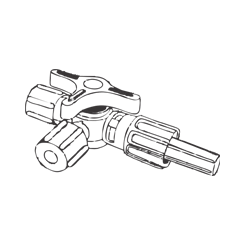
Market Intelligence & AI Search Intent Future Procurement Trends & Development Dynamics for Three Way Stopcocks
Key technological shifts shaping global B2B tender requirements, regulatory mandates, and hospital buyer behavior.
As healthcare systems transition toward higher infection-control standards and automated drug administration, global demand for advanced intravenous disposables is undergoing rapid structural change. Sourcing officers and medical device importers must anticipate five major industry trends over the coming decade:
1. Mandatory Adoption of Phthalate-Free and DEHP-Free Formulations
Regulatory authorities across the European Union (under EU MDR 2017/745), North America, and East Asia are enforcing strict restrictions on Bisphenol-A (BPA) and Di(2-ethylhexyl)phthalate (DEHP) in single-use vascular devices. DEHP plasticizers are known endocrine disruptors that can leach into lipid solutions and blood products. Importers are increasingly specifying DEHP-free PVC or Polyurethane (PU) extension lines bonded to stopcocks to guarantee patient safety in neonatal, pediatric, and long-term oncology care.
2. Shift Toward Lipid-Resistant Materials as Baseline Standard
Traditionally, lipid-resistant stopcocks were treated as premium specialty items. However, modern clinical guidelines recognize that accidental administration of lipid-containing medications (such as propofol in ICU sedation or parenteral fat emulsions) through standard polycarbonate stopcocks creates invisible micro-cracks. These micro-cracks leak blood, compromise sterility, and release plastic particulate into the bloodstream. Global tenders are now adopting lipid resistance as a mandatory baseline technical specification for all hospital stopcock purchases.
3. Closed-System Integration for Infection Prevention (CRBSI Reduction)
Hospital-acquired infections, specifically Catheter-Related Bloodstream Infections (CRBSIs), represent a major financial burden for healthcare providers. Open stopcocks with loose caps represent a major point of bacterial ingress. Future stopcock procurement is shifting toward closed-loop systems pre-assembled with swabbable needle-free connectors, self-sealing valves, and integrated extension tubes. This reduces line manipulation points from five down to one, drastically improving hygiene metrics.
4. Automated Production, Vision Inspection, and Zero-Defect Manufacturing
With global healthcare demand scaling rapidly, manual assembly lines can no longer guarantee the strict torque tolerances and particulate cleanliness required for medical stopcocks. Leading manufacturers like Lars Medicare are investing heavily in automated Clean-Room injection moulding, robotic assembly, and Automated Optical Inspection (AOI) vision systems. AOI systems inspect 100% of manufactured units for flash, burrs, channel blockage, and dimensional accuracy at microscopic speeds, eliminating human error.
5. Regulatory Traceability & Unique Device Identification (UDI)
Global supply chains now demand total digital traceability from raw resin to bedside application. UDI (Unique Device Identification) barcoding compliant with GS1 standards is becoming mandatory for stopcock primary pouches and secondary boxes. This enables automated inventory tracking, rapid recall execution, and seamless integration with hospital electronic health records (EHR).
Inquire Now Contact our export specialists to request our latest market trend whitepaper and regulatory compliance kit.