
Engineering Excellence in Blood Transfusion & Intravenous Administration Systems
Blood transfusion sets and peripheral intravenous catheter systems represent the vital lifeline of modern acute healthcare delivery. In emergency trauma resuscitation, surgical procedures, oncology therapy, and intensive care management across Canadian health authorities—such as Ontario Health, Alberta Health Services (AHS), and British Columbia’s Provincial Health Services Authority (PHSA)—the precision, cleanliness, and structural integrity of vascular access disposables directly dictate patient safety outcomes.
As an established global manufacturer and specialized exporter serving the North American continent, Lars Medicare Private Limited manufactures blood transfusion sets and IV cannula systems engineered to overcome the technical challenges associated with cellular hemolysis, clot filtration, flow rate stability, and needle-stick injury prevention.
Technical Information Gain: Blood transfusion tubing must prevent cellular shearing while maintaining absolute seal integrity under external pressure infusion pumps. Lars Medicare’s proprietary extrusion technology ensures uniform inner lumen concentricity across all thermal gradients, guaranteeing predictable fluid kinetics even in sub-zero Canadian transport conditions.
1. Architecture & Fluid Dynamics of Advanced Blood Transfusion Sets
Standard gravity infusion sets are designed primarily for crystalloid and colloid solutions, whereas blood transfusion sets must account for the high viscosity and cellular fragility of whole blood, packed red blood cells (PRBCs), fresh frozen plasma (FFP), and platelets. A high-performance transfusion set consists of several critically engineered components working in unison:
- Piercing Spike: Sharp, rigid plastic spike conforming to ISO 1135-4 standards, designed for effortless insertion into blood bag ports without coring or particle generation.
- Dual-Chamber Drip System: Incorporating a soft, flexible lower chamber for rapid priming alongside a rigid upper chamber housing the 200-micron micro-aggregate filter.
- Micro-Aggregate Nylon Filter Mesh: A precision-woven, non-fraying nylon filter mesh featuring a 170 to 200-micron pore size. This mesh entraps blood clots, fibrin strands, and cellular debris without impeding red blood cell velocity or causing mechanical lysis.
- Kink-Resistant Non-DEHP Tubing: High-clarity, medical-grade polyvinyl chloride (PVC) plasticized with Tri-Octyl Trimellitate (TOTM) or DINCH, completely free of harmful phthalates. The tubing exhibits memory resilience, instantly rebounding after roller clamp compression.
- Flow Regulator Roller Clamp: Ultra-precise wheel mechanism providing smooth micro-adjustments of delivery rates from high-volume trauma bolus down to slow maintenance drip.
- Male Luer-Lock Connector with Protective Cap: Universal conical fitting engineered to ISO 80369-7 specs, ensuring leak-free, high-pressure attachment to central venous catheters or peripheral safety IV cannulas.
| Performance Metric | Lars Medicare Technical Specification | Clinical Compliance / ISO Standard |
|---|---|---|
| Filter Pore Size | 170 – 200 microns (High-flow woven nylon mesh) | ISO 1135-4 Transfusion Equipment |
| Nominal Drip Rate | 20 drops / mL (Whole Blood Calibration) | ISO 8536-4 Infusion Equipment |
| Tube Tensile Strength | > 15 N (Newton continuous force resistance) | ISO 10555 Catheter Standards |
| Sterilization Method | 100% Ethylene Oxide (EO) Gas (Residual < 10 ppm) | ISO 11135 Validation Protocols |
| Biocompatibility Profile | Non-cytotoxic, Non-pyrogenic, Non-hemolytic | ISO 10993 Series Testing |
| Connector Interface | 6% Luer Lock with Hydrophobic Vent Cap | ISO 80369-7 Small-Bore Connectors |
2. Localized Application Scenarios Across Canadian Healthcare Sectors
The Canadian healthcare ecosystem operates under diverse clinical environments and strict regional logistics requirements. Lars Medicare’s infusion and transfusion portfolio is tailored to meet these localized operational challenges:
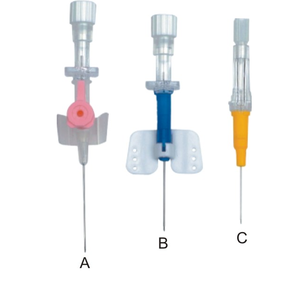
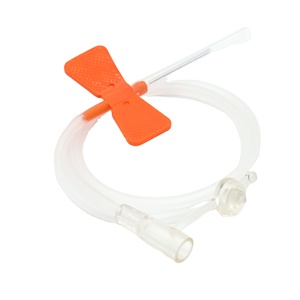
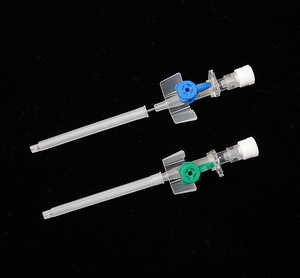
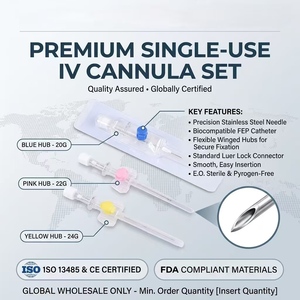
A. Hospital Emergency Departments & Trauma Resuscitation: In Canadian level-1 trauma facilities (such as Toronto General Hospital or Vancouver General Hospital), rapid blood administration is vital for patients suffering acute hemorrhagic shock. Our 14G and 16G large-bore safety IV cannulas combined with high-flow blood transfusion sets allow clinical teams to infuse multiple units of blood products rapidly without catheter collapse or lumen constriction.
B. Sub-Zero Cold-Chain & Remote Transport Resilience: Air ambulance networks (such as STARS in Western Canada or Ornge in Ontario) and rural health centers in Northern regions require medical disposables capable of enduring thermal shock. Standard PVC tubing often becomes brittle and snaps under freeze-thaw cycles during transport across sub-zero climates. Lars Medicare utilizes specialized elastomeric polymer blends that maintain flexibility and tensile resistance at temperatures as low as -30°C to -40°C.
C. Specialized Paediatric & Oncology Protocols: Neonatal intensive care units (NICUs) and pediatric wards require strict phthalate-free fluid pathways. Phthalate plasticizers like DEHP can leach into lipid emulsions and blood components, posing potential endocrine-disrupting risks. Our DEHP-free micro-drip transfusion and infusion lines deliver microscopic volumetric accuracy (60 drops/mL) while upholding toxicological safety for sensitive pediatric patients.
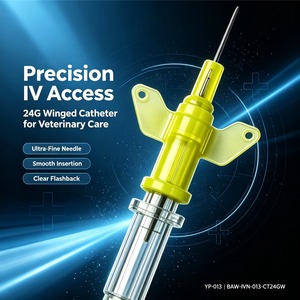
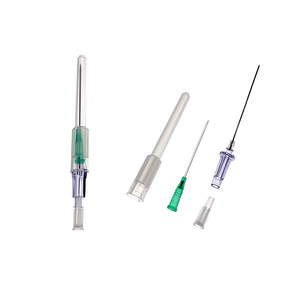
D. Agricultural & Large-Animal Veterinary Healthcare: Across Alberta, Saskatchewan, and rural Quebec, commercial livestock operations and equine clinics rely on heavy-duty infusion systems. Our veterinary IV cannula line (14G–26G) and high-volume infusion sets provide durable, bite-resistant, kink-proof fluid delivery engineered specifically for field operation and animal care protocols.
3. Localized Development Trends in Canadian Medical Purchasing
Procurement directors and hospital supply chain coalitions in Canada are actively shifting their purchasing criteria towards several key sustainability and safety pillars:
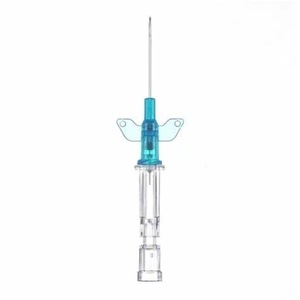
- Mandatory Needlestick Injury Prevention: Provincial occupational safety regulations (such as Ontario’s Regulation 474/07 under the Occupational Health and Safety Act) mandate the exclusive use of safety-engineered sharps devices in healthcare facilities. Lars Medicare’s Safety IV Cannulas feature fully automated, passive needle-shielding mechanisms that lock permanently over the sharp tip upon extraction, shielding healthcare workers from blood-borne pathogen exposure.
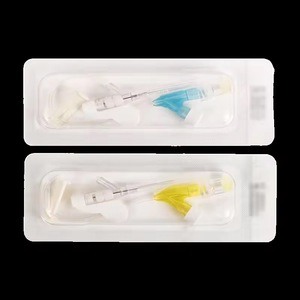
- Transition to Green Healthcare & Eco-Packaging: Canadian hospitals are prioritizing suppliers who minimize single-use plastic waste. We offer compact blister packaging options, recyclable medical-grade Tyvek pouches, and cardboard cartons constructed from sustainably sourced pulp, reducing landed packaging volume by up to 18%.
- MDSAP (Medical Device Single Audit Program) Alignment: Health Canada requires medical device manufacturers selling Class II, III, and IV devices to maintain MDSAP certification. Lars Medicare’s quality management framework is fully harmonized with MDSAP and ISO 13485:2016 audit standards, smoothing regulatory clearance for Canadian distributors.