
MEDICA 2026 | 16–19 November 2026 | Hall 6, Stall F37 | Düsseldorf, Germany
Direct factory supply for healthcare providers, clinical distributors, and government procurement channels in Kuala Lumpur, Selangor, and the Klang Valley.
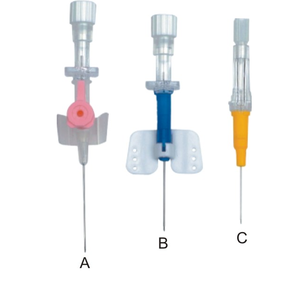
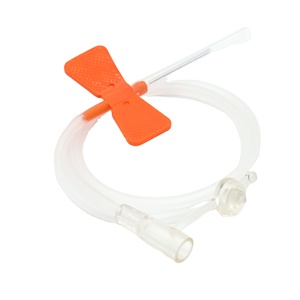
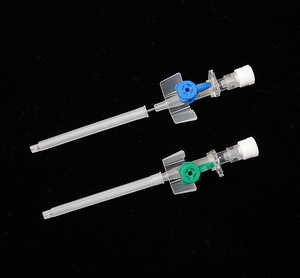
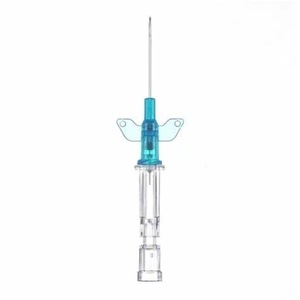
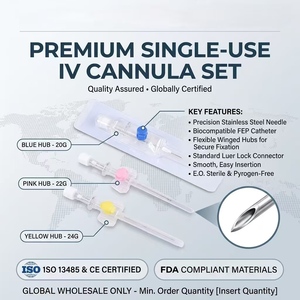
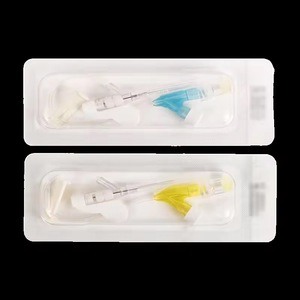
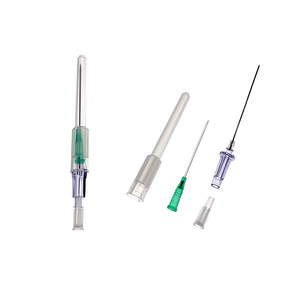
As healthcare systems in Kuala Lumpur, Petaling Jaya, and across Selangor modernize their vascular access protocols, the technical demand for high-integrity intravenous accessories has escalated dramatically. A Heparin Cap (also referred to as a heparin stopper or injection valve) serves as a vital gatekeeper in peripheral and central venous catheterization. It facilitates intermittent medication administration, blood sampling, and heparinized saline flushing while preserving a closed, sterile fluid pathway.
Leading Chinese medical manufacturing facilities serving the Malaysian market have migrated from basic natural rubber components to advanced polyisoprene and liquid silicone elastomer diaphragms integrated within rigid polycarbonate housings. These polymer engineering advancements directly solve key clinical challenges faced in high-turnover hospital wards like Hospital Kuala Lumpur (HKL) and private healthcare centers across the Klang Valley.
Information Gain Benchmark: Modern ISO 80369-7 standard Luer connectors mandate tight 6% taper dimensions, ensuring zero fluid leakage at static pressures up to 300 kPa while maintaining less than 0.04 mL internal fluid retention volume (dead space).
Formulated from synthetic non-latex polyisoprene or liquid silicone rubber (LSR), eliminating latex allergen transfer and preventing coring during hypodermic needle punctures.
Engineered with a standardized 6% conical Luer lock thread that seamlessly mates with all CE and MDA-registered IV cannulas, extension sets, and syringe hubs.
Validated to withstand internal fluid pressure exceeding 300 kPa without diaphragm displacement, micro-cracking, or seal compromise during fast bolus injections.
To assist Malaysian hospital procurement officers and medical device importers in evaluating manufacturing specs, the table below highlights the performance parameters of standard vs. advanced heparin cap formulations.
| Performance Parameter | Legacy Rubber Heparin Caps | Standard Polyisoprene Caps | Premium Silicone Medical Caps |
|---|---|---|---|
| Diaphragm Material | Natural Vulcanized Rubber | Synthetic Polyisoprene (Latex-Free) | Liquid Silicone Rubber (LSR) |
| Latex Allergy Risk | Present (High Risk) | Zero (Latex-Free Certified) | Zero (Latex-Free Certified) |
| Puncture Endurance | 20–30 Insertions | 60–80 Insertions | 100+ Insertions without coring |
| Dead Space Volume | 0.08 mL – 0.12 mL | 0.04 mL – 0.06 mL | < 0.03 mL (Ultra-low) |
| Housing Polymer | Standard Polypropylene | Medical Polycarbonate (PC) | High-Clarity PC (BPA Free) |
| Sterilization Method | Basic EO Batch Process | ISO 11135 Validated EO Gas | Gamma / E-Beam / ISO 11135 EO |
The healthcare ecosystem in Kuala Lumpur represents a dynamic mix of massive public tertiary referral centers (such as Hospital Kuala Lumpur, Hospital Selayang, and Universiti Malaya Medical Centre) alongside rapidly expanding private healthcare systems like Sunway Medical Centre, Pantai Hospital Kuala Lumpur, and Ramsay Sime Darby Healthcare. Each clinical sector presents distinct procurement intent and operational challenges:
High-frequency intermittent injections require heparin caps with extreme puncture resilience that resist fatigue and blood reflux under continuous nursing manipulations.
Hemodialysis centers in Selangor utilize low-dead-space heparin caps to seal dual-lumen catheter ports between dialysis sessions, preventing intra-luminal clot formation.
Neonatal and pediatric care units require non-pyrogenic, DEHP-free, and latex-free heparin stoppers to eliminate toxic leachables during sensitive infusion protocols.
Three dominant structural trends are shaping the procurement of heparin caps and vascular access consumables across Malaysia:
1. Strict Enforcement of MDA Registration: Under the Malaysian Medical Device Act 2012 (Act 737), all medical consumables imported into Kuala Lumpur must be registered with the Medical Device Authority (MDA). Top Chinese manufacturers partner directly with local Authorized Representatives (AR) in Malaysia, providing complete technical dossiers, ISO 13485 certification, and evaluation samples to streamline Class A and Class B registrations.
2. Adoption of Infection Prevention & Needle-Free Connectors: Patient safety guidelines issued by the Ministry of Health (MOH) Malaysia actively emphasize the reduction of Catheter-Related Bloodstream Infections (CRBSI) and needle-stick injuries. This has spurred a transition from traditional needle-re-entry heparin caps to positive-pressure needleless connectors in premium hospitals across Mont Kiara, Bangsar, and Subang Jaya.
3. Supply Chain Resilience & ACFTA Tariff Advantages: Procurement managers in Kuala Lumpur increasingly favor direct supply contracts with certified Chinese factories over intermediary traders. Leveraging the ASEAN-China Free Trade Area (ACFTA) Form E certificate enables Malaysian importers to enjoy zero or reduced import tariffs, dramatically reducing landed costs at Port Klang.
China's medical device manufacturing sector has evolved into a global benchmark for automated, cleanroom-manufactured single-use medical disposables. When sourcing heparin caps from top-tier Chinese plants, international buyers benefit from an integrated production ecosystem that covers every stage of production under one roof.
Sterility assurance is non-negotiable for intravenous access disposables. Top Chinese factories utilize computerized EO sterilization chambers backed by biological indicator (BI) challenge testing and gas chromatography residual testing. Aeration protocols ensure that residual Ethylene Oxide levels remain well below 4 µg/g, fully complying with ISO 10993-7 biocompatibility standards and ensuring zero cytotoxicity when products arrive at Port Klang containers.
For medical brand owners and tender participants in Kuala Lumpur, Chinese factories offer end-to-end OEM and ODM services:
Below are authoritative answers to common inquiries raised by Malaysian healthcare distributors, hospital procurement boards, and logistics coordinators sourcing heparin caps from China.
Direct ocean freight shipments from major Chinese ports (Shanghai, Ningbo, Shenzhen, or Qingdao) to Port Klang generally take between 7 to 12 days in transit. Accounting for order production, automated EO sterilization (which takes 4–6 days including aeration), pre-shipment QC release, and export customs clearance, total lead time from order confirmation to arrival at your warehouse in Klang Valley typically ranges between 3 to 4 weeks. Express air freight via KLIA is available for urgent hospital tender demands, reducing transit to 2–4 days.
Established Chinese exporters supply a comprehensive registration dossier required by the Malaysian Medical Device Authority (MDA). This dossier package includes ISO 13485:2016 certification, CE Certificates of Conformity, Free Sale Certificates (FSC) issued by national health authorities, Full Biocompatibility Test Reports according to ISO 10993 series (cytotoxicity, sensitization, systemic toxicity), EO Sterilization Validation Records, and technical drawings of the ISO 80369-7 Luer lock dimensions.
Yes. Premium Chinese factories manufacture heparin caps utilizing 100% medical-grade synthetic polyisoprene or liquid silicone rubber (LSR) diaphragms, completely eliminating natural rubber proteins. This guarantees zero risk of Type I latex-induced allergic reactions among patients, satisfying the strict non-latex requirements set by the Ministry of Health (MOH) Malaysia for public hospital tenders via e-Perolehan.
Absolutely. Qualified Chinese manufacturers issue official ACFTA Form E Preferential Certificates of Origin with each export shipment. Presenting Form E to the Royal Malaysian Customs Department at Port Klang or KLIA allows importers to benefit from preferential zero or significantly reduced import duty rates, substantially optimizing landed supply chain costs.
To withstand tropical climatic conditions in Malaysia, products are sealed in medical-grade Tyvek or high-density paper-plastic peeling pouches that act as robust microbial and moisture barriers. Master cartons are constructed from 5-ply reinforced corrugated cardboard lined with heavy-duty inner PE moisture-shield bags, ensuring box stability during sea transit and long-term warehouse storage in tropical environments.
Under recommended storage conditions (dry, dark environment between 15°C to 30°C), EO-sterilized heparin caps maintain a certified shelf life of 5 years. Each batch undergoes rigorous physical quality testing, demonstrating static hydraulic pressure resistance of at least 300 kPa (over 43 PSI) for 30 seconds without leakage, guaranteeing safety under high-flow IV flushing.
Navigating global healthcare supply chains requires a manufacturing partner that combines engineering mastery, stringent quality assurance, and responsive international customer service. By partnering directly with verified Chinese heparin cap manufacturers, healthcare organizations in Kuala Lumpur secure direct factory pricing, zero-defect quality guarantees, and long-term supply stability.