
MEDICA 2026 | 16–19 November 2026 | Hall 6, Stall F37 | Düsseldorf, Germany
Engineered to international ISO 7153-1 and ISO 10555 standards. Trusted by Belgian healthcare procurement teams for low-force venipuncture, burr-free surgical incisions, and sterile integrity.
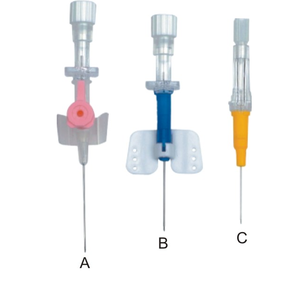
Featuring a tri-facet siliconized bevel stainless steel needle and radio-opaque FEP/PTFE catheter for smooth vein entry and reduced trauma during routine indwelling procedures.
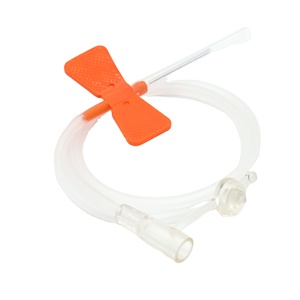
Medical-grade stainless steel trocar engineered for maximum sharpness. Packed in medical blister foil ensuring 5-year sterile shelf life under EO sterilisation validation.
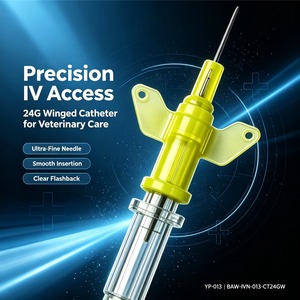
Flexible stabilizing wings designed for secure anchoring on small animals and pets. Eliminates line displacement during intensive animal care and veterinary infusion.
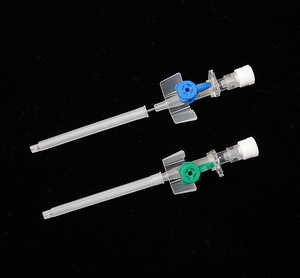
Includes a non-return snap-cap injection port for needleless bolus medication administration without compromising blood backflow prevention or sterile barriers.
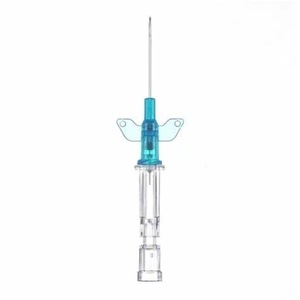
Ultra-fine gauge sizes engineered for feline, canine, and exotic animal venipuncture. Features high transparency chamber for instant blood flashback detection.
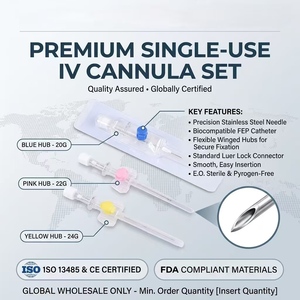
Designed for rapid visualization of venous access. High blood control hub prevents exposure to blood-borne pathogens during emergency room cannula placement.
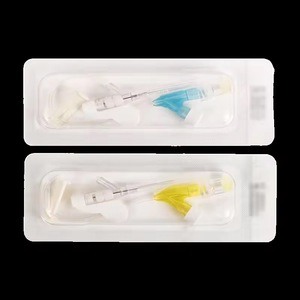
Passive needle-shielding safety clip engages automatically upon needle withdrawal to protect clinical staff and veterinary technicians from accidental sharps injuries.
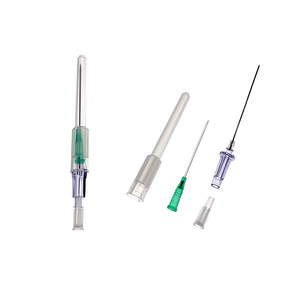
Complete selection of veterinary IV access solutions from 14G heavy livestock to 26G pediatric animal care, compliant with EU animal welfare healthcare directives.
An in-depth guide for procurement officers at Belgian hospital networks (Locoregionale Ziekenhuisnetwerken), medical device importers in Brussels, Flanders, and Wallonia, and surgical supply distributors.
Belgium’s healthcare infrastructure is renowned across Europe for clinical precision and dense network of university medical centers, including UZ Leuven, Cliniques Universitaires Saint-Luc, CHU de Liège, and AZ Sint-Jan Brugge. Operating within these facilities requires surgical instrumentation that satisfies demanding micro-cutting standards. Scalpel blades are not merely disposable items; they are the primary interface between surgeon dexterity and patient tissue preservation.
In high-throughput operating theatres across Brussels, Antwerp, Ghent, and Charleroi, surgical teams require scalpels that deliver exceptional initial sharpness (low penetration force), consistent edge retention during prolonged procedures, and absolute burr-free blade geometry. As a specialized manufacturer, our automated grinding lines utilize multi-axis computerized optical inspection to guarantee that every single-use blade (Sizes #10, #11, #12, #15, #20, #22, #24, #25) meets rigorous mechanical tolerances.
To optimize cutting efficiency across diverse surgical disciplines, our manufacturing plant produces blades in two distinct high-performance metal alloys:
| Metallurgical Property | High-Carbon Steel Blades (Grade C1095) | Martensitic Stainless Steel Blades (AISI 440C / 420) |
|---|---|---|
| Hardness (Rockwell C Scale) | 59 - 63 HRC (Superior Initial Keenness) | 56 - 60 HRC (High Corrosion Resistance) |
| Edge Bevel Geometry | Micro-ground double bevel angle (18° - 22°) | Lap-honed micro-bevel (20° - 24°) |
| Primary Clinical Applications | Plastic surgery, dermatology, ophthalmic incisions, precise tissue dissecting | General surgery, trauma surgery, wet field/fluid-heavy operating rooms |
| Corrosion Resistance | Requires VCI foil packaging with protective oil coating | Inherent chromium oxide passive layer protection |
| Standard Compliance | ISO 7153-1, BS 2982, EN ISO 11607 | ISO 7153-1, BS 2982, EN ISO 11607 |
Our carbon steel blades undergo a specialized heat treatment process involving controlled atmosphere martensitic hardening followed by cryogenic tempering. This eliminates residual austenite, preventing edge rollover during tough fascial cutting. For stainless steel variants, high chromium content combined with precision micro-lap sharpening ensures resistance against tissue fluid staining and oxidation.
Importing surgical devices into Belgium requires strict adherence to European Medical Device Regulation (EU MDR 2017/745). The Federal Agency for Medicines and Health Products (FAMHP / AFMPS) enforces vigilant post-market surveillance and mandatory registration for all single-use invasive medical consumables.
Every consignment supplied by our factory to Belgian distributors is delivered with comprehensive technical documentation:
Tailored manufacturing solutions engineered to satisfy specific clinical demands across Belgium's regional healthcare sectors.
High-volume surgical units in major metropolitan hospital centers demand #10 and #20 blades with consistent thickness tolerances (ISO 2982). Our blades snap securely onto standard No. 3 and No. 4 handles, ensuring zero play or unintended blade disengagement during high-pressure laparotomy incisions.
For fine plastic reconstruction and ophthalmic procedures, our #11 and #15 micro-blades offer ultra-keen blade tips and tight radius tolerances. The micro-grinding technology minimizes lateral tissue drag, aiding rapid post-operative wound healing and aesthetic scar outcomes.
Belgian day-surgery clinics (Daghospitalen) focus heavily on cost-efficiency and fast turnarounds. We provide pre-assembled single-use safety scalpels with protective retractable sheaths, fulfilling EU Directive 2010/32/EU requirements for sharps injury prevention.
Specialized veterinary scalpels and IV cannulas engineered for livestock, equine, and small animal clinical settings. Resistant to heavy mechanical stress and suited for challenging field operating conditions across Belgian agricultural sectors.
Analyzing key shifts in Belgian public tenders (Groot-Bijgaarden, Public Procurement Directives) and private hospital group contracting.
Belgian health authorities are actively urging hospitals to reduce single-use plastic waste. Our factory has pioneered down-gauged recyclable aluminum foil peel-packs and FSC-certified outer paper cartons, decreasing non-recyclable packaging mass by up to 28% without sacrificing sterile barrier performance (ISO 11607).
Under the Belgian Royal Decree implementing European Directive 2010/32/EU, hospital employers must minimize risks of needle-stick and cut injuries. We supply safety scalpels equipped with audible/tactile locking mechanisms, allowing one-handed sheath closure post-incision.
Global logistics disruptions have forced Belgian buying groups to move away from multi-tier trading brokers. Sourcing directly from our integrated plant guarantees direct batch traceability, locked pricing structures, and scheduled container dispatches straight to Antwerp port hubs.
Combining two decades of international export excellence with vertical clean-room production, custom tooling, and dedicated Belgian market support.
Unlike suppliers who outsource component stamping, our facility integrates tool design, precision stamping, automated grinding, clean-room assembly, and Ethylene Oxide (EO) sterilisation under one central ISO 13485 quality management system. This ensures absolute batch-to-batch consistency and fast OEM adaptation.
We manufacture custom-branded scalpel boxes, specialized pack counts (e.g., 50s, 100s, or customized surgical tray kits), localized Dutch/French packaging artwork, barcoding, and UDI integration tailored precisely to Belgian hospital tender specifications.
Essential answers regarding regulatory documentation, ordering logistics, localized labeling, and sample evaluation.
Yes. All scalpel blades and medical disposables manufactured by our plant are certified under EU Medical Device Regulation (EU MDR 2017/745) with valid CE marking. We provide full technical dossiers, EC Declarations of Conformity, ISO 13485:2016 certificates, and FAMHP (AFMPS) registration files necessary for distribution in Belgium.
Absolutely. We specialize in localized OEM packaging. Primary foil pouches, inner boxes, and outer cartons are printed with trilingual Instructions for Use (IFU) in Dutch (Nederlands), French (Français), and German (Deutsch), adhering fully to Belgian language regulations for medical devices.
Sea freight shipments disembarking at the Port of Antwerp or Port of Zeebrugge typically require 22 to 28 days transit time. Expedited air cargo shipments arriving at Brussels Airport (BRU) or Liège Airport (LGG) take approximately 3 to 5 business days post-production release.
We produce blades in both Premium High-Carbon Steel (Grade C1095) for maximum initial keenness and Martensitic Stainless Steel (AISI 440C/420) for high corrosion resistance in fluid-heavy surgical procedures. All materials comply with ISO 7153-1 standards.
For standard catalog neutral packaging, MOQs start as low as 1 mixed pallet. For full custom private-label artwork and customized box printing, typical MOQs are 50,000 units per SKU, allowing cost-effective printing runs for regional Belgian distributors.
Yes. We provide sample evaluation kits containing representative sizes (#10, #11, #15, #22, etc.) along with batch Certificates of Analysis (CoA) and sterility validation reports for hospital clinical trials. Simply submit an inquiry below to arrange dispatch.
Partner directly with a certified manufacturer. Access competitive wholesale volume pricing, technical dossiers, and expedited shipping schedules tailored for the Belgian healthcare market.