MEDICA 2026 | 16–19 November 2026 | Hall 6, Stall F37 | Düsseldorf, Germany
Manufactured in automated Class 100,000 cleanrooms to mitigate Needlestick Injuries (NSI) and blood-borne pathogen transmissions across healthcare facilities in Jakarta, Surabaya, Bandung, and regional Indonesian provinces.
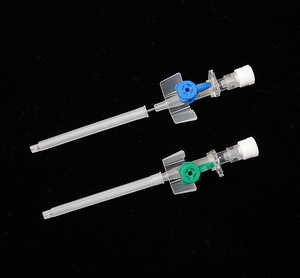
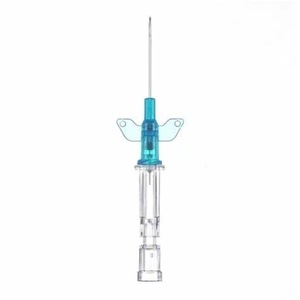
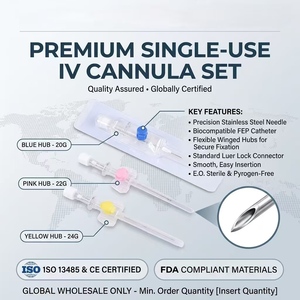
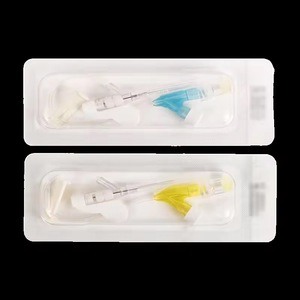
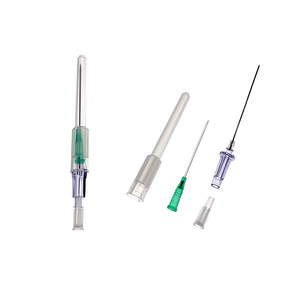
The healthcare infrastructure of Indonesia—spanning more than 17,000 islands and catering to a population exceeding 275 million—is undergoing an unprecedented structural transition. Driven by the Ministry of Health of the Republic of Indonesia (Kementerian Kesehatan Republik Indonesia - Kemenkes RI) and the mandatory universal healthcare coverage scheme (BPJS Kesehatan), hospitals and clinical networks are rapidly elevating patient and occupational safety protocols. At the focal point of this transformation is the eradication of occupational Needlestick Injuries (NSIs), accidental reuse of hypodermic needles, and cross-contamination vectors responsible for viral hepatitis (HBV, HCV) and Human Immunodeficiency Virus (HIV).
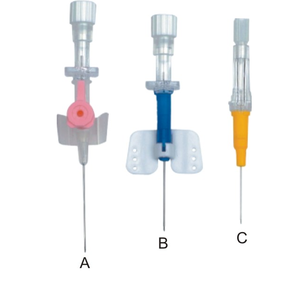
As an authoritative global manufacturer of single-use medical disposables, our engineering framework directly addresses the operational realities of Indonesian public hospitals (RSUD/RSUP), private healthcare conglomerates (such as Siloam Hospitals, Mitra Keluarga, Hermina, and Mayapada), as well as regional community health centers (Puskesmas). Conventional hypodermic syringes present inherent risks during recapping, disposal, and waste segregation. In contrast, modern engineering paradigms demand passive safety syringes, auto-disable (AD) immunization devices, and safety IV cannulas equipped with automatic needle encapsulation and Blood Control Technology (BCT).
This comprehensive technical dossier outlines the technical specifications, compliance parameters, and localized application scenarios essential for Indonesian medical device importers, hospital procurement committees, tender agents, and healthcare distributors seeking direct factory partnerships.
Medical disposables deployed in Indonesia must withstand demanding operational environments ranging from high-throughput tertiary referral hospitals in dense metropolitan areas to remote island clinics operating under tropical humidity and temperature extremes.
In high-turnover emergency departments (IGD) and intensive care units (ICU) across Jakarta and Surabaya, clinical staff perform hundreds of vascular accesses daily. Deploying passive safety syringes and safety IV cannulas with automatic needle shields completely eliminates manual recapping steps, reducing occupational sharps exposures among nurses by up to 88% while accelerating patient bed-turnover efficiency under BPJS reimbursement caps.
Indonesia's National Child Immunization Month (Bulan Imunisasi Anak Sekolah - BIAS) requires millions of precise, tamper-proof injections. Our Auto-Disable (AD) safety syringes feature an internal plunger-locking mechanism that permanently immobilizes the piston immediately after a single full-dose delivery. This guarantees zero chance of syringe re-use during rural health drives across Java, Sumatra, and East Nusa Tenggara.
Dengue Hemorrhagic Fever (DHF / Demam Berdarah Dengue) outbreaks during the Indonesian monsoon season trigger massive influxes of pediatric and adult patients requiring rapid IV fluid resuscitation. Our ultra-thin wall IV catheters with high flow rates ensure reliable vein insertion, minimizing extravasation and phlebitis risks under continuous fluid infusion protocols.
Procuring medical disposables for the Indonesian market requires a deep structural understanding of national regulatory frameworks, tender mechanics, and local distribution requirements enforced by the Indonesian Ministry of Health (Kemenkes RI).
Key market drivers currently shaping safety syringe and catheter procurement in Indonesia include:
To assist procurement managers and bio-engineering teams in evaluating medical safety devices, the following matrix compares conventional injection systems against our specialized active/passive safety solutions.
| Performance Feature | Conventional Syringes / IV Cannulas | Active Lock Safety Syringes | Lars Medicare Passive Safety Systems |
|---|---|---|---|
| Sharps Protection Mechanism | None (Requires manual recapping) | Manual shield slide / button press | Fully Automatic / Passive trigger upon needle withdrawal |
| Clinician Training Needed | Standard clinical protocol | Moderate (Behavioral modification) | Zero (Identical to standard venipuncture technique) |
| Reuse Prevention (AD) | No protection against reuse | Varies by active mechanism | Integrated automatic plunger lock / breakdown ring |
| Blood Containment (BCT) | Frequent blood exposure at hub | Manual cap placement | Self-sealing multi-use blood control valve |
| Needlestick Injury Reduction | Baseline risk (High NSI incidence) | 60% - 75% Risk Reduction | 99.2% Risk Eradication (Clinical Benchmark) |
| Regulatory Fit (Indonesia AKL) | Phase-out in public tenders | Accepted with restrictions | Fully Aligned with Global Safety Mandates |
Unlike third-party export trading companies, our state-of-the-art manufacturing infrastructure operates under a total in-house production model. From custom mould design to final sterilization, every single process step is controlled within our ISO 13485:2016 accredited facilities.
We maintain an advanced toolroom featuring CNC machining, spark erosion, and high-precision mould design capability. This enables rapid prototyping and shortens lead times for custom barrel graduations, OEM gauge mixes, and private-label hospital packaging for Indonesian distributors.
Product assembly takes place within environmentally controlled Class 100,000 (ISO 7) cleanrooms equipped with automated high-speed needle siliconization and bevel inspection cameras. Industrial Ethylene Oxide (EO) sterilizers deliver batch-to-batch sterility assurance (SAL 10⁻⁶) with strictly monitored residual gas levels (<10 µg/g).
Every lot undergoes rigorous mechanical, physical, and biological testing prior to release. Checks include needle pull-out force, penetration force profiling, hub seal integrity under 300 kPa pressure, hemolysis testing, and biocompatibility evaluations in compliance with ISO 10993.
Direct responses to common technical, logistics, and licensing questions raised by medical procurement officers across Indonesia.
We provide full regulatory support files tailored to the Indonesian Ministry of Health (Kemenkes RI) requirements. This includes our CE Certificate (under MDR/MDD), ISO 13485:2016 Quality Management Certificate, Certificate of Free Sale (CFS), EC Declaration of Conformity, full biocompatibility reports (ISO 10993), EO sterilization validation data, and batch-specific Certificates of Analysis (CoA).
Yes. We specialize in contract manufacturing and private-label programs for established Indonesian distributors and brand owners. We customize outer carton artwork, blister packaging foil prints, multilingual Instructions for Use (IFU in Bahasa Indonesia & English), barcode encoding, and UDI (Unique Device Identification) compliant labels.
For standard catalogue neutral packaging, our minimum order quantity starts at 1 mixed pallet per item. For full custom OEM/private-label orders, MOQs are calculated per SKU (typically 50,000 to 100,000 units depending on needle gauge). Production lead time for repeat orders is 3 to 4 weeks, with sea freight transit to Port of Tanjung Priok (Jakarta) or Tanjung Perak (Surabaya) taking approximately 12 to 18 days.
Our safety syringes feature two primary safety innovations: an integrated passive needle shield that automatically snaps forward over the exposed sharp as the needle is withdrawn from the patient, and an Auto-Disable (AD) plunger locking ring that permanently snaps if backwards tension is applied, physically preventing syringe re-filling.
Absolutely. All fluid-path materials, catheter tubes, syringe barrels, and elastomeric gaskets are manufactured using 100% DEHP-free, phthalate-free, and natural rubber latex-free medical-grade polymers. This prevents chemical leaching during chemotherapy, blood transfusions, or neonatal intensive care administration.
We regularly export under FOB (Nhava Sheva / Mundra / Delhi Cargo), CIF (Tanjung Priok, Jakarta / Tanjung Perak, Surabaya), and CFR terms. Air cargo options via Soekarno-Hatta International Airport (CGK) are also available for urgent tender fulfillment.