
MEDICA 2026 | 16–19 November 2026 | Hall 6, Stall F37 | Düsseldorf, Germany
Engineered for uncompromising microbial defense, fluid resistance, and ergonomics across clinical, surgical, and diagnostic settings in the Russian Federation.
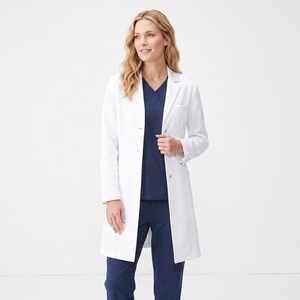
High-durability poly-cotton blend designed for autoclave laundering, staff comfort, and long-term hospital clinic usage.
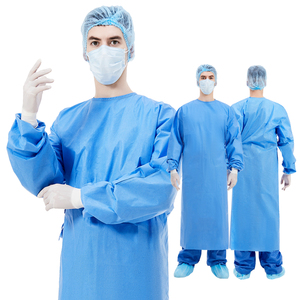
Coated poly-laminate barrier fabric delivering 100% liquid resistance against bloodborne pathogens during high-fluid procedures.
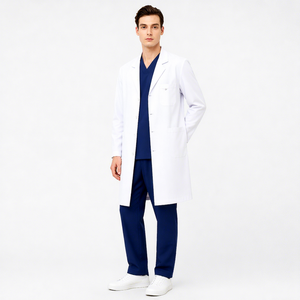
Tailored hospital uniform with customized Russian bilingual care labeling, tailored chest pockets, and anti-wrinkle finishing.
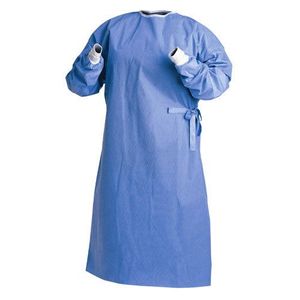
Multi-layer SMS non-woven construction balancing extreme hydrostatic pressure resistance with micro-porous thermal regulation.
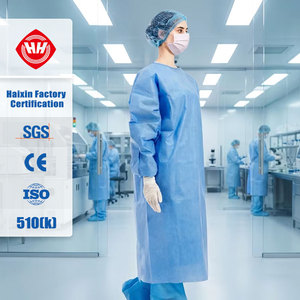
Ultrasonic welded critical zones with chest and forearm reinforcement for extended operating theater sterility.
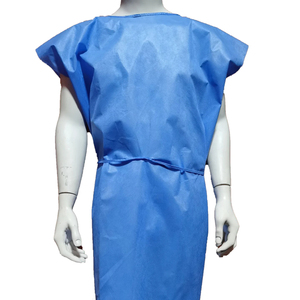
Soft, non-irritating hypoallergenic patient wear offering dignity, opacity, and rapid tie-back access for clinical staff.
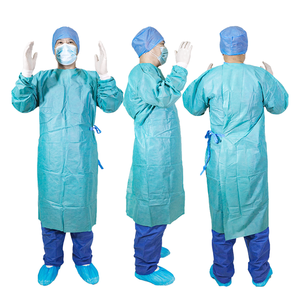
Five-layer SMMMS technology providing maximum filtration efficiency against aerosolized microbial particles and fluids.
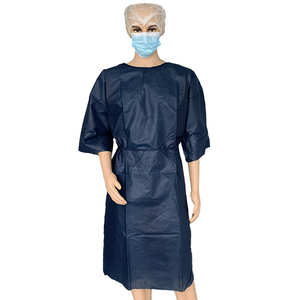
Radiolucent, non-transparent short-sleeve gowns optimized for rapid patient turnaround in X-ray and MRI imaging centers.
The healthcare infrastructure across the Russian Federation—spanning state Federal Autonomous Institutions (ФГАУ), municipal clinical hospitals (ГБУЗ), and rapidly expanding private clinical networks—demands a resilient, high-volume supply chain for personal protective equipment (PPE). As international regulatory parameters evolve and local sanitary-epidemiological oversight under Rospotrebnadzor and Roszdravnadzor (Federal Service for Surveillance in Healthcare) tightens, healthcare procurement managers require factory-direct manufacturing partners capable of delivering verified microbial barriers, structural gown integrity, and seamless import documentation.
Contracting with an established overseas medical apparel manufacturer to supply Russian regional centers (from the Moscow and Central Federal Districts to the Northwestern, Volga, and Siberian territories) demands more than standardized fabric stitching. It requires an intimate engineering understanding of high-density non-woven polymer extrusion, ultrasonic thermal bonding, ethylene oxide (EO) gas sterilizer validation, and regulatory dossier alignment matching Eurasian Economic Union (EAC) regulations.
Every lot exported to Russia is manufactured under ISO 13485:2016 quality governance. Technical documentation, safety datasheets, and toxicological evaluation reports are pre-structured to streamline national medical device registration (Регистрационное Удостоверение) procedures.
Packaging configurations utilize heavy-gauge multi-layer polyethylene inner pouches and reinforced export corrugation. Materials withstand wide temperature fluctuations (-40°C Siberian transits to humid maritime ports) without seal degradation or barrier embrittlement.
Modern surgical protection relies on precise non-woven polymer engineering. Medical gown performance is dictated by the density (grams per square meter - GSM), fiber orientation, and multi-layer composition of Polypropylene (PP), Meltblown (M), and Polyethylene (PE) laminates. Our production facility employs state-of-the-art multi-beam extrusion lines capable of manufacturing SMMMS (Spunbond-Meltblown-Meltblown-Meltblown-Spunbond) and microporous film laminates engineered to meet and exceed both ANSI/AAMI PB70 and GOST EN 13795 specifications.
| Gown Material Category | Grammage (GSM) | Hydrostatic Pressure (cm H₂O) | Tensile Strength (N - Dry/Wet) | Linting / Particle Count | Primary Clinical Application |
|---|---|---|---|---|---|
| Spunbond Polypropylene (SB-PP) | 25 - 35 GSM | > 15 cm H₂O | MD: > 45 / CD: > 30 | Low Linting (Log10 < 3.5) | Basic patient isolation, routine ward visitations, non-invasive diagnostic suites. |
| PP + PE Poly-Laminate | 40 - 55 GSM | > 100 cm H₂O (Impermeable) | MD: > 85 / CD: > 60 | Zero Lint Generation | High-fluid trauma procedures, obstetrics, blood transfusion units, pathology labs. |
| SMS (Spunbond-Meltblown-Spunbond) | 35 - 50 GSM | > 50 cm H₂O | MD: > 70 / CD: > 50 | Ultra-Low Linting | Standard general surgery, laparoscopic interventions, ICU isolation units. |
| SMMMS Advanced Non-Woven | 45 - 65 GSM | > 80 cm H₂O | MD: > 110 / CD: > 80 | Aseptic Level 1 Lint Rating | Orthopedic arthroplasty, cardiovascular bypass, organ transplantation operating rooms. |
| Poly-Cotton Woven (Lab Coat) | 180 - 240 GSM | Breathable / Water Repellent | High Tear Resistance (> 350 N) | N/A (Launderable) | Doctor consultations, pharmacy compounding, administrative rounds, medical faculty. |
To ensure total microbial exclusion, critical gown zones—including seam junctions, sleeve attachments, and chest panels—utilize ultrasonic sealing technology rather than conventional thread stitching. Needle punctures in traditional sewing compromise fluid resistance; ultrasonic welding fuses synthetic thermoplastic fibers via localized high-frequency mechanical motion, creating a continuous, impenetrable molecular bond capable of resisting viral penetration (ASTM F1671 standard).
Deploying specialized protective apparel across Russia’s vast medical network requires matching fabric specifications to distinct operational environments. Our medical gown series are tailored to meet the exact operational demands of Russian healthcare institutions:
In major clinical hubs such as Moscow’s N.N. Burdenko Neurosurgery Center or St. Petersburg’s Almazov National Medical Research Centre, surgical operations run around the clock. Operating rooms require SMMMS 50g Sterile Surgical Gowns featuring liquid-repellent fluorochemical treatments. These gowns prevent strike-through of body fluids while allowing perspiration vapor to escape during multi-hour surgical procedures under intense operating lights.
Infectious disease departments (such as those specialized under Rospotrebnadzor epidemic response standards) utilize our PP+PE Impermeable Disposable Gowns. Featuring thumb-loop cuffs that lock under nitrile gloves and full-coverage neck ties, these gowns establish a complete barrier against aerosolized pathogens, viral droplets, and aggressive disinfectant washdowns.
Emergency medical teams operating in extreme regional climates—ranging from the Far Eastern Federal District to Northern Siberia—depend on compact, tear-resistant protective wear. Vacuum-sealed SMS 45g Isolation Gowns provide space-saving storage inside mobile field kits and retain flexibility down to sub-zero ambient storage conditions without plasticizer cracking.
Private multi-specialty chains (e.g., Medsi, Invitro, KDL) and dental surgeries require economical yet professional workwear. Our Non-Sterile Short-Sleeve Patient X-Ray Gowns and Breathable Poly-Cotton Doctor Lab Coats offer cost-effective patient protection, patient modesty during imaging, and a sleek, modern clinical appearance for medical staff.
The Russian medical device and consumable import sector is undergoing significant structural shifts. Importers, regional distributors, and hospital procurement departments must navigate key strategic trends to maintain continuous supply lines and compliant inventories:
As a global leader in single-use medical disposable manufacturing, our production ecosystem is built around absolute quality assurance, scalable throughput, and regulatory transparency. We provide Russian healthcare distributors with direct access to factory-floor pricing paired with tier-one manufacturing standards:
All surgical gown cutting, ultrasonic welding, and primary pouch sealing take place inside climate-controlled ISO 14644-1 Class 8 cleanrooms with strict airborne particulate and bioburden monitoring.
High-speed ultrasonic seamers, automated tie-attaching modules, and robotic folding systems ensure uniform seam strength, exact dimensional tolerances, and zero manual contamination risk.
In-house computerized Ethylene Oxide (EO) sterilization chambers execute validated sterilization cycles according to ISO 11135 standards, guaranteeing a Sterility Assurance Level (SAL) of 10⁻⁶.
Every raw material batch undergoes hydro-head testing, hydrostatic tension verification, bioburden screening, and EO residual gas analysis (gas chromatography) prior to warehouse dispatch.
Full private-label customization including artwork design, Russian language IFUs (Instructions for Use), inner pouch printing, outer master carton branding, and customized pallet packaging.
Dedicated export sales specialists fluent in international trade compliance provide FOB, CIF, or DDP terms with rapid sample dispatch and guaranteed production lead times.
Clear technical and commercial guidance tailored for medical equipment distributors, tender managers, and hospital supply departments in Russia.
We provide a comprehensive technical dossier required for Roszdravnadzor registration (Регистрационное Удостоверение). This includes ISO 13485:2016 certificates, CE Certificates of Conformity, detailed raw material composition breakdowns, factory risk management reports (ISO 14971), EO sterilization validation reports (ISO 11135), toxicological evaluation reports, and clinical performance summaries. All documents can be apostilled and notarized upon request.
Spunbond-Meltblown-Spunbond (SMS) and SMMMS are breathable multi-layer non-woven fabrics where internal meltblown layers act as a microscopic filter against fluids and bacteria while allowing body heat to dissipate. They are ideal for general and prolonged surgical procedures. PP+PE gowns feature a solid polyethylene film laminated onto polypropylene, making them 100% fluid-impermeable (hydrostatic pressure > 100 cm H₂O) for high-fluid trauma, blood-heavy surgeries, or infectious decontamination zones.
Yes. As an OEM contract manufacturer, we specialize in customized Russian-language packaging. We print custom pouch artwork, inner box labels, and corrugated master cartons featuring Russian product titles, GOST/EAC markings, manufacturer address details, batch numbers, production dates, expiry dates, and single-use sterilization symbols according to GOST R ISO 15223-1 standards.
For standard neutral-packaged or inventory catalogue gowns, MOQs start as low as 5,000 units per SKU. For fully customized private-label OEM programmes (custom GSM, custom sizing, printed pouches), the typical MOQ is 10,000 to 20,000 units depending on material specifications. Standard production lead time is 2 to 3 weeks after artwork approval, with expedited container loading for urgent tender deadlines.
Our non-woven medical polymers use virgin medical-grade polypropylene resins blended with cold-resistant flexibilizer agents. Outer shipping cartons are manufactured from double-wall reinforced corrugated board (K=K grade) with water-resistant outer liner coatings. Packages undergo drop testing and ambient thermal stress tests to guarantee zero seam split or pouch vacuum breach down to -40°C environment transport conditions.
We support FOB (major Asian sea ports), CIF (Vladivostok, St. Petersburg, Novorossiysk), and FCA terms for overland rail container dispatch. Our export department coordinates shipping documentation—including Commercial Invoices, Packing Lists, Certificates of Origin (Form A/Apt), Bills of Lading / Rail Waybills—ensuring smooth customs clearance at Russian border points.
Whether you require bulk sterile surgical gowns for tender fulfillment, custom OEM isolation apparel, or doctor lab coats for hospital supply networks in Russia, our engineering team is ready to assist.