MEDICA 2026 | 16–19 November 2026 | Hall 6, Stall F37 | Düsseldorf, Germany
High-precision, single-use medical devices validated for clinical efficiency, strict sterility standards, and seamless integration into Austrian medical centers.
Austria’s healthcare infrastructure—managed through state-level health authorities such as the Wiener Gesundheitsverbund (WIGEV), KAGes (Steiermärkische Krankenanstaltengesellschaft), and the NÖ Landesgesundheitsagentur—operates under some of the most rigorous clinical safety, environmental governance, and economic efficiency benchmarks in the European Union. Procurement for public hospitals and private clinic networks (such as PremiQaMed Group) is heavily coordinated through the central purchasing body, Bundesbeschaffung GmbH (BBG). For Austrian medical procurement officers, hospital materials managers, and regional medical distributors, sourcing single-use hospital consumables is no longer merely a transaction of unit price; it is a critical equation balancing compliance with the European Medical Device Regulation (EU MDR 2017/745), guarantee of supply chain continuity, compliance with the Austrian Federal Law on Medical Devices (Medizinproduktegesetz - MPG), and strict adherence to environmental sustainability guidelines.
As an integrated manufacturer and direct exporter with over two decades of production heritage, Lars Medicare (Lelvbiemedical) delivers high-gain structural advantages to Austrian healthcare importers. By maintaining an end-to-end manufacturing footprint—from precision in-house tool design and cleanroom injection moulding to automated ethylene-oxide (EO) sterilisation—we bridge the gap between competitive factory-direct economics and the zero-defect compliance demanded by Austrian hospital wards.
In recent years, the transition from the legacy Medical Device Directive (MDD 93/42/EEC) to the strict EU MDR 2017/745 framework has created significant supply disruptions across European healthcare facilities. Many tier-3 trading intermediaries have struggled to provide updated technical dossiers, leading to stock shortages in critical care items like IV access lines, blood collection devices, surgical gowns, and hemodialysis kits.
Our operational architecture is specifically tuned to satisfy the exhaustive documentation required by Austrian regulatory auditors and BBG public tender evaluations:
Hospital consumables manufactured at our state-of-the-art facility are engineered for specialized, high-stress clinical environments throughout Austria’s nine federal states (Bundesländer):
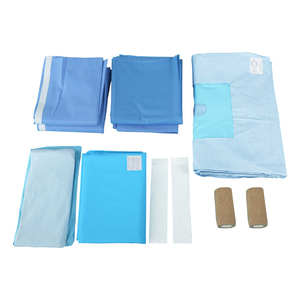
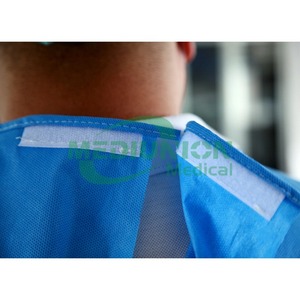
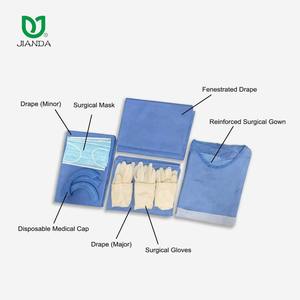
Applied in major facilities like AKH Wien (Vienna General Hospital) and Landeskrankenhaus Graz. Our SMS 45gsm ultrasonic heat-sealed surgical gowns and U-shape shoulder surgical packs provide absolute fluid barrier resistance (EN 13795 standard), preventing intraoperative pathogen transmission during complex orthopedic and general surgical procedures.
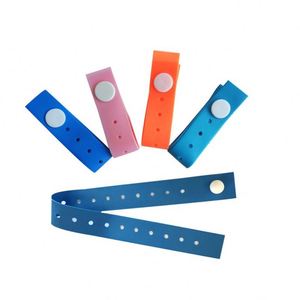
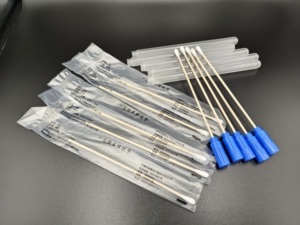
Utilized in Österreichische Gesundheitskasse (ÖGK) health centers and private diagnostic laboratories. Our ergonomic silicon disposable button tourniquets and sterile specimen sampling swabs ensure painless venipuncture, rapid single-hand operation, and high-efficiency pathogen elution for laboratory diagnostics.
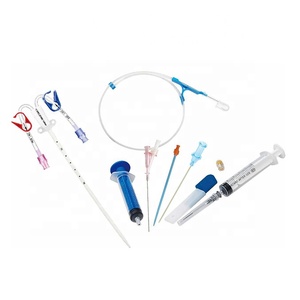
Deployed in specialized nephrology clinics (e.g., Dialysezentrum Wien). Our CE-marked hemodialysis catheter kits feature radiopaque polyurethane tubing with superior kink resistance, providing high laminar blood flow rates and reduced thrombosis risks during long-term renal replacement therapy.
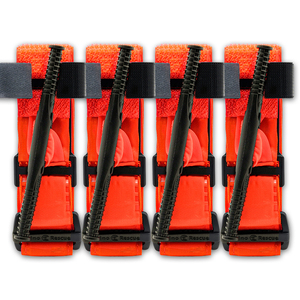
Equipped by emergency organizations such as the ÖSterreichisches Rotes Kreuz (Austrian Red Cross) and Samariterbund. Tactical blood collection tourniquets and basic emergency trauma packs allow rapid hemorrhage control and field stabilization in acute emergency care scenarios.
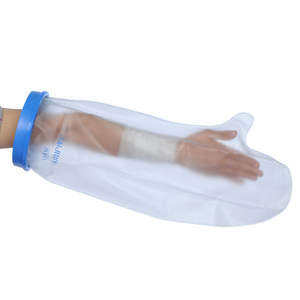
Integrated into inpatient nursing routines. Reusable waterproof arm sleeve protectors keep casts and catheter entry sites completely dry during hydrotherapy and hygiene routines, preventing secondary surgical site infections (SSIs) and speeding up patient rehabilitation.
Critical care units rely on our precision infusion sets, DEHP-free extension lines, and three-way stopcocks. Chemically inert materials protect sensitive oncology patients and neonates from plasticizer leaching while delivering controlled flow dynamics.
To provide actionable Information Gain for procurement directors, our market research highlights four key trends defining the Austrian medical supply sector in 2024 and beyond:
Unlike standard trading operations, Lars Medicare (Lelvbiemedical) controls every phase of the manufacturing life cycle under one unified quality management system. Our integrated facility in Sonepat, India—supported by international sales offices in Delhi and Canada—provides Austrian buyers with distinct operational benefits:
We design, cut, and maintain our own high-cavity injection moulds. This allows us to rapidly prototype custom gauge sizes, tweak catheter bevel geometries, or adjust port configurations based on specific Austrian hospital tender requirements without relying on third-party molders.
All automated assembly, needle siliconization, micro-drip calibration, and primary blister packaging take place inside environmentally monitored ISO Class 8 (Class 100,000) cleanrooms, keeping bioburden and particulate levels far below EU standards.
Our automated Ethylene Oxide (EO) sterilization chambers operate under strict ISO 11135 protocols. We perform rigorous aeration cycles to guarantee zero EO residue, delivering fully sterile, shelf-stable goods validated by biological indicator testing for every batch.
Understanding the structural advantages of direct manufacturer engagement for high-volume Austrian hospital consumables procurement:
| Procurement Metric | Lars Medicare Direct OEM Factory | Standard European Wholesale Importer |
|---|---|---|
| Cost Structure | Factory-direct pricing; zero intermediary markups (Save 25% - 40%) | Multi-tiered markups including broker commissions & warehousing overhead |
| Customization (OEM/Private Label) | Full flexibility: German IFU, custom gauge mix, bespoke packaging & barcodes | Fixed catalogue items only; no custom print or technical modifications |
| EU MDR Technical Audit Support | Direct access to plant QA engineers, raw material CoAs & sterilization validation | Limited documentation support; dependent on third-party supplier chains |
| Material Safety (DEHP/Latex) | 100% verified DEHP-free, phthalate-free compounds with ISO 10993 reports | Varies by batch; risk of unverified plasticizers in low-cost imports |
| Production Scalability | High-capacity automated lines handling million-unit hospital tender volumes | Subject to local warehouse stockouts during sudden regional demand spikes |
| Supply Logistics & Incoterms | Flexible FOB, CIF, or DDP delivery directly to Vienna, Graz, or Linz hubs | Local EXW/CPT terms with additional domestic handling fees |
Answers to common technical, legal, and operational questions asked by Austrian hospital procurement officers, medical device importers, and tender managers:
All single-use medical devices exported to Austria are manufactured in accordance with the European Medical Device Regulation (EU MDR 2017/745). We maintain full technical documentation, CE certificates issued by recognized Notified Bodies, ISO 13485:2016 certification, and EU Declarations of Conformity. Our products are registered under EUDAMED requirements with complete UDI tracking, allowing immediate, compliant distribution and sale across Austria without regulatory friction.
Every shipment dispatched to Austrian ports or logistics hubs (such as Vienna Airport or sea-rail routes via Koper/Rotterdam) includes a complete export documentation dossier: Commercial Invoice, Packing List, Bill of Lading / Airway Bill, Certificate of Origin, Batch-specific Certificate of Analysis (CoA), Sterilization Validation Certificate (EO residual test reports per ISO 11135), and EC Declaration of Conformity.
Yes. Over 60% of our global production is dedicated to OEM and private-label partnerships. We provide full customization, including custom pouch and carton printing with your brand logo, multilingual packaging artwork featuring German (DE) and English (EN) Instructions for Use (IFU), custom barcode formats (GS1 DataMatrix), and bespoke kit configurations for specific hospital tender demands.
Absolutely. To support Austria’s strict "Nachhaltige Beschaffung" (Green Hospital Procurement) directives, our entire infusion, transfusion, and vascular access range can be manufactured using 100% DEHP-free, phthalate-free medical PVC or alternative TPE/TPU materials. Biocompatibility reports adhering to ISO 10993 (cytotoxicity, sensitization, systemic toxicity) are available upon request.
For standard catalogue products in neutral packaging, minimum orders start from one mixed pallet. For full OEM/private-label programs, MOQs are determined per SKU based on artwork printing runs. Repeat orders typically ship within 3 to 4 weeks, while first-time OEM contracts require 5 to 6 weeks to allow final artwork sign-off, precision molding adjustments, and sterilization validation.
We work flexibly with FOB (Nhava Sheva / Mundra ports), CIF (Port of Koper, Slovenia or Hamburg/Rotterdam with rail delivery to Austria), and DDP (Delivered Duty Paid directly to your warehouse in Vienna, Linz, Graz, or Innsbruck). Our logistics team coordinates all export customs clearance and EORI tracking for seamless EU entry.
In accordance with EU Directive 2010/32/EU and Austrian Arbeitnehmerschutzgesetz (AschG), our safety IV cannulas feature an automatic, passive needle-shielding mechanism. Upon withdrawing the stylet, a spring-loaded safety clip automatically encapsulates the sharp tip forever, eliminating user error and preventing accidental needlestick injuries (NSIs) among nursing staff.
Optimize your medical supply chain for the Austrian market with direct factory pricing, guaranteed EU MDR compliance, and custom OEM manufacturing.