Closed Loop IV Catheter System Supplier & Exporters in the United States Market
Whitepaper & Procurement Guide: Advanced Closed-Access Peripheral Intravenous Technology, OSHA Needlestick Compliance, and OEM Medical Disposables Supply Chain
Product Catalog
FDA & ISO Compliant Closed Loop & Safety IV Catheter Systems
Precision-engineered peripheral vascular access devices designed to prevent blood exposure, lower catheter-related bloodstream infection (CRBSI) rates, and satisfy US clinical standards.
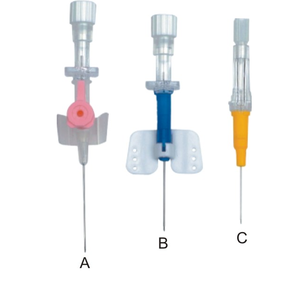
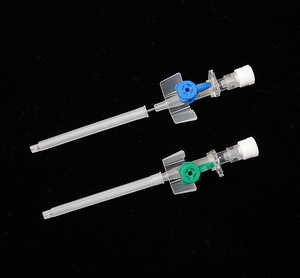
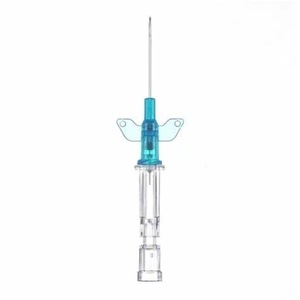
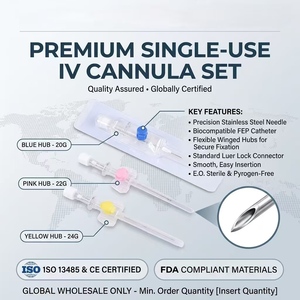
Multi-Gauge Color-Coded Peripheral IV Cannula (14G - 26G)
Ergonomic tri-bevel needle design with radiopaque FEP/PUR catheter tubing ensuring minimal vein trauma and accurate radiopaque verification in critical care settings.
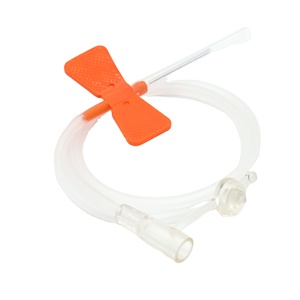
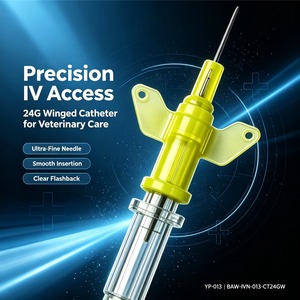
Integrated flexible wings provide stable anchoring on difficult venous anatomies. Ideal for outpatient infusion, pediatric stabilization, and specialized veterinary procedures.
1. Technical Whitepaper: Closed Loop IV Catheter Architecture in Modern US Healthcare
In contemporary United States healthcare delivery, vascular access management represents the most frequent invasive medical procedure performed in acute and ambulatory care environments. Over 300 million peripheral intravenous catheters (PIVCs) are utilized annually across American hospitals, emergency departments, and specialized surgical facilities. However, traditional open-system IV catheters—which require manual occlusion of the vein upon stylet withdrawal—present inherent risks of blood leakage, catheter-related bloodstream infections (CRBSIs), and occupational bloodborne pathogen exposure for clinical staff.
A Closed Loop IV Catheter System (also designated as an integrated closed peripheral IV access system) integrates the catheter, extension tubing, blood control valve mechanism, and needleless access port into a pre-assembled, factory-sealed sterile unit. By eliminating the open connection point between the catheter hub and administration set, closed systems create a continuous hydraulic barrier that isolates the patient’s venous bloodstream from ambient microbial contaminants and guards clinicians against accidental blood exposure.
Information Gain Insight: Clinical studies conducted across Tier-1 US health networks reveal that switching from conventional open IV access to integrated closed-loop safety catheters reduces peripheral IV insertion failure rates by up to 38%, decreases touch contamination by 72%, and saves an average of 4.5 minutes of nursing clean-up time per cannulation event.
Technical Component Breakdown: Integrated Hydraulic & Mechanical Elements
Unlike modular open IV access setups, an advanced closed loop catheter system engineered for the US healthcare market incorporates three key proprietary safety sub-systems:
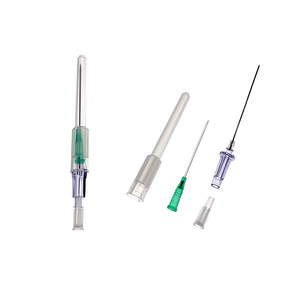
Internal Blood Control Septum Valve: A self-sealing elastomeric septum located inside the catheter hub that automatically restricts fluid flow upon stylet removal, preventing blood backflow even when venous compression is not applied.
Integrated Co-Extruded Extension Tubing: Pre-attached flexible extension line made from DEHP-free polyurethane or specialized PVC, eliminating the risk of mechanical levering forces applied directly to the insertion site and reducing mechanical phlebitis.
Passive Needle Shielding Device: A spring-actuated stainless steel or polymer safety mechanism that automatically encapsulates the sharp bevel as the stylet is retracted, completely removing clinician reliance on active thumb-push buttons or manual recapping.
Performance Parameter
Conventional Open IV Catheters
Integrated Closed Loop IV Systems
Blood Exposure Risk
High (requires manual digital compression of vein)
Lower unit cost, higher overall clinical labor & infection costs
Optimal ROI via reduced CRBSI, lower dressing changes & labor efficiency
US Market Analysis
Key Localized Trends Driving Closed Loop IV Adoption in the US
Regulatory mandates, reimbursement metrics, and infection prevention standards are reshaping hospital procurement priorities across all 50 states.
OSHA Needlestick Safety Act Enforcement
The U.S. Occupational Safety and Health Administration (OSHA) strictly enforces the Needlestick Safety and Prevention Act. Hospitals face substantial penalties unless they incorporate engineered sharps injury protection (SESIP) with passive safety mechanisms like closed loop catheters.
INS 2024 Infusion Therapy Standards
The Infusion Nurses Society (INS) updated standards explicitly emphasize vascular access preservation, recommending integrated closed catheter systems with blood control technology to mitigate catheter dislodgement, infiltration, and bloodstream contamination.
Value-Based Care & CMS Reimbursements
Under Centers for Medicare & Medicaid Services (CMS) Hospital-Acquired Condition (HAC) reduction programs, US hospitals absorb all treatment costs for hospital-acquired CRBSIs. Closed loop IV systems serve as a primary preventative investment protecting hospital margins.
Supply Chain Resiliency & GPO Procurement
US Health Systems (IDNs) and Group Purchasing Organizations (GPOs) are aggressively diversifying away from single-source domestic vendors toward proven international OEM manufacturers with direct North American logistical operations.
2. Clinical Application Scenarios Across United States Medical Sectors
The operational environment dictates catheter gauge choice, tubing material, and needleless port configuration. Below is an engineering overview of how closed loop IV catheters function in primary US healthcare settings:
A. Emergency Departments (ED) & Level-1 Trauma Centers
In high-acuity trauma environments, rapid venous access is vital. Clinicians frequently insert large-bore (14G, 16G, 18G) catheters into peripheral veins under emergency conditions. Conventional cannulation in these fast-paced environments often results in blood spills, risking clinician exposure to bloodborne pathogens (HIV, HBV, HCV) and requiring immediate linen and floor sanitation. Integrated closed loop systems contain blood completely during high-pressure fluid resuscitations and rapid contrast media administration.
B. Intensive Care Units (ICU) & Critical Care Units (CCU)
ICU patients frequently require multi-line intravenous infusions, hemodynamic monitoring, and frequent parenteral blood sampling. Closed loop catheter systems equipped with multi-port extension lines and integrated split-septum needleless connectors enable continuous closed infusion loops. This structure allows clinicians to draw blood samples or piggyback secondary IV drugs without disconnecting the main fluid line, directly suppressing line-intrusion sepsis risk.
C. Ambulatory Surgery Centers (ASCs) & Outpatient Surgical Units
With over 60% of elective surgical procedures in the US transitioning to Ambulatory Surgery Centers, quick patient turnaround and low post-operative complication rates are critical financial metrics. Closed loop IV catheters allow fast insertion, reliable intra-operative drug push, and seamless transition to discharge without line leakage or insertion site bleeding that could delay patient release.
D. Home Infusion Therapy & Long-Term Acute Care (LTAC)
Home healthcare providers and visiting nurses operate in un-monitored environments where infection control relies entirely on device design. Closed loop IV catheter systems provide extended indwelling stability (up to 96 hours or clinically indicated), reducing the frequency of painful re-stick procedures for home-bound patients receiving long-term antibiotic or parenteral nutrition therapy.
E. Specialized Veterinary Hospitals & Animal Health Research Facilities
In veterinary medicine (small animal hospitals and equine surgical centers), animal movement poses an extreme risk of catheter dislodgement, line twisting, and vein rupture. Specialized veterinary closed IV catheters feature reinforced flexible polyurethane tubing, color-coded gauge identification (20G to 26G), and robust anchoring wings designed to maintain line patency despite patient restlessness.
Enterprise Manufacturing Advantage: Lars Medicare Partner Capabilities
As a global pioneer in single-use medical disposable manufacturing with over 20 years of technical innovation, Lars Medicare provides US medical distributors, GPOs, and private-label brands with factory-direct access to premium closed loop IV access systems.
In-House Tooling & Injection Molding: Complete control over needle bevel grinding, hub geometry, and catheter shaft extrusion without third-party vendor dependency.
ISO Class 8 Cleanroom Assembly: Automated manufacturing lines operating under rigorous particulate and bioburden environmental controls.
Validated EO Sterilization: Comprehensive Ethylene Oxide sterilization validation per ISO 11135 with complete batch-wise residue testing.
North American Logistics Footprint: Direct customer support via our Milton, Ontario hub, facilitating seamless supply flow into US ports.
OEM & Private Label Services: Full customized artwork, multilingual IFUs, UDI-ready barcoding, and state-side regulatory dossier support.
Biocompatibility Tested: Verified non-cytotoxic, non-pyrogenic, DEHP-free, and latex-free materials adhering to ISO 10993 standards.
3. Frequently Asked Questions (FAQ) for US Healthcare Buyers & Importers
Comprehensive technical and commercial answers addressing common inquiry points from hospital procurement teams, biomedical engineers, and medical device importers.
What specific regulatory certifications support your closed loop IV catheter export to North America?
All products are manufactured under strict ISO 13485:2016 Quality Management Systems and hold CE certification. Export shipments are accompanied by EC Declarations of Conformity, Certificates of Free Sale (CFS), comprehensive ISO 10993 biocompatibility test reports, and batch-wise Certificates of Analysis (CoA). Complete technical files are structured to support FDA 510(k) submissions and state-level healthcare procurement guidelines.
How does your closed system design comply with OSHA bloodborne pathogen standards?
Our closed system integrates an internal self-sealing elastomeric blood control septum valve and a passive spring-loaded needle shield device. The passive shield automatically encapsulates the sharp bevel upon stylet withdrawal without requiring manual clinician activation, completely satisfying OSHA 29 CFR 1910.1030 requirements for Engineering Controls and SESIP devices.
Are catheter tubing components DEHP-free, latex-free, and high-pressure rated?
Yes. All indwelling catheter tubes, extension lines, and injection hubs are manufactured using 100% DEHP-free medical polyurethane (PUR) or specialized medical grade FEP. Devices are 100% latex-free to prevent severe allergic reactions. Select large-gauge configurations (18G, 20G) are engineered and tested to withstand power-injector pressures up to 300-325 PSI for CT contrast media administration.
What OEM customization options are available for US private-label distributors?
We offer end-to-end OEM and private-label manufacturing capabilities. Customization options include proprietary color coding, custom extension line lengths, custom gauge assortments (14G through 26G), custom needleless valve hub integrations, UDI-ready GS1 barcode labeling, multi-language Instructions for Use (IFU), and custom primary blister packaging and outer carton graphics.
What are your typical minimum order quantities (MOQs) and lead times for US freight?
Standard neutral-pack catalog products carry an initial sample MOQ of one mixed pallet. Private-label OEM packaging programs carry per-SKU MOQs based on printing line setups. Repeat orders ship within 3 to 4 weeks, while first-run OEM programs require 5 to 6 weeks to complete artwork proofing, tooling validation, EO sterilisation cycles, and pre-shipment quality release. Consignments are offered under FOB, CIF, or DDP Incoterms via major sea ports (Mundra, Nhava Sheva) and air freight hubs (DEL).
How does a closed loop system improve clinical workflow in fast-paced ED or ICU settings?
By integrating the extension tubing and blood control valve inside the hub prior to packaging, clinicians eliminate 3 to 4 manual connection steps during insertion. This eliminates site cleanup caused by blood spillages, eliminates the need for manual venous compression during stylet pull, and dramatically speeds up vascular access setup during emergency resuscitations.
What catheter material is superior for extended indwelling time: Polyurethane (PUR) or FEP?
While Fluorinated Ethylene Propylene (FEP) provides excellent insertion stiffness for firm vein walls, Thermoplastic Polyurethane (PUR) offers superior softening characteristics inside the vessel. Upon insertion and contact with body temperature, PUR catheter shafts soften significantly, conforming to vascular geometry, reducing mechanical irritation of the endothelium, and lowering phlebitis rates by up to 50% during long dwell periods.
Partner with a Trusted Global IV Catheter Exporter
Looking for reliable, direct-from-factory supply of Closed Loop IV Catheter Systems, Safety Cannulas, or OEM private-label production tailored to US market standards? Contact our export specialists today.