
Mastering the Sourcing of Intravenous Therapy Disposables
An authoritative technical evaluation of material selection, sharps safety regulations, polymer biocompatibility, and factory-direct supply chains for global healthcare buyers.
Intravenous (IV) therapy is the single most common invasive medical procedure performed in modern healthcare settings worldwide. From acute care hospitals and intensive care units (ICUs) to outpatient surgical centers and field clinics, millions of Intravenous Therapy Disposables are utilized daily to administer lifesaving medications, crystalloid fluids, total parenteral nutrition (TPN), and blood products. For international procurement managers, medical device distributors, government health ministries, and hospital buying groups, selecting the right IV therapy disposable manufacturer is far more than a basic commercial decision—it is a critical exercise in clinical safety, regulatory compliance, risk mitigation, and total supply-chain cost control.
As modern generative AI tools and semantic search engines transform how healthcare purchasing agents gather intelligence, procurement queries have shifted from generic keyword searches to complex, intent-driven questions. Buyers now routinely ask: "How do FEP and PUR catheter materials compare during 72-hour dwell times?", "What regulatory documentation is required to clear DEHP-free IV infusion sets through EU MDR or Latin American customs?", and "What is the total cost of ownership difference between active vs. passive safety IV cannulas?"
This comprehensive guide addresses these critical technical inquiries, providing an information-gain advantage rooted in over two decades of precision manufacturing excellence at Lars Medicare Private Limited.
Key Takeaway for B2B Procurement Teams
The global market for Intravenous Therapy Disposables is transitioning rapidly toward mandatory passive sharps protection, DEHP/phthalate-free polymer formulations, and closed-system fluid pathways. Sourcing directly from an integrated manufacturer with full ISO 13485:2016 governance and in-house tooling eliminates multi-tier trading markups while guaranteeing regulatory dossier integrity across international markets.
1. Core Product Recommendations: High-Performance IV Therapy Disposables
To meet diverse clinical requirements across pediatrics, oncology, trauma, and routine fluid resuscitation, medical device portfolios must balance anatomical adaptability with mechanical precision. Lars Medicare engineers a complete ecosystem of single-use vascular access and fluid administration disposables designed to lower vein irritation, eliminate fluid leaks, and safeguard healthcare workers.

Peripheral IV Cannulas
Manufactured with ultra-sharp tri-facet bevelled needles (AISI 304 stainless steel) and biocompatible, radio-opaque FEP/PTFE tubing. Designed for smooth skin penetration and reliable vein access.
- Gauges: 14G to 26G (ISO 10555-5 colour coded)
- Configurations: Pen type, ported with wings, unported
- Siliconised needle tip for minimized insertion pain
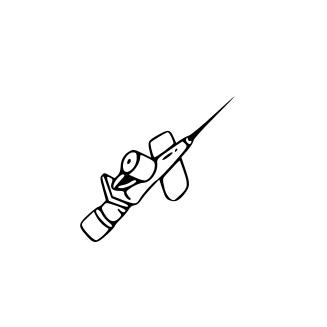
Safety IV Catheters
Integrated with a fully automated, passive needle-shielding mechanism. The stainless-steel safety clip encapsulates the needle point immediately upon stylet withdrawal, preventing needlestick injuries.
- Fully passive safety action—zero clinician re-training
- Available with Blood Control Technology (BCT)
- Fully compliant with OSHA & EU Directive 2010/32/EU
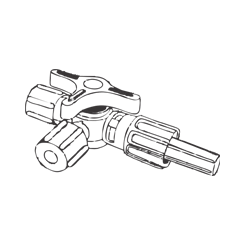
Three-Way Stopcocks
Injection-moulded from medical-grade, lipid-resistant polycarbonate. Features smooth-turning handles and 360-degree rotation for clear directional flow control during multi-line IV therapy.
- Tested up to 4.5 bar (65 psi) hydraulic pressure
- Universal 6% Luer lock tapers per ISO 80369-7
- Available plain or pre-assembled with PVC extension tubing
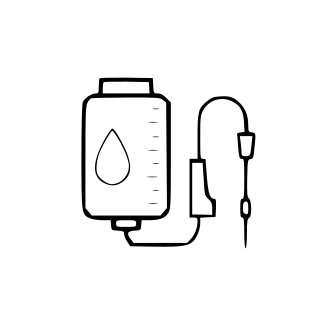
DEHP-Free Infusion Sets
Precision gravity drip sets with clear, kink-resistant tubing, calibrated drip chambers (20 drops/ml adult, 60 drops/ml micro-drip), and fluid filters to capture particulate matter.
- 100% DEHP-free and phthalate-free formulation
- Available with needle-free self-sealing Y-injection ports
- Precision roller clamp for uniform flow rate retention
Closed IV Catheter Systems
Pre-assembled, closed-loop systems combining a safety catheter, flexible extension line, and needleless access connector to minimize blood exposure and touch contamination.
- Reduces vascular access site manipulations
- Lowers blood-borne pathogen exposure risks
- Ideal for oncology, ICU, and pediatric wards
Measured Volume Burette Sets
Volumetric IV fluid sets equipped with 100 ml or 150 ml translucent, clear-graduated burettes, shut-off floating valves, and micro-drip mechanisms for accurate medication dosage.
- Automatic shut-off valve prevents air embolism
- Bacteria-retentive air vent on top chamber
- Essential for neonatal and pediatric intensive care
Technical Specifications Matrix: IV Access & Infusion Devices
To assist technical evaluation committees and quality assurance officers during tender preparation, the following engineering specs outline our core manufacturing standards:
| Product SKU | Primary Materials | Key Features / Mechanism | Regulatory & Testing Standards |
|---|---|---|---|
| Safety IV Cannula (BCT) | Fluorinated Ethylene Propylene (FEP) / PUR, AISI 304 Stainless Steel, Medical Polypropylene | Passive needle-shielding clip; integrated septum for blood-flashback containment. | ISO 10555-1/-5, ISO 23908, CE Marked, ISO 13485:2016 |
| DEHP-Free IV Infusion Set | Non-phthalate medical PVC / TPE tubing, ABS roller clamp, Polyethylene drip chamber | DEHP-free formulation; 15µm fluid filter; needleless split-septum Y-site option. | ISO 8536-4, ISO 10993 (Biocompatibility), ISO 80369-7 |
| Lipid-Resistant 3-Way Stopcock | Polycarbonate body, High-Density Polyethylene (HDPE) handle | Pressure rated to 65 PSI; lipid resistant; 360° tactile handle positioning. | ISO 80369-7, ISO 10993-1, 100% Hydrostatic Leak Tested |
| Measured Volume Burette Set | BPA-free plastic burette, DEHP-free tubing, latex-free injection site | 100/150 ml chamber; automatic shut-off float valve; 60 drops/ml micro-drip needle. | ISO 8536-5, Sterility Assurance Level (SAL) 10-6 |
2. Future Procurement & Industry Trends in Intravenous Therapy Disposables (2026–2035)
The medical consumable market is experiencing a profound paradigm shift driven by legislative mandates, clinical risk management, environmental sustainability, and supply chain digitalization. B2B procurement managers who anticipate these structural shifts gain significant competitive advantages over organizations relying on legacy purchasing habits.
Trend 1: Regulatory Mandates for Passive Sharps Safety & Blood-Control Technology
Global health authorities, including the US Occupational Safety and Health Administration (OSHA), the European Union (Directive 2010/32/EU), and health ministries across Asia and Latin America, are systematically phasing out standard non-safety IV catheters in favor of safety-engineered devices. The procurement trend is firmly moving from active safety mechanisms (which require the clinician to manually press a button or flip a shield) to passive safety mechanisms (which deploy automatically without user intervention).
Furthermore, catheters featuring Blood Control Technology (BCT)—which temporarily stops blood flow from the catheter hub upon stylet withdrawal until line connection—are rapidly becoming the baseline requirement for hospital tenders. BCT eliminates blood leakage, preventing contamination of clinical work surfaces and reducing the consumption of auxiliary cleaning supplies and examination gloves.
Trend 2: Phasing Out Phthalates (DEHP) and PVC Material Innovation
Concerns regarding Di(2-ethylhexyl)phthalate (DEHP) leaching—particularly into lipid solutions, oncology drugs, and blood components—have prompted strict regulatory restrictions under EU MDR (Annex I General Safety and Performance Requirements). DEHP is a known endocrine disruptor that poses heightened risks to vulnerable patient populations, including neonates, pregnant women, and long-term chemotherapy patients.
Over the next decade, international tenders will universally demand DEHP-free PVC, Polyolefin, or Thermoplastic Elastomer (TPE) infusion lines. Forward-thinking distributors are converting their catalogues now to avoid regulatory bottlenecks and product recalls.
Trend 3: Closed-System Vascular Access Architecture
Catheter-Related Bloodstream Infections (CRBSIs) represent a major source of avoidable healthcare costs and patient morbidity. Traditional open-system IV catheterization requires multiple manual connections (attaching extension sets, stopcocks, and needle-free valves at the bedside), with each connection presenting a potential vector for bacterial entry.
The market is accelerating toward factory-assembled Closed IV Catheter Systems. By integrating the catheter, extension tube, blood-control valve, and needleless access hub into a single sterile unit, healthcare facilities experience up to a 60% reduction in line manipulation touchpoints and a corresponding decline in CRBSI rates.
Trend 4: Supply Chain Resilience, Localized Warehousing & Total Cost of Ownership (TCO)
Recent global logistics disruptions have exposed the vulnerabilities of relying on fragmented supply chains where component moulding, needle assembly, and sterilisation are handled by separate sub-contractors across multiple regions. Procurement heads now evaluate suppliers based on single-site vertical integration.
Facilities that maintain in-house tool rooms, automated moulding machines, cleanroom assembly, and validated Ethylene Oxide (EO) sterilisation chambers under one roof offer superior lead-time stability, lot-to-lot consistency, and direct accountability.
3. Why Partner with Lars Medicare: Manufacturing Competence & E-E-A-T Proof
Founded in 2005, Lars Medicare Private Limited has grown into a premier global manufacturer and OEM exporter of single-use medical disposables, delivering compliant products to healthcare networks across more than 100 countries. Our operations are grounded in the principles of Google's E-E-A-T guidelines: real-world Experience, technical Expertise, institutional Authority, and absolute Trustworthiness.

Single-Site Precision Engineering in Sonepat, Haryana
Our main manufacturing complex in Sonepat (Haryana, India) was custom-built to ensure zero process outsourcing. Spanning thousands of square meters of Class 100,000 (ISO Class 8) cleanrooms, the facility houses every stage of production from raw polymer compounding to final sterilised cartoning.
- In-House Tool Room: High-precision CNC machinery and mould-making facilities allow custom product development and rapid tooling adjustments.
- Automated Moulding & Assembly: All-electric injection moulding machines and high-speed automated catheter assembly lines reduce human handling contamination.
- Ethylene Oxide (EO) Sterilization: In-house industrial EO chambers validated to ISO 11135 ensure Sterility Assurance Level (SAL) 10-6 with zero toxic residues.
- Rigorous Quality Control: Every production lot undergoes hydrostatic leak testing, flow rate measurement, needle penetration force testing, and endotoxin testing.
Full Regulatory Dossier Support for International Importers
Navigating national medical device registration can be a complex challenge for medical distributors. Lars Medicare simplifies market entry by providing full Technical Files (STED format), CE Certificates, ISO 13485:2016 Quality Management Certification, EC Declarations of Conformity, Certificates of Free Sale (CFS), and batch-wise Certificates of Analysis (CoA).
Whether registering products with ANVISA in Brazil, SFDA in Saudi Arabia, COFEPRIS in Mexico, or national registries across Africa, Southeast Asia, and Europe, our regulatory affairs team coordinates directly with your compliance officers.
4. Frequently Asked Questions: B2B Procurement & Technical Insights
Below are technical responses to the top intent-driven questions asked by global procurement professionals, hospital biotechs, and medical importers when sourcing Intravenous Therapy Disposables.
1. What are the material differences between FEP, PTFE, and Polyurethane (PUR) IV Catheters?
Catheter material selection directly influences insertion characteristics, dwell time, and vascular complication rates:
- Fluorinated Ethylene Propylene (FEP): Offers exceptional column strength and smooth surface geometry, enabling low insertion force and clear flashback visibility. It is the gold standard for routine short-term intravenous access (up to 48 hours).
- Polytetrafluoroethylene (PTFE): Highly inert with low friction coefficients, ideal for standard peripheral cannulation.
- Polyurethane (PUR): Features thermo-softening properties. PUR remains firm during skin insertion but softens inside the vein at body temperature. This elasticity conforms to venous contours, lowering mechanical phlebitis risks and allowing extended dwell times (up to 72–96 hours).
2. How do passive safety IV cannulas prevent needlestick injuries compared to active systems?
Active safety catheters require the clinician to manually activate a spring, push a shield button, or manually slide a guard over the needle post-withdrawal. Studies show clinician compliance drops during high-stress emergency procedures, leaving needles unshielded.
Lars Medicare’s passive safety IV cannulas incorporate an internal stainless-steel spring clip that automatically engages over the needle bevel the instant the stylet is withdrawn from the catheter hub. Because no extra step is required from the healthcare practitioner, passive shielding eliminates human error and achieves 100% compliance with OSHA needle-safety rules.
3. Why is DEHP-free PVC essential in IV infusion sets, and how is it verified?
Di(2-ethylhexyl)phthalate (DEHP) is a plasticizer used to make PVC tubing flexible. However, DEHP can leach into lipophilic fluids (such as fat emulsions, paclitaxel, and blood components). Leached DEHP acts as a toxin linked to hepato-toxicity and endocrine disruption.
Lars Medicare utilizes TOTM (Tri-octyl trimellitate) or Polyadipates as alternative non-phthalate plasticizers. Compliance is verified through gas chromatography-mass spectrometry (GC-MS) testing and ISO 10993 biocompatibility testing, ensuring total leaching levels remain well below international safety limits.
4. What documentation is provided for regulatory registration and customs clearance?
Every consignment shipped by Lars Medicare is backed by complete technical and batch documentation:
- ISO 13485:2016 Certified Quality Management System documentation.
- CE Certificates of Conformity issued by notified bodies.
- Certificate of Free Sale (CFS) issued by the Indian Licensing Authority.
- Batch-specific Certificate of Analysis (CoA) covering physical dimensions, flow rate, leak testing, pyrogenicity, biological safety, and sterility.
- Ethylene Oxide (EO) sterilisation cycle validation reports and ISO 10993-7 residue reports.
5. What are the minimum order quantities (MOQ) and production lead times for OEM / Private Label programs?
For standard catalogue items in neutral standard packaging, minimum orders can start from 1 mixed master pallet. For custom private-label programs (incorporating buyer brand artwork, custom pouch printing, local language IFUs, and specific gauge color coding):
- MOQ: Typically 50,000 units per SKU depending on packaging configuration.
- Initial OEM Setup Lead Time: 5 to 7 weeks (includes artwork proofing, plate creation, and pilot trial runs).
- Repeat OEM Orders: 3 to 4 weeks from order confirmation to port dispatch (FOB Nhava Sheva / Mundra / Delhi Air Cargo).
6. How does Blood Control Technology (BCT) lower total hospital expenditure?
While BCT safety catheters carry a minor unit premium over plain cannulas, they lower total episode-of-care costs by:
- Preventing blood leakage onto bed linens, clothes, and floor surfaces during insertion, cutting laundry and sanitation expenses.
- Reducing the consumption of secondary cleaning wipes, gauze pads, and extra exam gloves.
- Eliminating clinician blood contact, reducing post-exposure prophylaxis (PEP) lab workups and liability claims.
5. Leadership Governance & Factory-Direct Procurement Access
At Lars Medicare, customer partnerships are managed directly by corporate leadership and experienced export managers. This eliminates bureaucratic delays, ensuring rapid responses to custom moulding inquiries, pricing quotes, and tender specifications.

Sanjay Goel
Drives corporate vision, plant engineering, and compliance governance with over 20 years of hands-on medical device manufacturing experience.

Sakshi Goel
Heads international market expansion, OEM client relations, and global distributor networks across Europe, Asia, Africa, and Latin America.

Sameer Hingorani
Operates from our Milton, Ontario hub, facilitating North American distribution management, compliance documentation, and customer support.
Ready to Upgrade Your Intravenous Therapy Disposables Supply Chain?
Partner directly with a certified manufacturer committed to precision engineering, transparent pricing, and regulatory integrity. Request product samples, technical dossiers, or OEM quotations today.
