MEDICA 2026 | 16–19 November 2026 | Hall 6, Stall F37 | Düsseldorf, Germany
In the evolving landscape of global personal protective equipment (PPE) and medical-grade infection control, selecting an authoritative, certified OEM/ODM Nitrile Gloves Factory & Exporter is paramount for medical distributors, industrial safety importers, and government healthcare procurement units. Nitrile butadiene rubber (NBR)—a synthetic copolymer of acrylonitrile and butadiene—has established itself as the gold standard across healthcare, laboratory, cleanroom, automotive, and food processing industries due to its exceptional puncture resistance, chemical impermeability, and non-allergenic, latex-free profile.
This technical document serves as a comprehensive buyer’s whitepaper. It outlines our advanced compounding technologies, rigorous quality control protocols (AQL 1.0/1.5/2.5), regulatory compliance dossiers (CE, ISO 13485:2016, EN 455, ASTM D6319, EN ISO 374), and customized private-label manufacturing capabilities designed to optimize total cost of ownership (TCO) for international trade partners.
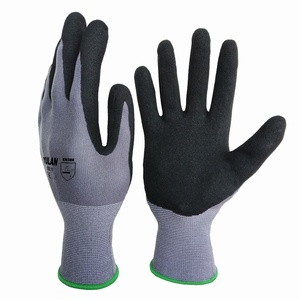
Explore our certified range of medical exam, industrial heavy-duty, and coated work gloves engineered for maximum tactile sensitivity, barrier integrity, and mechanical endurance.
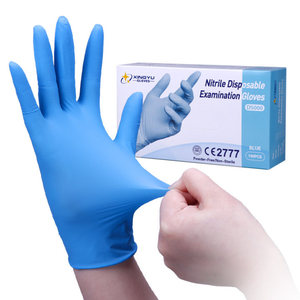
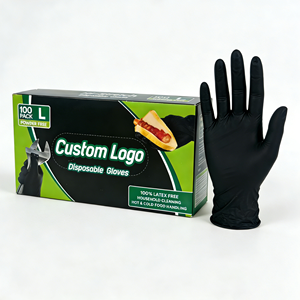
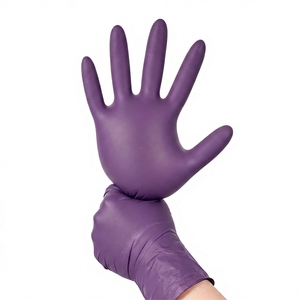
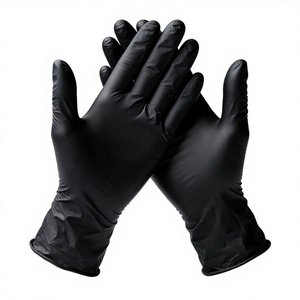
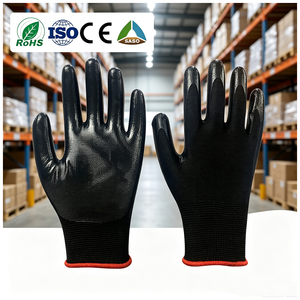
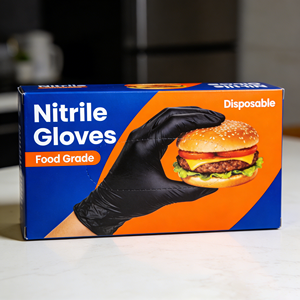
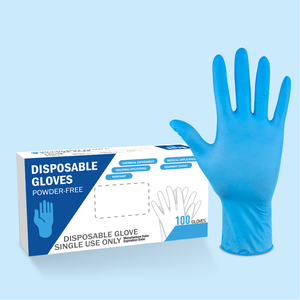
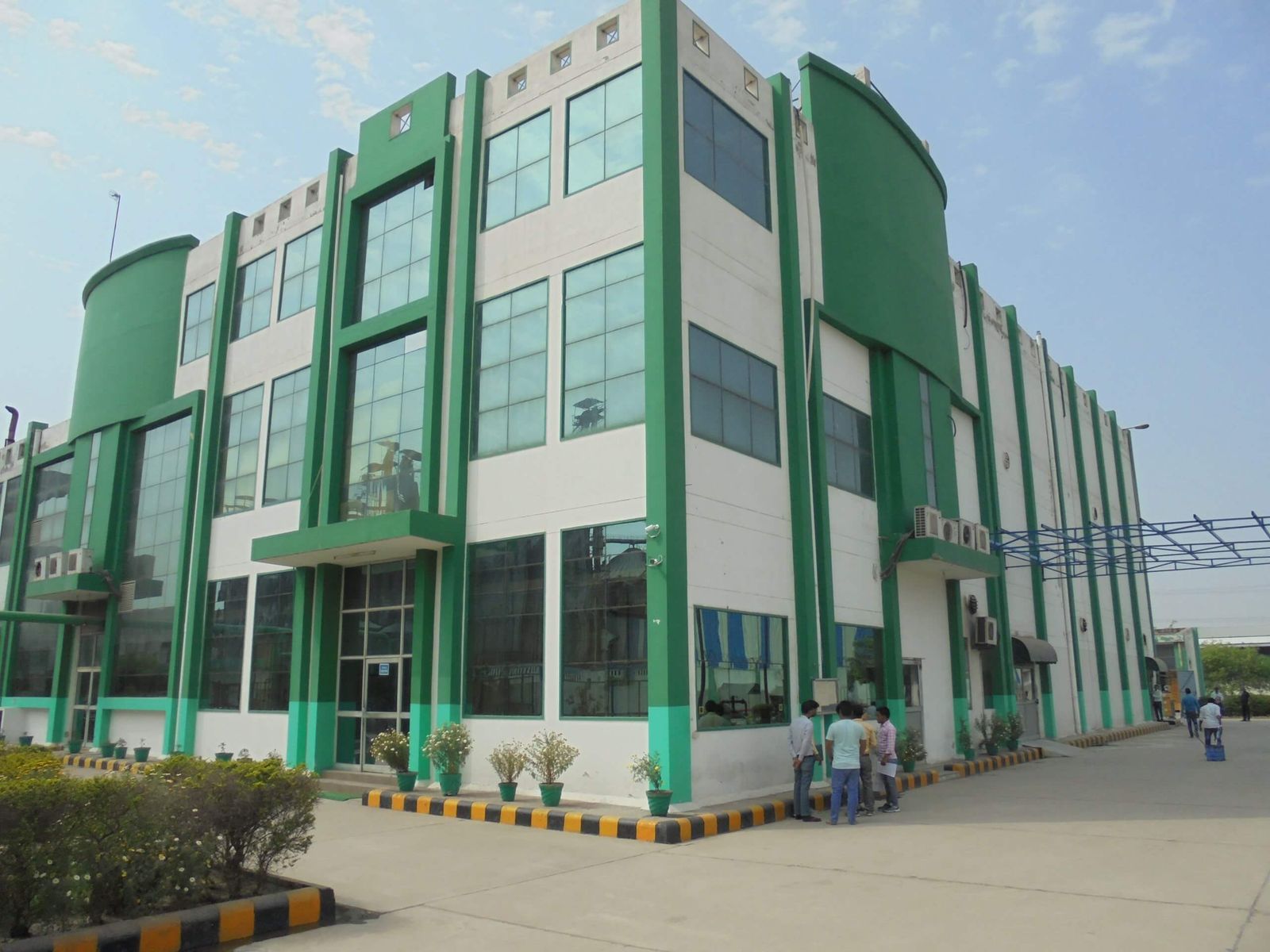
Unlike trading companies or virtual suppliers, our production ecosystem integrates every critical phase under a single quality control envelope. From synthetic NBR compounding and automatic dipping lines to online chlorination, double leaching, and clean-room packaging, we maintain 100% batch traceability.
Our in-house tool room and R&D laboratories allow us to adjust polymer cross-linking density, polymer color swatches, tactile surface patterns, and packaging artwork without depending on external sub-contractors—guaranteeing rapid lead times and strict adherence to technical tenders.
Delivering high-capacity production, uncompromising quality assurance, and tailor-made private-label solutions for worldwide brands.
Fully compliant with EU MDR 2017/745 Class I, US FDA 510(k), EN 455 (Parts 1-4), ASTM D6319, and EN ISO 374 chemical permeation standards. Every shipment is accompanied by a Certificate of Analysis (CoA) and EC Declaration of Conformity.
Complete customization services including customized inner box branding, barcode/UDI generation, multilingual Instructions for Use (IFU), master carton packaging, and customized gauge/weight specifications (from 2.2 mil ultra-light to 8.0 mil heavy-duty).
Seamless export handling with FOB, CIF, and DDP Incoterms via major sea ports and air cargo hubs. Direct container loading from our manufacturing base ensures optimal freight rates and zero third-party handling risks.
The global nitrile glove industry is undergoing a structural transition driven by material science innovations, ergonomic engineering, and environmental mandates. As a leading OEM/ODM factory, our research and development division focuses on four core technological vectors:
Traditional nitrile dipping processes utilize chemical vulcanization accelerators such as dithiocarbamates, thiurams, and thiazoles. While effective at cross-linking, these chemical residuals are the primary trigger for Type IV delayed hypersensitivity (allergic contact dermatitis) among medical practitioners. Our modern production lines utilize advanced self-cross-linking NBR polymers that completely eliminate sulphur and chemical accelerators, delivering a biocompatible glove that minimizes skin irritation while maintaining high tensile strength.
Historically, achieving high barrier protection required thick glove walls (5.0 mil+), which compromised tactile sensitivity and caused hand fatigue during prolonged surgical or diagnostic procedures. Through precise molecular weight control during polymer formulation, our factory now produces ultra-thin 2.2 mil to 3.0 mil medical exam gloves that achieve tensile strengths exceeding 20 MPa and elongation rates above 500%. This offers surgeons and healthcare professionals "second-skin" tactile dexterity without sacrificing biohazard protection.
With billions of disposable gloves entering landfills annually, sustainable procurement has become an essential criterion for government tenders and corporate ESG initiatives. Our factory has pioneered the integration of organic biodegradation additives into the NBR compound. Tested under ASTM D5511 standards, these bio-nitrile gloves decompose in anaerobic landfill environments up to 90% faster than standard synthetic nitrile, breaking down into organic biogases and soil nutrients without leaving microplastic residues.
Different industrial environments demand specialized surface mechanics. We have developed proprietary dipping molds that yield multi-axis raised diamond grip patterns for heavy-duty mechanics handling heavy engine oils, micro-foamed NBR coatings for cut-resistant safety gloves, and low-friction halogenated interior finishes for rapid double-donning in sterile surgical suites.
Strategic insights for procurement directors, hospital purchasing agents, and regional importers looking to build resilient supply chains.
Global buyers are moving away from single-country reliance, establishing dual-sourcing contracts with flexible OEM factories capable of rapid capacity expansion during health emergencies.
Purchasing units now evaluate Total Cost of Ownership rather than lowest unit price. Gloves with lower pinhole rates (AQL 1.0 vs 2.5) reduce expensive clinical cross-contamination incidents.
Customs authorities in North America and Europe are tightening verification of UDI labeling, PFAS-free material compliance, and ethical labor auditing (BSCI / Sedex SMETA compliance).
Hospitals are demanding 2D DataMatrix and GS1 UDI barcoding on individual inner boxes to automate stock tracking, serial verification, and automated re-ordering through hospital ERPs.
At our manufacturing plant, quality assurance is integrated into every stage of the production cycle rather than performed as a final inspection. We perform continuous 100% online air-inflation pinhole testing, followed by statistical water-tightness sampling according to ISO 2859-1 standards.
Our in-house quality control laboratory conducts regular batch testing for physical dimensions, tensile strength before and after accelerated thermal aging (7 days at 70°C as per ISO 188), residual powder limits (< 2mg per glove as per EN 455-3), and chemical permeation resistance against aggressive solvents and chemotherapy agents.

Direct technical answers to common questions raised by B2B buyers, medical importers, and tender coordinators.
Acceptable Quality Limit (AQL) defines the maximum allowable number of defective gloves (specifically pinhole leaks) per sample batch during statistical inspection under ISO 2859-1. An AQL 1.0 rating represents high-grade surgical/critical barrier protection with strict defect thresholds. AQL 1.5 is the standard requirement for medical examination gloves across Europe and North America (EN 455 / ASTM D6319). AQL 2.5 or 4.0 is generally reserved for general-purpose industrial, janitorial, or food handling applications. Our factory operates automated pinhole detection lines capable of meeting AQL 1.0 for medical tenders.
Every export consignment is shipped with a comprehensive documentation pack, including: ISO 13485:2016 Quality Management Certification, CE Certificate under EU MDR 2017/745, EC Declaration of Conformity, Batch-wise Certificate of Analysis (CoA), EN 455 Parts 1-4 test reports, ASTM D6319 physical property test data, EN ISO 374 chemical permeation matrix, Certificate of Free Sale (CFS), and ISO 10993 biocompatibility test records.
Yes. We specialize in complete OEM/ODM private-label manufacturing. Buyers can specify glove weight (e.g., 3.0g, 3.5g, 4.0g, 5.0g, 6.0g per piece), palm/finger thickness (from 2.2 mil to 8.0 mil), surface textures (smooth, textured fingertips, full diamond grip), custom color swatches (blue, black, purple, pink, green, white), customized inner dispenser boxes, multilingual IFU artwork, GS1 UDI barcoding, and heavy-duty corrugated master cartons.
For standard neutral-pack items or stock catalogue configurations, minimum order quantities can start at 100 master cartons (or mixed pallets). For full custom OEM private-label programs with printed dispenser boxes, the typical MOQ is 500 to 1,000 master cartons per SKU (depending on box printing runs). Repeat production orders ship within 3 to 4 weeks, while initial OEM setups take approximately 4 to 6 weeks to allow for packaging proof approvals and regulatory alignment.
Synthetic Nitrile (NBR) offers significantly higher resistance to petroleum-based oils, fuels, grease, acids, and chemical solvents compared to Natural Rubber Latex (NR) and Polyvinyl Chloride (PVC/Vinyl). Unlike latex, nitrile contains zero natural rubber proteins, eliminating the risk of Type I latex allergies. Compared to vinyl gloves—which have weak tensile strength, low elongation, and susceptible pinhole rates—nitrile provides superior puncture resistance (up to 3x higher than latex) and elastic memory.
Yes. Specialized medical exam lines in our purple and blue formulations are tested against ASTM F739 and ASTM D6978 standards for resistance to permeation by chemotherapy drugs (including Carmustine, Cyclophosphamide, Doxorubicin, Fluorouracil, Paclitaxel, and Thiotepa). For food industry applications, our gloves comply with EU Regulation 10/2011 and US FDA 21 CFR 177.2600 for repeated direct contact with fatty, aqueous, and dry foodstuffs.
Nitrile gloves should be stored in their original unopened packaging in a cool, dry, and well-ventilated area at temperatures between 10°C and 30°C (50°F to 86°F). Cartons must be kept away from direct sunlight, UV light sources, fluorescent lighting, ozone generators, moisture, and intense heat. Adhering to these storage guidelines ensures that physical properties (tensile strength and elongation) remain stable throughout the validated 5-year shelf life.
We regularly work with FOB, CFR, CIF, and DDP terms. Goods are loaded directly at our factory into 20FT (approx. 900-1,000 master cartons) or 40FT HQ containers (approx. 2,200-2,400 master cartons) for direct vessel loading. Payment terms typically include Telegraphic Transfer (T/T) or Confirmed Irrevocable Letter of Credit (L/C at sight).
