
MEDICA 2026 | 16–19 November 2026 | Hall 6, Stall F37 | Düsseldorf, Germany
Explore our primary range of single-use medical devices and surgical disposables. Manufactured under strict ISO Class 8 cleanroom conditions, fully tested for biocompatibility, sterility assurance, and international regulatory compliance.
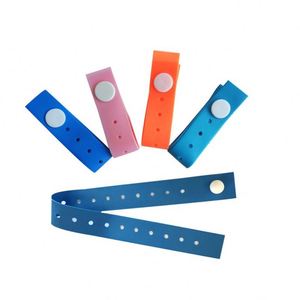
2.5*36cm / 2*30cm EOS Class I sterile medical silicone tourniquet engineered with quick-release button mechanisms to prevent cross-contamination during venipuncture.
Get Catalog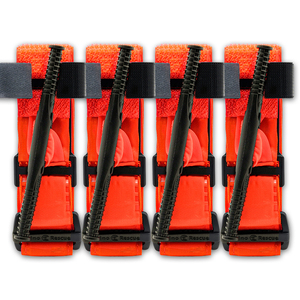
High-tensile medical grade tactical arterial tourniquet designed for fast one-handed application in emergency trauma care, military first aid, and clinical blood draw.
Get Catalog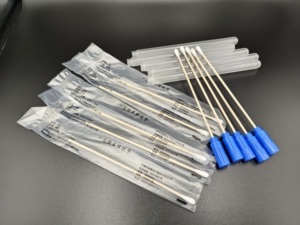
EO sterile flocking and synthetic swab applicators for hospital laboratories, molecular diagnostic sampling, viral transport medium (VTM), and clinical testing.
Get Catalog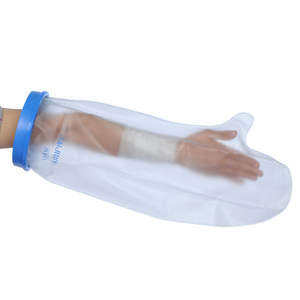
CE Class I reusable and disposable protective cast & bandage sleeve seals engineered with elastic watertight closures for post-operative orthopedic recovery.
Get Catalog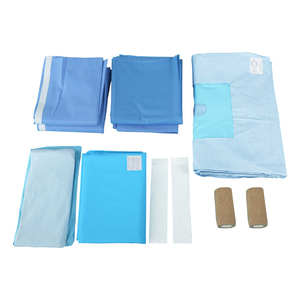
Customized orthopedic surgical drape pack featuring integrated fluid collection pouches, high-barrier absorbent drapes, and precise anatomical aperture cutouts.
Get Catalog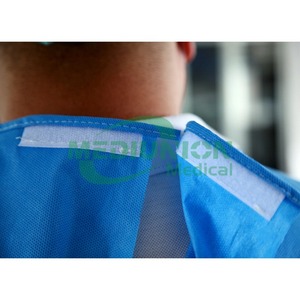
High-performance AAMI Level 3/4 fluid protection surgical gown with ultrasonic seam sealing, breathable nonwoven structure, and lint-free barrier construction.
Get Catalog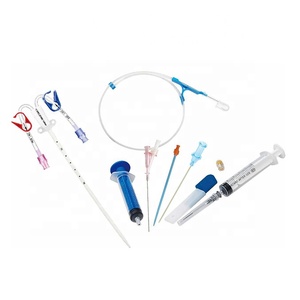
Radiopaque polyurethane dual-lumen catheter kit for acute vascular access, complete with guidewire, introducer needle, vessel dilator, and securement devices.
Get Catalog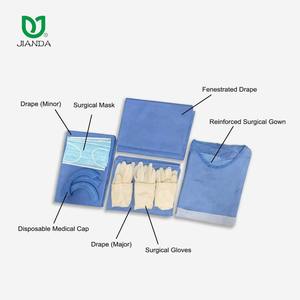
Comprehensive operating room pack containing universal draping systems, mayo stand covers, hand towels, and utility drapes for standardized clinical prep.
Get CatalogIn the rapidly changing global healthcare landscape, healthcare procurement directors, international medical device distributors, and hospital networks are re-evaluating their supply chains. Transitioning from transactional purchasing to strategic partnerships with integrated OEM (Original Equipment Manufacturer) and ODM (Original Design Manufacturer) producers has become a foundational imperative. The quality, sterile integrity, and biological safety of single-use hospital consumables directly govern clinical outcomes, nosocomial infection rates, and overall hospital operational efficiency.
Contract manufacturing of Class I, Class IIa, and Class IIb medical devices requires far more than basic plastic injection molding. It demands strict adherence to rigorous quality management standards, including ISO 13485:2016 quality systems, EU MDR (2017/745) regulations, US FDA QSR compliance, and comprehensive biological evaluation protocols governed by ISO 10993 standards. As a premier medical manufacturing partner operating state-of-the-art facilities in Sonepat, Haryana, India, supported by strategic business operations in Milton, Ontario, Canada, Lars Medicare provides total vertical integration—from raw polymer synthesis and mold tooling design to Class 100,000 (ISO Class 8) cleanroom assembly and industrial Ethylene Oxide (EO) sterilization validation.
Equipped with automated CNC tool rooms and high-precision injection molds, enabling rapid customized prototyping, unique gauge geometry, and specialized fluid pathway development without third-party delay.
Complete compilation of Technical Documentation (STED format), CE Certificates of Conformity, Certificates of Free Sale (CFS), and batch-specific Certificates of Analysis (CoA) for rapid customs clearance.
Proprietary automated Ethylene Oxide (EO) chamber processing verified with biological indicators (Bacillus atrophaeus) and gas chromatograph EO residue monitoring per ISO 11135.
Choosing an OEM/ODM medical disposables manufacturer demands absolute confidence in quality control, delivery consistency, and intellectual property defense. Operating for over two decades, our centralized manufacturing philosophy ensures every production milestone—from virgin polymer selection to final pallet shrink-wrapping—is governed under a single quality management system.
Unlike trading houses or partial contract packagers, our Sonepat facility integrates mold engineering, plastic compounding, automated catheter tipping, ultrasonic welding, blister packaging, and terminal EO sterilization on site. This eliminates reliance on sub-tier suppliers, dramatically reduces production lead times to 3-4 weeks for standard lines, and protects product quality against batch variations.
We offer turn-key private label packaging services designed around regional distributor requirements. This includes artwork design, multi-lingual Instructions for Use (IFU) in English, French, Spanish, Arabic, Portuguese, and Russian, linear/2D GS1 DataMatrix barcoding, and full compliance with Global Unique Device Identification (UDI) tracking standards for EU MDR and US FDA GUDID systems.
Addressing global clinical shifts away from toxic plasticizers, our infusion and vascular access product lines offer DEHP-free, Phthalate-free, and Latex-free compounds. Formulated with medical-grade PVC, Polyurethane (PUR), and Silicone, our materials undergo rigorous ISO 10993 cytotoxicity, systemic toxicity, hemocompatibility, and sensitization testing to safeguard neonatal, pediatric, and oncology patients.
Strategically connected to Nhava Sheva and Mundra ocean ports as well as Indira Gandhi International Airport (DEL) in Delhi, we manage consolidated FCL/LCL shipping with precise logistics documentation. Supported by our North American office in Milton, Ontario, Canada, we provide localized account management, multi-currency contracting, and immediate technical support across global time zones.
Hospital procurement officers and ministry-level tender authorities are rapidly upgrading their technical criteria. Sourcing decisions are no longer driven purely by unit cost; instead, procurement mandates focus on risk mitigation, clinical safety enhancements, environmental sustainability, and long-term vendor reliability.
Healthcare regulations across Europe, North America, and emerging markets increasingly require passive safety devices. Safety IV cannulas featuring automatic needle encapsulation and Blood Control Technology (BCT) are replacing conventional catheters to eliminate occupational exposure to blood-borne pathogens (HIV, Hepatitis B/C) among nursing staff.
Environmental health directives are accelerating the ban on Di(2-ethylhexyl)phthalate (DEHP) in IV infusion tubing, blood bag sets, and hemodialysis kits. Future-proof procurement relies on manufacturers capable of processing alternative plasticizers such as TOTM, DINCH, or polyolefin elastomers without compromising tubing elasticity or clarity.
To minimize Catheter-Related Bloodstream Infections (CRBSI), hospital ICUs and surgical wards are adopting closed IV catheter systems. Integrating pre-attached extension lines, needle-free access valves, and blood control hubs into a single pre-assembled unit dramatically reduces touch contamination points and catheter manipulation risks.
Geopolitical disruptions and regional freight bottlenecks have exposed the vulnerability of single-source procurement models. Global distributors are establishing strategic secondary manufacturing hubs in established export nations like India to ensure continuous product availability, competitive duty structures, and risk mitigation.
The design and production of single-use medical devices are experiencing significant technological advances. Emerging engineering methods elevate patient comfort, streamline clinical workflow, and enhance mechanical performance during critical procedures.
Precision lancet three-facet needle tips combined with controlled medical silicone coating drastically decrease penetration force during venipuncture, minimizing tissue trauma, vein collapse, and patient distress.
Replacing traditional needle stitching with high-frequency ultrasonic bonding eliminates needle holes in SMS/PP surgical gowns and drapes, establishing complete liquid and microbial barrier integrity against blood-borne pathogens.
Specially formulated polycarbonate 3-way stopcocks withstand stress-cracking caused by intravenous lipid emulsions, chemotherapy drugs, and high-pressure power injectors up to 4.5 bar (65 psi).
The table below provides a quick reference to key technical specifications across our main OEM product families, aiding quality assurance managers and procurement teams in product evaluation.
| Product Category | Primary Material Compound | Sterilization Method | Key Regulatory Certification | Shelf Life & Packaging |
|---|---|---|---|---|
| Silicon Button Tourniquet | Medical Grade Silicone & ABS | Ethylene Oxide (EO) / Gamma | CE Class I, ISO 13485 | 5 Years; Individual Sterile Pouch |
| Tactical Blood Tourniquet | High-Strength Nylon & Aluminum Windlass | Non-Sterile / EO Option | CE, FDA Registered | 5 Years; Box Bulk / Polybag |
| Sterile Sampling Swabs | Nylon Flocked / ABS Shaft | Ethylene Oxide (EO) | CE, ISO 13485, Biological Clearance | 3 Years; Peel-Open Blister Pack |
| SMS Surgical Gowns (45gsm) | Multilayer SMS Nonwoven PP | Ethylene Oxide (EO) | CE Class Is, EN 13795, AAMI Level 3 | 5 Years; Vacuum Sealed Sterile Pouch |
| Hemodialysis Catheter Kit | Medical Polyurethane (PUR) | Ethylene Oxide (EO) | CE Class IIb, ISO 13485 | 3 Years; Rigid Tray Blister Pack |
| U-Shape Surgical Pack | PE Laminate / SMS Absorbent Fabric | Ethylene Oxide (EO) | CE Class I Sterile, ISO 13485 | 5 Years; High-Barrier Pouches |
Direct answers to common technical, regulatory, and commercial inquiries received by our global export division.
Every export shipment from Lars Medicare is accompanied by a full regulatory documentation package. This includes our ISO 13485:2016 quality system certificate, CE Certificates of Conformity issued by accredited Notified Bodies, Certificate of Free Sale (CFS), batch-wise Certificate of Analysis (CoA), material safety data sheets (MSDS), and EO sterilization validation reports (biological indicator results and residual gas chromatograph analysis per ISO 11135). Product dossiers in STED format are available to accelerate distributor registration with national health authorities.
For standard catalogue items under neutral branding, orders can start from 1 mixed pallet per SKU. For custom OEM private-label projects—including specialized pouch artwork, customized color-coded components, tailored gauge mixes, and multi-lingual IFUs—the MOQ typically ranges from 20,000 to 50,000 units depending on product geometry. Standard manufacturing lead time for repeat orders is 3 to 4 weeks, while initial OEM setups require 5 to 7 weeks for artwork sign-off and mold alignment.
Yes. We offer fully DEHP-free (phthalate-free) and 100% latex-free options across our entire IV access, infusion, burette, and blood transfusion product lines. Material testing certificates proving non-DEHP formulations and biocompatibility compliance per ISO 10993 (cytotoxicity, systemic toxicity, and hemocompatibility) are provided upon contract execution.
Sterilization is performed in automated EO chambers following validated cycles certified under ISO 11135. Post-sterilization aeration takes place in dedicated heated quarantine rooms to accelerate gas desorption. Every production lot is tested via gas chromatography to confirm that residual Ethylene Oxide (EO) and Ethylene Chlorohydrin (ECH) levels fall strictly below the limits mandated by ISO 10993-7 before release for shipment.
Absolutly. Our ODM surgical drape and pack division specializes in assembling custom procedural kits (Universal, Orthopedic, Ophthalmic, Angiography, and Laparoscopy packs). We configure component selection, drape dimensions, aperture sizes, fluid collection pouches, and accessory arrangements precisely according to distributor specification cards and local clinical protocols.
We work with FOB (Nhava Sheva / Mundra / Delhi), CIF, CFR, and DDP Incoterms. Sea freight container loading (20ft, 40ft HQ FCL, and LCL consolidation) is handled directly from our Sonepat plant. Urgent clinical shipments can be dispatched via air cargo through Indira Gandhi International Airport (DEL), Delhi. Our export team coordinates all customs documentation, chamber of commerce attestations, and bills of lading.
Maintaining uncompromised clinical quality requires rigorous governance. Lars Medicare operates an integrated Quality Management System certified to ISO 13485:2016 standards. Our cleanroom facilities follow strict environmental monitoring protocols, including continuous airborne particulate counts, pressure differential monitoring, laminar airflow validation, and microbial settle plate checks.
Each finished batch undergoes rigorous functional testing prior to batch release:
Expand your product portfolio with factory-direct OEM/ODM manufacturing. Download our complete product catalog, request evaluation samples, or consult directly with our regulatory and engineering specialists.