
MEDICA 2026 | 16–19 November 2026 | Hall 6, Stall F37 | Düsseldorf, Germany
Direct Factory OEM/ODM Single-Use Sterile Catheters, IV Dressing Securements, and Clinical Supplies
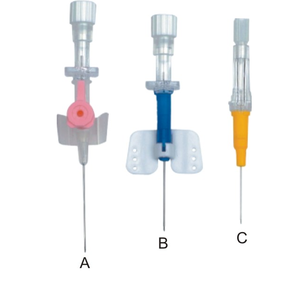
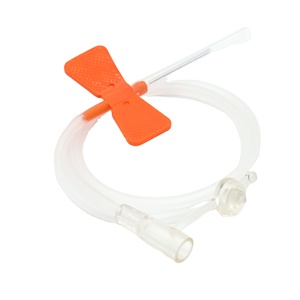
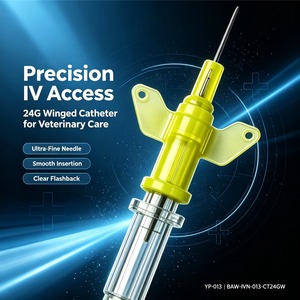
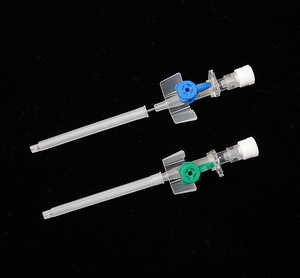
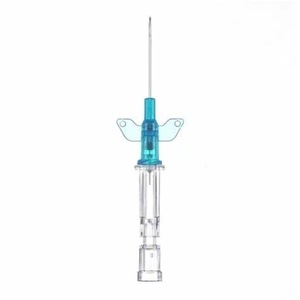
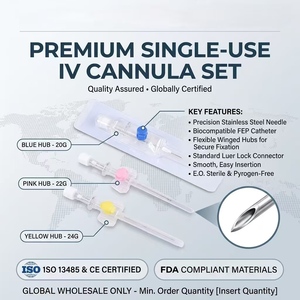
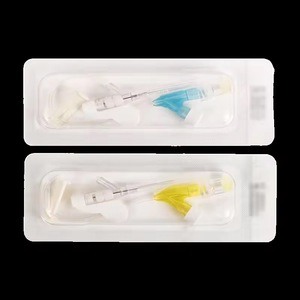
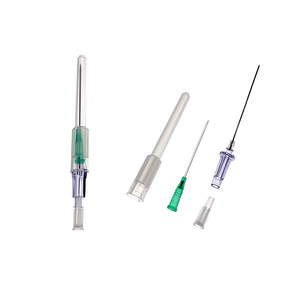
The global medical disposables ecosystem is undergoing a profound paradigm shift driven by stringent regulatory frameworks, enhanced infection control standards, and an escalating demand for integrated vascular access and advanced wound care solutions. As hospitals, healthcare systems, and regional distributors seek reliable international procurement partners, China has solidified its position as a primary global hub for high-volume, precision-engineered medical consumables.
Modern clinical management recognizes that intravenous therapy and wound care are intrinsically linked. Every vascular access procedure—whether utilizing a standard 18G butterfly catheter or a safety-shielded 24G IV cannula—requires an immediate, sterile, and biocompatible wound dressing barrier to prevent Catheter-Related Bloodstream Infections (CRBSIs). Consequently, top-tier Chinese manufacturing complexes have evolved beyond basic commodity assembly. Today, leading certified factories integrate advanced polymer extrusion, precision needle grinding, hydrocolloid/polyurethane formulation, and automated cleanroom assembly under unified Quality Management Systems (QMS) governed by ISO 13485:2016 and European Medical Device Regulation (EU MDR 2017/745).
Clinical Insight for Overseas Importers: Evaluating a wholesale manufacturer requires scrutinizing the synergy between vascular hardware and site dressing compatibility. A failure in fluid transmission, needle lubricity, or adhesive breathability directly impacts clinical outcomes, indwelling longevity, and hospital infection metrics.
The performance of medical disposables rests entirely upon raw material integrity and precise engineering tolerances. In both advanced wound dressings and peripheral intravenous catheters, biomaterials must satisfy non-cytotoxic, non-hemolytic, and hypoallergenic criteria as defined by ISO 10993 series testing.
In transparent IV site dressings and advanced wound dressings, semi-permeable polyurethane (PU) film acts as a critical physical barrier. The primary engineering metric for these films is the Moisture Vapor Transmission Rate (MVTR), measured in grams per square meter over 24 hours (g/m²/24h). High-MVTR dressings prevent fluid pooling under the dressing—a key vector for bacterial proliferation—while remaining completely impervious to external liquid water, viral pathogens, and exogenous bacteria.
In peripheral intravenous catheterization, catheter material dictates indwelling trauma and phlebitis incidence. Chinese OEM factories offer two primary catheter formulations:
| Material / Attribute | Clinical Function | Regulatory Standard | OEM Application Impact |
|---|---|---|---|
| High-MVTR Polyurethane Film | Moisture dissipation & microbial exclusion | ISO 10993-5, EN 13726 | Prevents moisture accumulation under IV securement dressings |
| Thermosensitive Polyurethane (PUR) | Vascular conformity & anti-phlebitis performance | ISO 10555-5 | Reduces mechanical vein trauma during extended catheter indwelling |
| Tri-Facet Japanese Stainless Steel | Low-force atraumatic venipuncture | ISO 7864, ISO 9626 | Minimizes patient pain scores and first-stick failure rates |
| Medical-Grade Medical Hydrocolloid | Autolytic debridement & moist wound healing | USP Class VI, ISO 10993 | Accelerates epithelialization in chronic and acute wound care |
To achieve absolute batch-to-batch repeatability and satisfy stringent tender specifications, premier medical device manufacturers operate integrated vertical supply chains. Outsourcing core processes like molding, siliconization, or ethylene oxide (EO) sterilization introduces unacceptable quality variances.
Our centralized manufacturing campus in Sonepat, operating under strict international governance, encapsulates the complete lifecycle of single-use medical devices:
Custom component geometries—including catheter hubs, butterfly wings, injection port caps, and flashback chambers—are molded in-house using medical-grade polypropylene (PP), polycarbonate (PC), and ABS polymers. In-house tooling eliminates vendor delays and enables custom color-matching, gauge configurations, and private-label embossing.
Contamination control is non-negotiable. Assembly operations occur inside HEPA-filtered Class 100,000 cleanrooms where ambient particulate counts, relative humidity, and positive air pressure are continuously monitored. Automated vision systems inspect needle bevel alignment, tip-to-catheter transition clearances, and valve seal integrity before manual handling.
Sterilization efficacy is verified per ISO 11135 guidelines. Bulk consignments undergo automated EO gas cycles, followed by controlled aeration chambers to remove chemical residuals below ISO 10993-7 thresholds. Every batch is released only after physical biological indicator incubation and chemical indicator verification.
Why International Medical Distributors and Healthcare Systems Partner with Our OEM Infrastructure
Rapid engineering of proprietary catheter molds, custom dressing die-cuts, and gauge variations without reliance on third-party suppliers.
Complete CE, ISO 13485, Declaration of Conformity, Free Sale Certificates (FSC), and ISO 10993 biocompatibility testing packages ready for national regulatory filing.
Automated visual bevel inspection, pressure leakage testing, and batch-wise Certificate of Analysis (CoA) included with every container dispatch.
Consolidated ocean cargo from Nhava Sheva/Mundra and direct air freight via Delhi (DEL) with FOB, CIF, or DDP Incoterms supported.
Turnkey brand integration: artwork design, multilingual IFUs, UDI barcoding, custom blister pouch sealing, and retail box printing.
Standard catalogue repeat shipments within 3-4 weeks; new OEM private label programs launched smoothly in 5-7 weeks.
As healthcare purchasing committees look toward the coming decade, procurement strategies are pivoting away from lowest-unit-cost evaluation toward total value-based purchasing (TVBP). Understanding these macro-level industry shifts is vital for medical importers aiming to secure high-margin market share.
Occupational health regulations worldwide (such as the EU Directive 2010/32/EU and US OSHA Sharps Injury Prevention Standards) are mandating the adoption of safety-engineered devices. Conventional non-safety IV cannulas are rapidly being phased out in public hospital tenders in favor of passive needle-shielding mechanisms. Passive safety systems automatically encapsulate the needle tip upon withdrawal without requiring additional manual activation steps by the clinician. Importers must align their portfolios with safety-shielded variants to maintain tender eligibility.
Concerns over the endocrine-disrupting properties of plasticizers like Di(2-ethylhexyl)phthalate (DEHP) in flexible PVC tubing have pushed European and North American regulatory authorities to restrict DEHP content in medical devices. Future procurement guidelines prioritize DEHP-free, phthalate-free, and latex-free medical infusion sets, burettes, and wound dressings—especially for pediatric, neonatal, and long-term oncology care.
Catheter-related bloodstream infections and clinician blood exposure during venipuncture represent major hospital cost burdens. Advanced IV catheter systems now feature integrated Blood Control Technology (BCT), incorporating a multi-use septum inside the catheter hub that stops blood leakage upon needle withdrawal until an infusion line is connected. Combining blood control septa with antimicrobial-coated securement dressings forms a dual-defense barrier that drastically lowers CRBSI rates.
Global regulatory bodies are enforcing Unique Device Identification (UDI) tracking codes on medical packaging to ensure supply chain transparency and rapid recall execution. Concurrently, healthcare institutions are demanding eco-friendly packaging redesigns—reducing secondary paper volume, utilizing recyclable blister substrates, and adopting energy-efficient ethylene oxide sterilization cycles.
Technical and Logistics Insights Direct from Our Regulatory and Export Division
Every export consignment is supported by a comprehensive regulatory dossier including a valid CE Certificate (under MDD/MDR), ISO 13485:2016 Quality Management Certification, EC Declaration of Conformity, Certificate of Free Sale (CFS), and batch-wise Certificate of Analysis (CoA). Additionally, we provide ethylene-oxide (EO) sterilization validation reports, bioburden testing, and ISO 10993 biocompatibility test data. Technical files are organized in STED / Common Technical Document format to accelerate your local national registration in Africa, Latin America, Europe, the Middle East, and South-East Asia.
Yes. Lars Medicare specializes in full-scope private-label OEM manufacturing. We customize artwork, multi-lingual Instructions for Use (IFUs), primary pouch film printing, outer retail carton designs, and master shipper branding. Our system generates UDI-ready GS1 barcodes, matrix codes, and localized language translations tailored to your market’s regulatory mandates. Because our mold tool room and printing setups are managed in-house, custom gauge mixes and packaging quantities can be fulfilled without third-party vendor delays.
For standard catalogue items in neutral factory packaging, minimum orders can start at one consolidated pallet. For full private-label OEM programs, the MOQ is typically structured per SKU based on blister printing run lengths (usually 50,000 to 100,000 units depending on gauge). Repeat orders of stock catalogue lines dispatch in 3 to 4 weeks. First-time private-label OEM shipments require 5 to 7 weeks to accommodate artwork proofing, plate creation, sterilization validation, and pre-shipment quality release.
Yes. We manufacture complete lines of DEHP-free, phthalate-free, and 100% latex-free IV infusion sets, measured volume burette sets, extension lines, and wound dressings specifically engineered for pediatric, neonatal, and oncology applications. Chemical test reports confirming non-DEHP compound integrity and ISO 10993 biocompatibility compliance are furnished with technical documentation.
Our safety IV cannulas integrate a passive, fully automatic needle-shielding clip mechanism. As the introducer needle is withdrawn from the catheter hub, the spring-loaded shield automatically locks over the sharp needle tip. This passive action requires no extra manual activation step by the clinician, eliminating accidental exposure. Paired with optional Blood Control Technology (BCT) that prevents blood flashback at the hub, our safety catheters dramatically lower sharps injuries and blood-borne pathogen exposure in busy clinical environments.
We quote standard FOB, CIF, CFR, and DDP Incoterms. Maritime exports ship through major deep-water ports at Nhava Sheva (JNPT) and Mundra, while expedited air cargo routes move via Indira Gandhi International Airport (DEL) in New Delhi. Standard export payment structures include Telegraphic Transfer (T/T) with deposit and balance upon Bill of Lading, as well as Irrevocable Documentary Letters of Credit (L/C at sight) issued by top-tier international banks.
All single-use sterile consumables should be stored in clean, dry, well-ventilated warehouse environments away from direct sunlight, extreme heat sources, and chemical vapors, maintained at temperatures between 5°C and 40°C with relative humidity below 80%. When stored in unopened, undamaged original blister packs, our EO-sterilized IV cannulas and wound dressings carry a validated 5-year shelf-life stability rating.
Contact our global export division today to request product samples, technical dossiers, tender pricing, or full OEM/private-label contract manufacturing proposals.
Inquire Now