MEDICA 2026 | 16–19 November 2026 | Hall 6, Stall F37 | Düsseldorf, Germany
Sterile, single-use vascular catheters and safety injection disposables compliant with global clinical safety mandates. Select an SKU below to initiate factory-direct wholesale sourcing.
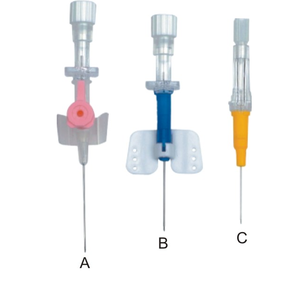
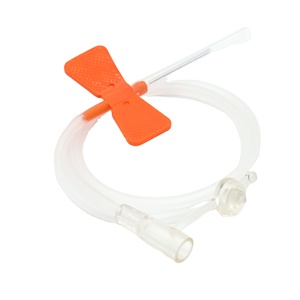
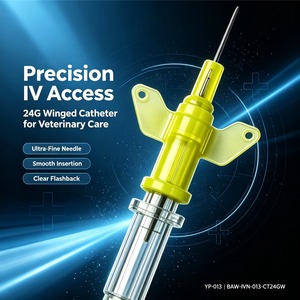
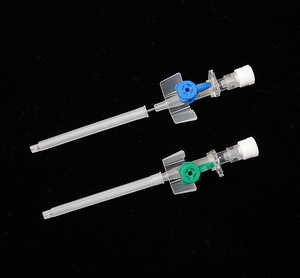
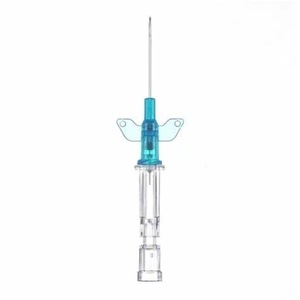
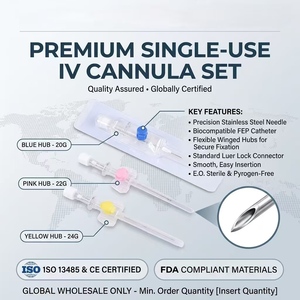
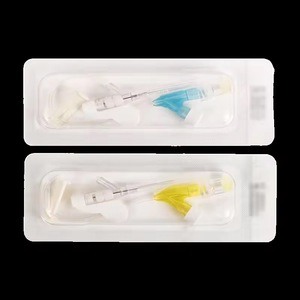
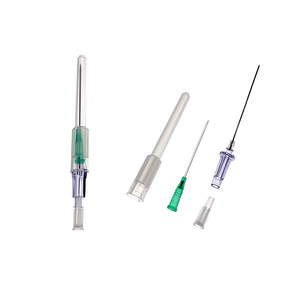
The global market for medical injection and vascular access disposables is undergoing a fundamental regulatory and engineering transformation. Driven by stringent healthcare worker safety legislation—including the U.S. Needlestick Safety and Prevention Act, EU Directive 2010/32/EU, and WHO recommendations on safe injection practices—hospitals and procurement ministries worldwide are phasing out conventional hypodermic syringes and standard catheters in favor of active and passive safety syringes.
For international medical distributors, hospital purchasing syndicates, and OEM brand owners, securing a resilient supply chain with an established manufacturer in China is strategic. Modern safety syringes are not merely standard injection barrels with modified tips; they are high-precision safety mechanisms engineered to eliminate Needlestick Injuries (NSIs), prevent cross-contamination, and optimize dead-space volume during high-value drug administration.
Information Gain Key Takeaway: Transitioning to low dead space (LDS) safety syringes can reduce costly drug wastage by up to 0.08 mL per dose. In global vaccination campaigns and oncology regimens, this engineering optimization yields thousands of additional usable doses per million units procurement.
Understanding the structural mechanics of safety syringes is vital for sourcing managers evaluating technical tender compliance. Primary engineering modalities manufactured within our accredited cleanrooms include:
| Safety Mechanism Category | Activation Protocol | Engineering Mechanics | Target Clinical Setting |
|---|---|---|---|
| Auto-Disable (AD) Syringes | Passive / Automatic | Internal locking ring breaks plunger upon retraction; prevents secondary reuse. | Mass immunization campaigns, outpatient clinics, epidemic response. |
| Retractable Needle Safety Syringes | Active (Manual) / Passive (Spring) | Needle retracts directly into the plunger barrel post-injection, completely encapsulating the sharp. | High-risk infectious wards, ICU, emergency medical services (EMS). |
| Shielded / Sliding Sleeve Safety Syringes | Active (Single-hand push) | Rigid protective guard slides forward over the needle tip, locking permanently in place. | General hospital wards, phlebotomy, routine subcutaneous administration. |
| Safety IV Access Catheters with BCT | Passive Automatic Shielding | Metal safety clip encapsulates needle tip upon withdrawal, combined with Blood Control Technology. | Venous access, continuous IV infusion, pediatric & adult inpatient care. |
Our state-of-the-art manufacturing infrastructure eliminates reliance on third-party vendors, guaranteeing batch-to-batch consistency, complete technical traceability, and custom OEM agility.
Custom mold design and high-cavity injection molding equipment allow rapid modification of gauge mixes, hub geometry, and plunger actuation force without third-party lead time delays.
Automated assembly lines operate inside controlled particulate environments, preventing microbial contamination prior to packaging and ethylene oxide (EO) sterilization validation.
Every consignment is accompanied by CE certificates, ISO 13485 audits, EC Declaration of Conformity, Certificates of Free Sale, and batch-wise ISO 10993 biocompatibility testing records.
Advanced medical-grade polypropylene and synthetic elastomers guarantee total chemical inertness, eliminating toxic phthalate leaching in critical intravenous oncology therapies.
Seamless container loading from major sea ports and air cargo hubs. Multilingual IFU artwork, barcode generation, and UDI compliance tailored for your destination market.
Tensile strength, penetration force, hydraulic leak-proof integrity, and sterility limits are verified per batch prior to release, fulfilling stringent national tender specifications.
As global healthcare systems focus on infection prevention, operational efficiency, and environmental sustainability, B2B buyers must align their procurement strategies with emerging manufacturing technologies. Sourcing partners who fail to adapt to these technological vectors risk regulatory non-compliance and inventory obsolescence.
Future safety catheters are moving beyond simple needle-shielding mechanisms. The integration of septum-based Blood Control Technology prevents blood leakage from the hub upon needle withdrawal prior to extension set attachment. This dual-protection architecture drastically reduces clinician exposure to bloodborne pathogens (such as HIV, HBV, and HCV) and minimizes bedside cleanup line downtime in emergency departments.
With the expansion of specialized mRNA therapies, monoclonal antibodies, and high-cost biologicals, fluid retention inside the syringe tip and needle hub represents a significant financial loss for healthcare providers. Advanced safety syringe designs incorporate zero-dead-space plunger extensions and integrated needle-barrel configurations that reduce residual volume to under 0.005 mL, maximizing therapeutic yield.
Hospital procurement boards—particularly across Europe and North America—are enforcing carbon footprint targets within tender scorecards. Medical device suppliers are replacing non-recyclable PVC components with sustainable polypropylene blends and bio-based polymers, while transitioning blister packaging to recyclable paper-poly films that maintain sterile barrier integrity throughout a 5-year shelf life.
Regulatory agencies such as the US FDA and European Medicines Agency (EMA) mandate GS1-compliant UDI barcodes down to the primary blister unit. Modern manufacturing processes directly print 2D DataMatrix codes onto individual safety syringe peel pouches, enabling hospital automated inventory systems to track lot numbers, sterilization dates, and expiration markers in real time.
Detailed answers regarding regulatory documentation, OEM customization, minimum order quantities (MOQs), and quality compliance for safety syringes and IV disposables.
Every export shipment is backed by a comprehensive regulatory dossier. This includes an authentic CE Certificate, ISO 13485:2016 Quality Management Certification, EC Declaration of Conformity, Certificate of Free Sale (CFS), batch-specific Certificate of Analysis (CoA), and Ethylene Oxide (EO) sterilization residual validation reports (ISO 11135). Technical Files formatted per STED / EU MDR requirements are available to accelerate registration with national health authorities across Africa, Latin America, Europe, Asia, and the Middle East.
Yes. We specialize in private-label OEM manufacturing for global distributors, healthcare brands, and government tender holders. OEM services encompass custom outer carton artwork design, primary blister pouch printing, multilingual Instructions for Use (IFU), custom gauge color-coding, variable drop-rate calibrations, and UDI-compliant GS1 barcode integration. Our in-house tool room allows rapid modification of packaging configurations and product specifications.
For standard catalogue items in neutral export packaging, minimum order quantities start at one consolidated pallet per SKU. For custom OEM private-label programs, MOQs are determined based on film printing runs and tooling requirements (typically 50,000 to 100,000 units depending on the model). Repeat production orders ship within 3 to 4 weeks, while first-time private-label programs require 5 to 7 weeks to accommodate artwork approval, pre-production sampling, and EO sterilization cycles.
Passive safety mechanisms activate automatically during normal device operation without requiring any extra user step—for example, a metal clip that automatically covers the catheter needle tip upon withdrawal. Active safety mechanisms require the clinician to manually engage a protective shield or press a button to retract the needle sharp into the barrel. Passive systems provide superior protection because they eliminate human error in fast-paced clinical environments like emergency rooms.
Yes. We offer complete product lines formulated with medical-grade, DEHP-free, phthalate-free, and 100% latex-free materials. These non-toxic formulations are essential for neonatal, pediatric, and oncology administration, as well as prolonged intravenous therapies where chemical leaching must be strictly avoided. Full ISO 10993 biocompatibility test reports are supplied upon request.
We routinely quote and execute contracts under FOB, CIF, CFR, and DDP Incoterms. Shipments are dispatched via major container ports (such as Shanghai, Ningbo, or Nhava Sheva) and international air cargo hubs. Container consolidation is expertly managed at our facility to optimize volumetric space and minimize landed freight costs for global buyers.
Our quality assurance workflow employs automated vision inspection systems and mechanical test equipment. Stainless-steel needles undergo siliconization and 100% automated optical inspection for burrs and bevel alignment. Flow rates and hydraulic pressure seal integrity are tested per ISO 7886 and ISO 10555 standards. Batch samples are retained for the duration of product shelf life to support continuous quality audits.
Request technical data sheets, factory-direct wholesale pricing, or evaluation samples for your registration and clinical trials. Our international export team responds within one business day.