MEDICA 2026 | 16–19 November 2026 | Hall 6, Stall F37 | Düsseldorf, Germany
Engineered for maximum bio-barrier integrity, fluid resistance, and patient care safety under stringent EN 13795 and ISO 13485 quality protocols.
An in-depth guide for hospital procurement executives, medical supply distributors, and government tender boards evaluating China's top medical apparel factories.
In modern operating theaters, surgical gowns serve as the primary defensive barrier protecting healthcare professionals and patients from cross-contamination, blood-borne pathogens, and liquid-borne viruses. The global demand for high-performance surgical gowns has shifted dramatically from basic fluid repellency to advanced multi-layer nonwoven barrier science.
As a leading China surgical gown manufacturer and factory, our facility leverages state-of-the-art Spunbond-Meltblown-Spunbond (SMS, SMMS, and SMMMS) polypropylene multi-layer structures, alongside micro-porous PE film laminates. Understanding the structural differences between these materials is vital for clinical buyers:
Combines high-tensile spunbond outer layers for tear resistance with micro-denier meltblown inner layers that act as a microscopic filter matrix against bacteria and fluid droplets. Offers optimal breathability during long surgical operations.
Engineered by bonding a breathable polyethylene film to a soft spunbond nonwoven web. Allows moisture vapor molecules (sweat) to escape while completely blocking liquid penetration and viral particles under high hydrostatic pressure.
Incorporates additional fluid-impervious film layers across the chest and forearms (AAMI Level 4 critical areas) specifically tailored for fluid-heavy orthopedic, cardiovascular, and trauma procedures.
Clinical Insight: According to EN 13795 and ANSI/AAMI PB70 standards, surgical gowns are evaluated not only by raw fabric performance, but by critical zone integrity—including ultrasonic welded seams, cuff comfort, and neck closure ergonomics.
To eliminate procurement ambiguity, our quality assurance team adheres strictly to international testing standards. The table below delineates the barrier thresholds required across different surgical risk levels, giving hospital procurement committees clear specifications for RFQ drafting:
| AAMI Protection Level | Target Clinical Application | Water Resistance: Impact Penetration (AATCC 42) | Hydrostatic Head Pressure (AATCC 127) | Viral / Blood Barrier Test Standard |
|---|---|---|---|---|
| AAMI Level 1 | Standard isolation, basic patient care, visitor protection | ≤ 4.5 g | ≥ 20 cmH2O | N/A |
| AAMI Level 2 | Minimally invasive surgery, blood draw, suturing in ER | ≤ 1.0 g | ≥ 50 cmH2O | N/A |
| AAMI Level 3 | Abdominal surgery, ER trauma, arterial line insertion, IV cannulation | ≤ 1.0 g | ≥ 100 cmH2O | Passes Synthetic Blood Resistance |
| AAMI Level 4 | Long fluid-intense surgeries, open heart, orthopedic replacement | 0.0 g (Complete Barrier) | ≥ 140 cmH2O | Passes ASTM F1671 Viral Penetration (Phi-X174) |
Our China manufacturing facility utilizes automated ultrasonic seam sealing technology instead of traditional needle stitching for Level 3 and Level 4 surgical gowns. Stitch holes can act as microscopic avenues for fluid leakage under pressure; ultrasonic welding fuses nonwoven polymers seamlessly, establishing 100% liquid-proof joins across arm sockets and chest seams.
The global healthcare supply chain is experiencing a structural migration toward high-reliability direct-factory relationships. Importers, government health ministries, and medical distributors are reshaping their sourcing criteria based on four macro trends:
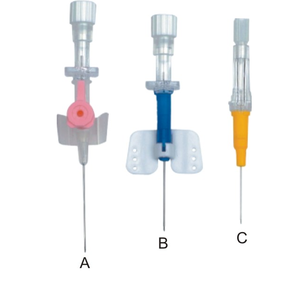
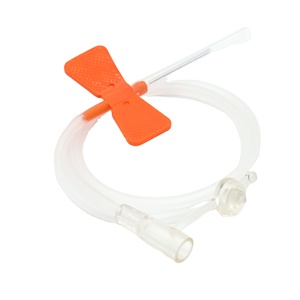
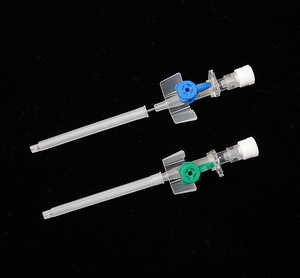
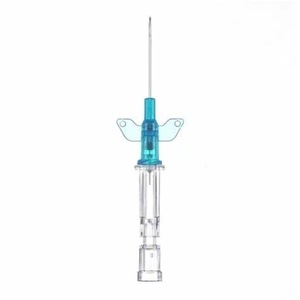
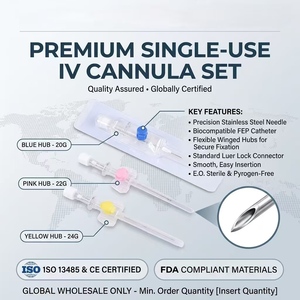
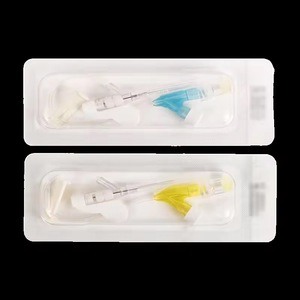
Hospital purchasing offices are consolidating suppliers to cut freight handling costs and streamline quality audits. Procuring surgical apparel alongside sterile vascular access disposables—such as Safety IV Cannulas, Butterfly IV Catheters, and 3-Way Stopcocks—from a single certified manufacturer reduces container fragmentation and simplifies customs clearance.
With environmental regulations expanding across Europe and North America, surgical gown manufacturers are developing low-linting, ultra-lightweight SMMS fabrics that maintain AAMI Level 3 performance while reducing plastic mass by up to 18%. This lowers medical waste incineration loads without compromising safety.
Global regulatory bodies (FDA, EU MDR) now mandate Unique Device Identification (UDI) down to individual sterile pouches. Modern factories must integrate inline thermal-transfer printers and automated barcode verification systems to ensure full lot traceability from nonwoven extruders to operating room storage bins.
To guard against supply chain disruption, tier-1 healthcare brands are contracting directly with fully integrated plants in Asia that house tool rooms, cleanroom assembly lines, and ETO sterilizers under one roof—eliminating reliance on third-party sub-contractors.
Building clinical trust requires uncompromised transparency. Our production matrix operates under a rigorous quality management system aligned with ISO 13485:2016 and CE Medical Device Directives. Every production run undergoes five distinct validation gates:
Every roll of SMS/SMMS nonwoven fabric is tested for hydrostatic head pressure, surface wetting resistance, and linting propensity before entering cleanroom cutting zones.
Gowns, IV cannulas, and infusion components are assembled, folded, and sealed in environmentally controlled cleanrooms with strict particulate and bio-burden monitoring.
Controlled humidity, gas concentration, and exposure temperature cycles guarantee a Sterility Assurance Level (SAL) of 10-6, backed by biological indicator incubation reports.
Compliance Standard: Batch-wise Certificates of Analysis (CoA), Ethylene Oxide Residue Reports (ISO 10993-7), and Free Sale Certificates (FSC) are issued with every container dispatch to guarantee effortless customs clearance worldwide.
Combining decades of medical engineering expertise with scalable production capacity for international tenders and OEM private-label brands.
Our fully equipped precision tool room allows custom gauge configurations, specialized cuff styles, and rapid prototype development without relying on external component vendors.
Eliminates needle pinholes across surgical gown armpits and chest zones, delivering bulletproof fluid resistance required for AAMI Level 4 compliance.
With direct export hubs and dedicated international customer support in Asia and North America, we handle FOB, CIF, and DDP shipments efficiently.
Technical Files prepared in STED format, facilitating rapid medical device registration with MOH authorities across South America, Europe, Africa, and Asia.
Multilingual IFUs, custom pouch artwork design, master carton branding, and UDI barcode printing tailored precisely to distributor specifications.
Every lot undergoes strict AQL inspection for tensile strength, seal burst pressure, EO residual limits, and bioburden sterility before container loading.
Clear, authoritative answers regarding certifications, OEM procedures, material specifications, minimum order quantities, and international logistics.
Looking for reliable AAMI Level 1-4 Surgical Gowns, Safety IV Cannulas, or OEM Medical Disposables? Contact our technical sales engineering team today for instant quotes, free evaluation samples, and complete regulatory compliance dossiers.