
MEDICA 2026 | 16–19 November 2026 | Hall 6, Stall F37 | Düsseldorf, Germany
Engineered in ISO 13485 certified Class 100,000 cleanrooms, our surgical tools and vascular infusion catheters deliver uncompromising clinical sharpness, zero micro-burr geometry, and absolute biological safety.
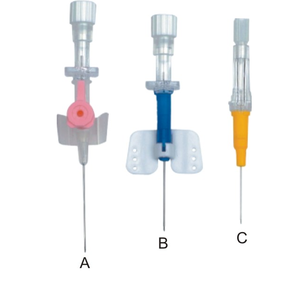
Ultra-sharp tri-facet bevelled stainless steel needle paired with radiopaque FEP/PTFE catheter for atraumatic venous placement.
Inquire Now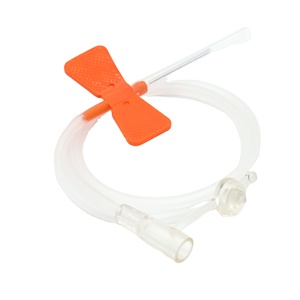
Ethylene Oxide (EO) sterilized clinical-grade intravenous cannula designed for extended dwell stability and minimal phlebitis risk.
Inquire Now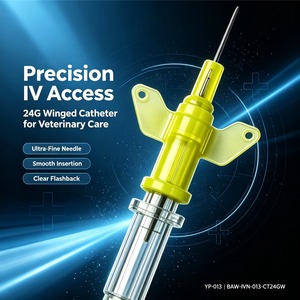
Flexible interlocking wings for secure surface anchoring, optimal for pediatric, geriatric, and veterinary infusion procedures.
Inquire Now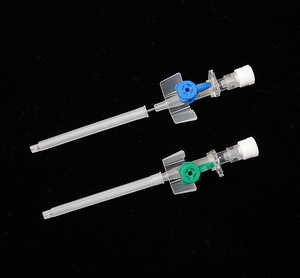
Integrated color-coded injection port with non-return silicone valve allowing bolus medication delivery without needle resticking.
Inquire Now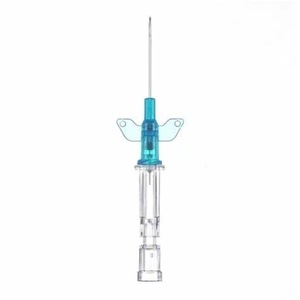
Heavy-duty biocompatible catheter tubing tailored for veterinary surgical interventions, pet trauma therapy, and equine care.
Inquire Now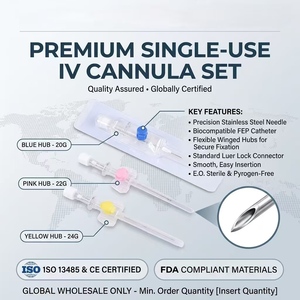
Transparent blood confirmation chamber offering immediate visual confirmation of successful vein entry prior to stylet withdrawal.
Inquire Now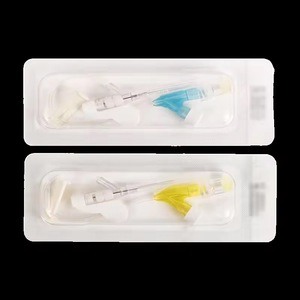
Automated passive safety mechanism that encapsulates the sharp needle tip upon extraction, mitigating blood exposure risk.
Inquire Now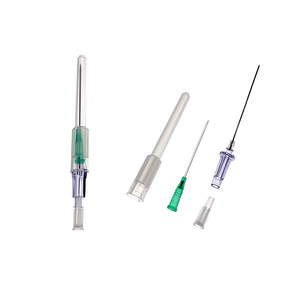
Comprehensive B2B bulk collection of high-tensile strength surgical access instruments available for global tender fulfillment.
Inquire NowChina's premier manufacturing ecosystem combines advanced automated grind lines with stringent ISO 13485 and European CE MDR regulatory frameworks.
In modern surgical suites, the performance of a scalpel blade is directly dictated by its metallurgical purity, micro-bevel geometry, and edge retention index. As leading surgical blade manufacturers and exporters in China, our production methodology integrates Swedish cold-rolled carbon steel (SK5 / 1095 carbon equivalent) and surgical-grade martensitic stainless steel (AISI 420 C) to satisfy the rigorous demands of general surgery, ophthalmic microsurgery, cardiovascular procedures, and plastic reconstruction.
Choosing between high-carbon steel and stainless steel depends on the tissue resistance and duration of the surgical procedure. Carbon steel blades feature a refined carbide structure that allows an initial sharpening tolerance down to 0.25 to 0.4 microns. This produces an unmatched "first-cut" sharpness required for delicate cosmetic incisions and ophthalmic entry.
| Property Parameter | High-Carbon Steel Blades (SK5/1095) | Martensitic Stainless Steel (AISI 420C) |
|---|---|---|
| Hardness Rating (Vickers/HRC) | 750–820 HV / 62–65 HRC | 680–740 HV / 56–58 HRC |
| Edge Honing Radius | 0.25 µm – 0.35 µm | 0.40 µm – 0.55 µm |
| Corrosion Resistance | VCI Paper Sealed (Requires Dry Storage) | High Passivation / Salt-Spray Tested (>72 Hours) |
| Primary Surgical Application | Microsurgery, Plastic Surgery, Dermatology | General Surgery, Orthopedics, Trauma, ER |
| Standard Compliance | BS 2982 / ISO 7740 / CE Mark | ISO 7740 / EN ISO 13485 / US FDA 510(k) |
Our state-of-the-art Chinese manufacturing facilities employ CNC multi-axis grinding machines equipped with diamond wheel dressers. Traditional blade stamping introduces microscopic burrs and stress risers along the cutting edge. Our automated process uses a three-stage grinding process—rough beveling, precision honing, and ultrasonic deburring—followed by electrochemical polishing.
Every production batch undergoes 100% automated optical inspection (AOI) with high-resolution telecentric lenses. This ensures that every blade profile (#10, #11, #15, #20, #22, #23, #24) perfectly conforms to the ISO 7740 fitting dimension standard, ensuring effortless engagement with standard No. 3 and No. 4 scalpel handles.
Engineered with strict keyway tolerances for instantaneous snap-fit locking on universal No. 3, 4, 7, and 9 surgical handles.
Dual-validated sterilization systems offering a 10⁻⁶ Sterility Assurance Level (SAL), packaged in peelable medical grade foil pouches.
Integrating retractable safety handles and passive protective shields compliant with OSHA Needlestick Safety directives.
Global medical procurement is undergoing a structural shift driven by stringent regulatory frameworks, supply chain diversification, and environmental imperatives. Healthcare procurement managers, OEM brand owners, and hospital tender boards must navigate three dominant industry shifts:
Regulatory agencies across the European Union (EU MDR 2017/745), North America (OSHA Bloodborne Pathogens Standard), and Asia-Pacific are increasingly mandating safety-engineered scalpels in operating theaters. Disposable safety scalpels equipped with temporary and permanent locking mechanisms significantly reduce accidental sharps injuries during pass-offs between scrub nurses and surgeons. Chinese original equipment manufacturers (OEMs) are leading this shift by manufacturing single-use safety scalpels with pre-mounted precision blades at cost points competitive with traditional reusable handles.
In tandem with surgical blades, clinical fluid management devices—such as IV cannulas, 3-way stopcocks, and extension sets—are transitioning away from legacy DEHP-plasticized PVC. Modern hospital tenders explicitly require DEHP-free, phthalate-free, and latex-free medical compounds to prevent chemical leaching into sensitive oncology and pediatric patients. OEM facilities in China have invested heavily in co-extrusion technology, producing multi-layer polyurethane (TPU) and PE catheters that combine biological inertness with high kink resistance.
With the global implementation of Unique Device Identification (UDI) regulations, healthcare distributors require GS1-compliant Datamatrix barcoding down to the individual blister pack. Advanced factories in China now integrate direct laser marking and vision-guided robotic packaging lines inside Class 100,000 cleanrooms. This ensures total batch traceability, allowing global importers to verify sterilization certificates, raw material heats, and manufacturing timestamps in real-time.
Combining two decades of precision manufacturing with end-to-end quality governance, our enterprise provides global medical supply houses with an unassailable competitive advantage.
Detailed technical answers to assist procurement directors, hospital supply chain executives, and regulatory managers in evaluating supplier capabilities.
High-carbon steel surgical blades (typically manufactured from SK5 or 1095 steel) offer a higher hardness rating (62-65 HRC), allowing the cutting edge to be honed to an acute angle under 0.35 microns. This provides superior initial sharpness ideal for fine tissue dissection. Stainless steel blades (AISI 420C) provide inherent corrosion resistance, making them ideal for long procedures in moist surgical fields or regions with high ambient humidity during storage.
Every export shipment includes a full regulatory documentation package: CE Certificate of Conformity under EU MDR/MDD, ISO 13485:2016 Quality Management System Certificate, Certificate of Free Sale (CFS), batch-specific Certificate of Analysis (CoA), Ethylene Oxide (EO) Sterilization Validation Records (ISO 11135), and ISO 10993 Biocompatibility Test Reports (Cytotoxicity, Sensitization, Systemic Toxicity).
For standard catalogue items under neutral packaging, orders can start from 1 mixed pallet (approx. 50,000 units). For custom OEM private-label branding—including customized foil pouch printing, brand color boxes, and language-specific IFUs—the baseline MOQ is typically 100,000 units per SKU, depending on printing plate dimensions and packaging specifications.
Edge sharpness is verified through a two-fold quality gate: continuous automated visual inspection (AOI) to detect microscopic blade imperfections, followed by statistical sampling using computerized penetration force testing machines. Penetration testing measures the peak force required for the blade to cut through standardized synthetic membrane media, ensuring every lot meets strict performance metrics before release.
Surgical blades are individually wrapped in hermetically sealed peelable aluminum foil pouches lined with VCI (Vapor Corrosion Inhibitor) paper for carbon steel variants, preventing moisture ingress and oxidation. 100 individual blades are packed into an inner unit box, and 50 unit boxes are packed into heavy-duty 5-ply corrugated export master cartons reinforced with moisture-resistant barrier liners.
Standard catalog orders ship within 21 to 30 days following order confirmation. Initial private-label OEM orders require 35 to 45 days to allow for artwork approval, packaging proofing, and sterilization validation. We support flexible Incoterms including FOB (Port of Ningbo/Shanghai/DEL/Mundra), CIF, CFR, and DDP (Delivered Duty Paid) to your distribution center.
Looking for high-margin OEM solutions, competitive tender pricing, or samples for clinical evaluation? Our international trade desk and technical engineering team are ready to support your market growth.