
MEDICA 2026 | 16–19 November 2026 | Hall 6, Stall F37 | Düsseldorf, Germany
Manufactured in Class 100,000 cleanrooms with Japanese stainless steel cannula shafts, micro-milled Tuohy bevels, and strict zero-leakage testing.
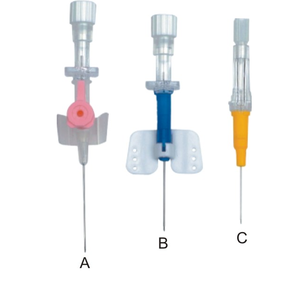
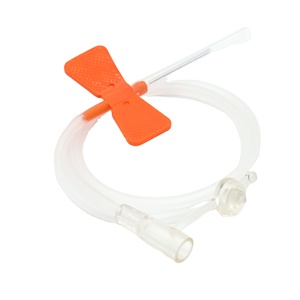
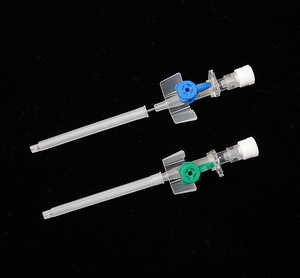
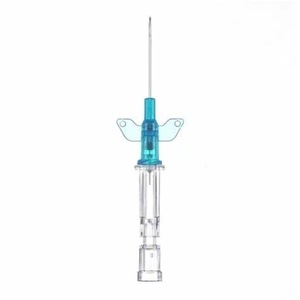
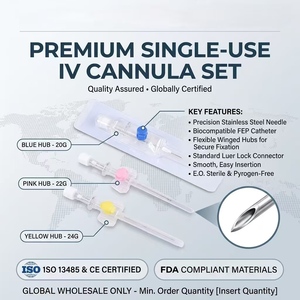
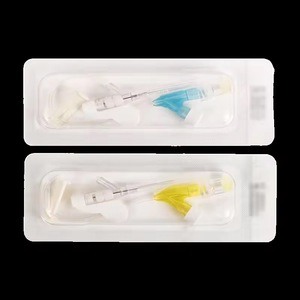
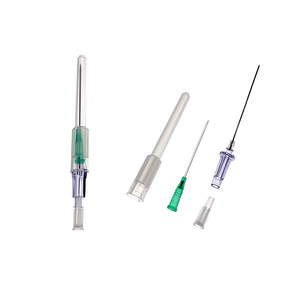
Epidural anesthesia and analgesia remain foundational procedures in modern surgical obstetrics, post-operative pain management, and chronic pain management therapy worldwide. As global healthcare systems face expanding surgical volumes coupled with strict cost-containment mandates, medical procurement departments, hospital networks, and B2B medical distributors are increasingly turning to top-tier Chinese medical manufacturers for high-precision Epidural Needles (Tuohy, Weiss, Crawford tip geometries) and integrated Combined Spinal Epidural (CSE) sets.
Historically, European and North American manufacturers dominated the anesthesia device market. However, over the past decade, leading Chinese medical device factories have undergone massive technological upgrades. By implementing automated cold-drawing tube manufacturing, robotic laser bevel grinding, automated vision inspection, and ISO 13485 quality systems, China's premier factories now deliver clinical performance that matches or exceeds traditional Western brands at a 35% to 50% cost advantage.
An epidural needle must fulfill two distinct, mechanically opposing clinical demands: it must smoothly traverse dense ligamentum flavum tissue while simultaneously providing an unmistakable loss-of-resistance (LOR) tactile response when entering the epidural space without puncturing the delicate dura mater (preventing post-dural puncture headache, or PDPH).
| Bevel Type | Curvature Angle | Clinical Primary Application | Dural Puncture Risk | Catheter Deflection Control |
|---|---|---|---|---|
| Tuohy Bevel | 15° - 30° Curved Tip | Standard Lumbar Epidural & Continuous Infusion | Very Low (< 0.8%) | Optimal (Directs catheter cephalad/caudad) |
| Weiss Bevel | Fixed Wings, Curved Tip | Obstetric Labor Analgesia & High-Control Block | Extremely Low (< 0.5%) | High Tactile Stability via Fixed Wings |
| Crawford Bevel | Straight 45° Short Bevel | Thoracic Epidural & Direct Spinal Access | Moderate (Requires skilled operator) | Linear (Minimal catheter direction offset) |
| Sprotte / Non-Coring | Pencil Point with Lateral Eye | Combined Spinal-Epidural (CSE) Procedures | Lowest (< 0.2%) | Dual-Lumen Guided Alignment |
Chinese factories certified under CE MDR (Medical Device Regulation 2017/745) utilize medical-grade AISI 304/316L stainless steel with tensile strengths exceeding 1,200 MPa. This structural rigidity prevents needle flexure when inserting through obese patients or calcified interspinous ligaments, protecting patient safety during regional anesthesia delivery.
When evaluating China suppliers for epidural needles and medical disposables, international buyers must audit cleanroom conditions, automated quality gates, and regulatory documentation files. True Tier-1 OEM manufacturers operate integrated production chains containing the following core pillars:
Enclosed automated assembly environments meeting ISO 14644-1 parameters. Airborne particulate counts and microbial bioburden levels are continuously monitored to ensure sub-10 CFU bioburden limits prior to sterilisation.
Multi-stage electrochemical polishing and ultrasonic wash cycles remove micro-burrs along the Tuohy curve edge, reducing insertion trauma and tissue friction forces below 2.5 Newtons.
High-speed 4K CCD optical cameras inspect 100% of needle bevels and stylet alignment. Any discrepancy in bevel curvature or hub concentricity results in instant pneumatic rejection.
As regional block anesthesia moves toward point-of-care ultrasound (POCUS) guidance and value-based healthcare models, epidural needle manufacturing is undergoing four pivotal technological shifts:
Traditional Tuohy needles can prove difficult to visualize under steep-angle ultrasound imaging. Advanced Chinese factories are pioneering laser-dimpled and micro-grooved echogenic tips that reflect acoustic waves back to the ultrasound transducer, enabling anesthesiologists to track needle tip trajectory in real time, dramatically reducing vascular puncture risks.
Needlestick injury prevention regulations (such as US OSHA standards and EU Directive 2010/32/EU) are expanding from standard IV catheters into spinal and epidural puncture devices. Integrated passive safety mechanisms encapsulate the contaminated sharp stylet immediately upon removal from the cannula, effectively eliminating accidental pathogen exposure for surgical operating room staff.
Environmental health and drug compatibility mandates require epidural catheters and LOR syringes to be 100% free of DEHP, BPA, and natural rubber latex. Leading suppliers now utilize medical-grade polyether block amide (PEBAX) and polyurethanes (PUR) that resist lipid degradation during prolonged post-operative pain pump infusions.
Hospitals are shifting from buying standalone needles to procuring customized single-use Epidural Procedure Trays. China's top factories provide full OEM assembly—combining Tuohy needles, LOR low-friction glass/plastic syringes, epidural filters (0.22 micron), skin scalpels, and prep sponges into custom-branded, sterile blister packs ready for surgical deployment.
Leveraging over two decades of precision manufacturing excellence, our integrated medical device production base combines tooling design, polymer injection moulding, automated needle tip beveling, cleanroom assembly, and Ethylene Oxide (EO) sterilisation under one unified quality system.
For European Union importation, devices must comply with the EU Medical Device Regulation (MDR 2017/745) and bear a valid CE Certificate issued by a recognized Notified Body alongside an ISO 13485:2016 Quality Management System certification. For the US market, 510(k) clearance is required for Class II anesthesia devices. Our manufacturing facilities maintain full ISO 13485 certification, CE compliance, and technical documentation ready for rapid registration.
The Tuohy needle features a gently curved, rounded tip (Huber/Tuohy point) angled at 15° to 30°. When advancing through the ligamentum flavum into the epidural space, the curved bevel pushes the dura mater away rather than cutting through it like a traditional sharp lancet bevel. Additionally, the curved lumen directs the epidural catheter smoothly along the longitudinal axis of the epidural space.
Yes. We offer complete OEM/ODM solutions, including customer artwork branding on primary peel-packs, inner boxes, and shipping cartons. We support custom gauge combinations (16G, 17G, 18G, 20G, 22G), specialized needle lengths (from 50mm pediatric to 120mm extra-long bariatric needles), custom hub colors according to ISO standards, and customized depth marking graduations.
For standard catalogue items in neutral bulk packaging, the minimum order starts at 10,000 pieces per SKU. For custom private-label OEM orders, standard MOQs are 30,000 to 50,000 pieces per gauge size depending on packaging customization. Production lead times for repeat orders are typically 3 to 4 weeks, while initial OEM orders require 5 to 6 weeks to finalize packaging proofing and sterilisation cycle validations.
Each needle shaft and stylet wire are matched during production using precision laser-micrometer measuring systems. The flush fit between the metal/plastic stylet bevel and the outer cannula tip eliminates gaps where tissue plugs could enter during insertion. 100% of production lots are sample-tested for penetration force and coring resistance in accordance with ISO 7864 guidelines.
Yes. All polymer components used in our Epidural Needles, IV Cannulas, and anesthesia accessories (including hub materials, wing polymers, catheter tubings, and stylet caps) are manufactured using 100% DEHP-free, non-toxic, biocompatible medical-grade raw materials certified under ISO 10993 standards.
Our products undergo validated Ethylene Oxide (EO) sterilisation in accordance with ISO 11135 standards. Individual units are sealed in medical-grade paper-poly blister pouches featuring chemical sterilisation indicators. Sealed outer cartons are shrink-wrapped on moisture-resistant pallets to protect against humidity and ambient fluctuations during ocean transport.
Connect directly with our engineering and export team to request technical specification sheets, CE regulatory files, and sample kits for hospital evaluation.