
MEDICA 2026 | 16–19 November 2026 | Hall 6, Stall F37 | Düsseldorf, Germany
Explore our export-grade sterile single-use universal drape packs, specialty surgical sheets, and customized OEM procedure kits designed for strict operating theater infection control.

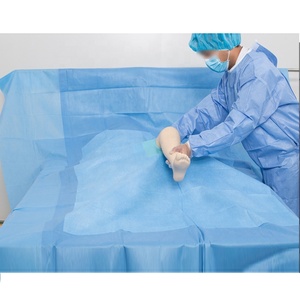
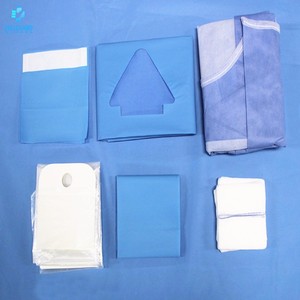
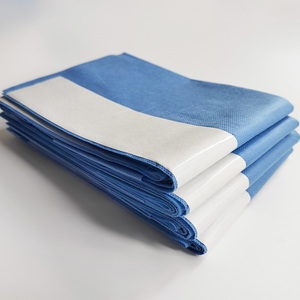
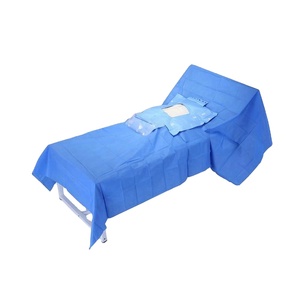
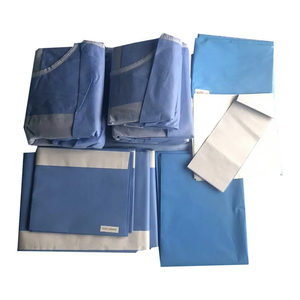
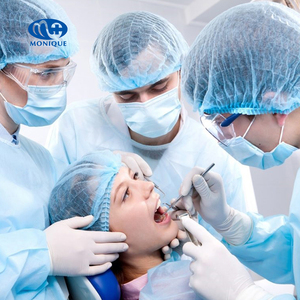
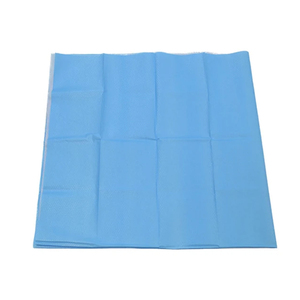
Surgical Site Infections (SSIs) represent one of the most substantial challenges in contemporary perioperative healthcare, accounting for significant hospital readmissions, increased patient morbidity, and heightened financial burdens on health systems worldwide. Modern aseptic protocols demand that the sterile field around the incision zone remain uncompromised throughout invasive procedures. Single-use sterile surgical drapes serve as the primary physical barrier preventing the cross-transmission of microorganisms, blood-borne pathogens, and liquid particulate matter between non-sterile areas and the patient’s surgical site.
As a global premier manufacturer and exporter certified under ISO 13485:2016 and European Union CE Standards (EU MDR 2017/745 compliant), our engineering framework prioritizes high-performance barrier textile science. By replacing traditional reusable cotton linens—which suffer from progressive fiber degradation, unpredictable linting, and micro-porosity expansion after repeated laundering cycles—single-use nonwoven surgical drapes offer guaranteed, batch-validated hydrostatic head pressure resistance, zero lint generation, and uniform bacterial filtration efficiency (BFE).
The performance of modern single-use surgical drapes relies directly on nonwoven polymer processing technologies. Standard industrial drapes utilize composite matrix structures engineered specifically to balance fluid repellency, tensile strength, breathability, and flame resistance.
Spunbond-Meltblown-Spunbond layers combine structural tensile strength (Spunbond) with dense micro-fibrous meltblown webs that trap pathogens and liquid molecules down to sub-micron dimensions.
Surrounding the fenestration, localized absorbent zones soak up excess irrigation fluids while an inner impervious film prevents strike-through to the sterile field.
Integrated medical-grade acrylic adhesives secure the drape rim tightly to patient skin, preventing fluid seepage beneath the drape without triggering cutaneous irritation or tearing tissue upon removal.
Healthcare procurement authorities must evaluate drape specifications against international testing benchmarks. The table below outlines the essential barrier parameters engineered into our product lines:
| Testing Benchmark | AAMI PB70 Level 3 / EN 13795 Standard | AAMI PB70 Level 4 / Critical Zone Standard | Clinical Significance |
|---|---|---|---|
| Hydrostatic Head Pressure | > 50 cm H₂O | > 100 cm H₂O (Impervious) | Prevents fluid penetration under physical pressure (e.g., surgeon leaning). |
| Impact Penetration | < 1.0 gram | 0.0 grams (Viral Barrier ASTMF1671) | Resists liquid splashes and high-velocity fluid spraying during irrigation. |
| Lint & Particulate Generation | Log10 Counting Index < 2.3 | Zero particle shedding | Eliminates foreign body airborne contamination in cleanroom operating environments. |
| Tensile & Bursting Strength | Dry > 20 kPa / Wet > 20 kPa | Dry > 40 kPa / Wet > 40 kPa | Prevents accidental tearing when manipulating heavy surgical instruments. |
The global medical disposables landscape is undergoing structural realignments driven by regulatory updates, supply chain security, and sustainable hospital operational goals. B2B medical procurement directors, tender agents, and hospital purchasing groups are adapting to several distinct macro trends:
Modern hospital operating rooms are shifting away from buying standalone utility drapes in favor of bundled, procedure-specific surgery packs (e.g., Orthopedic Hip/Knee Kits, Oral Implantology Sets, Cardiovascular Drapes). Procedure packs streamline inventory holding costs, accelerate operating room setup turnaround time by up to 40%, and guarantee that all sterile components—including mayo stand covers, camera sleeves, line holders, and side towels—share matching sterilisation validation dates.
With the full implementation of the European Union Medical Device Regulation (EU MDR 2017/745) and strict FDA Unique Device Identification (UDI) mandates, healthcare importers no longer tolerate uncertified OEM vendors. International buyers require direct access to Technical Documentation Dossiers, including ISO 11135 Ethylene Oxide Sterilization Validation reports, ISO 10993 Cytotoxicity and Biocompatibility testing, and continuous batch-wise Certificates of Analysis (CoA).
Environmental management standards (ISO 14001) are influencing healthcare RFPs. Leading manufacturers are investing in recyclable polypropylene monocomponent nonwovens, ultra-thin high-barrier microporous membranes, and reduced packaging volume to minimize carbon footprints during ocean container freight and medical waste incineration.
Building upon our enterprise infrastructure (leveraging two decades of specialized manufacturing expertise across global facilities), our supply capabilities offer direct factory-to-distributor value without intermediary markups:
Every shipment is supported by a comprehensive documentation package, including CE Certificates under EU MDR regulations, ISO 13485:2016 Quality Management Certification, EC Declaration of Conformity, Certificate of Free Sale (CFS), batch-specific Certificates of Analysis (CoA), and ISO 11135 Ethylene Oxide Sterilization Validation reports. Technical Files formatted for national health authority registrations (such as US FDA, SFDA, MOH) are provided upon request.
Traditional cotton drapes lose their liquid barrier properties after as few as 10 to 15 wash cycles, generating heavy lint that carries bacteria into open wounds. Single-use SMS/SMMS nonwoven drapes offer guaranteed 100% fluid barrier consistency, zero linting, superior burst strength, and superior resistance to microbial migration, eliminating hospital laundering expenses and infection hazards.
Yes. As a direct OEM manufacturer, we provide complete custom engineering. You can specify overall drape dimensions, fenestration shape and diameter, position of incise film, adhesive border placement, size of fluid collection pouches, and the inclusion of integrated line holders or suction tubing clamps.
Our sterile surgical drape packs carry a validated shelf life of 3 to 5 years from the date of sterilisation, provided the primary medical-grade paper-poly pouch remains unopened and undamaged. Storage should take place in a cool, dry environment (15°C to 25°C) away from direct sunlight, reactive chemical vapors, and moisture.
For standard catalogue drapes in neutral packaging, minimum orders start at 500 to 1,000 units per SKU. Custom private-label OEM procedure packs typically require an MOQ based on material converting runs (typically 3,000 to 5,000 packs). Repeat production cycles ship in 3 to 4 weeks, while initial OEM setup orders ship within 5 to 6 weeks following artwork approval.
100% of our raw materials, including nonwoven fabrics, elastic fenestrations, incise films, and adhesives, are completely latex-free and DEHP-free. All materials undergo biocompatibility testing per ISO 10993 guidelines (including skin sensitization, irritation, and systemic toxicity evaluation).
We routinely support FOB, CIF, CFR, and DDP terms. Consignments are consolidated in sea-freight containers (20FT/40HQ) or air cargo shipments. Export packing utilizes heavy-duty 5-ply double-wall corrugated cartons reinforced with moisture-barrier liners to withstand international ocean freight transport.