MEDICA 2026 | 16–19 November 2026 | Hall 6, Stall F37 | Düsseldorf, Germany
Direct factory supply of sterile, single-use vascular access devices manufactured under Class 100,000 cleanroom standards.
Evaluating factory-direct manufacturing capabilities for critical care consumables.
Full control over mould fabrication, needle grinding, and component geometry ensures ultra-precise tolerances, preventing fluid leaks and hub stress cracking across high-volume production batches.
Fully compliant with EU MDR directives, offering technical dossiers, Certificate of Free Sale (CFS), and batch-wise ethylene oxide (EtO) sterilisation residue reports for global market clearance.
Exporting to over 100 countries across Europe, Latin America, Africa, and Asia-Pacific with consolidated shipping options via Nhava Sheva, Mundra, and Delhi Air Cargo facilities.
In modern healthcare systems, the demand for single-use medical disposables has evolved from simple cost-based procurement to rigorous risk mitigation, regulatory alignment, and supply chain resilience. High-volume hospital networks, national health ministries, and international medical device distributors require direct access to CE certified medical disposables factories capable of maintaining absolute batch-to-batch consistency under strict quality management frameworks such as ISO 13485:2016.
Intravenous (IV) access devices, safety IV catheters, three-way stopcocks, DEHP-free fluid delivery lines, and clinical consumables represent the frontline of patient care. A failure in raw material purity, cannula lubricity, hub concentricity, or sterilisation integrity can lead to phlebitis, catheter-related bloodstream infections (CRBSIs), needle-stick injuries among clinical staff, or operational downtime during critical surgeries. Consequently, evaluating factory competencies requires an in-depth understanding of engineering standards, raw material science, cleanroom environmental controls, and global regulatory mandates.
Key Takeaway for B2B Purchasing Directors: Selecting a direct-manufacturing partner over a secondary trading desk eliminates supply opacity, reduces regulatory compliance timelines by up to 60%, and ensures direct engineering oversight over product modifications such as custom gauge combinations, specialized wing designs, and country-specific packaging configurations.
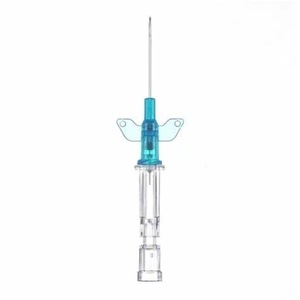
The manufacture of single-use peripheral IV catheters involves multi-stage precision engineering. Leading manufacturers, such as Lars Medicare Private Limited operating out of integrated industrial facilities in Sonepat, Haryana, control every phase of production within controlled cleanroom environments (ISO Class 8 / Class 100,000) to prevent microbiological and particulate contamination.
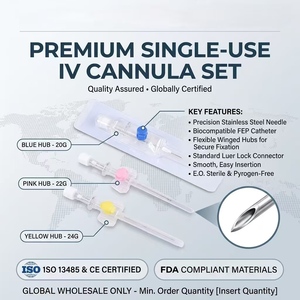
The patient experience and ease of venipuncture depend heavily on needle point geometry. Modern medical disposable factories utilize automated grinding machines to craft Japanese-origin stainless steel (AISI 304/316) into tri-facet bevelled tips. This ultra-sharp geometry minimizes tissue displacement and insertion force. Furthermore, the needle surface undergoes micro-siliconisation using medical-grade silicone fluid. This reduces frictional drag as the needle pierces the epidermis, subcutaneous tissue, and vessel wall, significantly decreasing the risk of vein trauma and thrombophlebitis.
Catheter material selection dictates indwelling performance. Advanced medical disposable factories process two primary polymers:
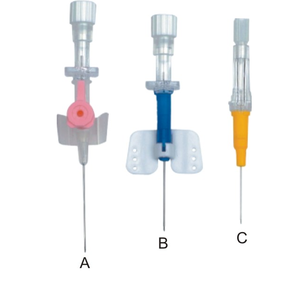
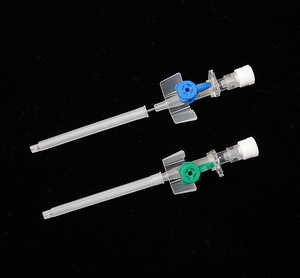
Immediate confirmation of successful venipuncture is critical for clinical staff. Factory-engineered IV cannulas incorporate a high-clarity polycarbonate flashback chamber equipped with a hydrophobic blood-stopper filter. This microporous membrane allows air to escape while stopping blood leakages, providing quick visual verification of vein entry without exposing healthcare workers to blood-borne pathogens.
Occupational exposure to blood-borne pathogens (such as Hepatitis B, Hepatitis C, and HIV) due to accidental needlestick injuries remains a major concern for hospital safety boards worldwide. Health authorities in Europe, North America, and LATAM have enacted stringent regulations mandating the adoption of Safety IV Cannulas in acute care facilities.
CE-certified medical disposable factories have responded by developing passive and active needle-shielding mechanisms integrated directly into the catheter hub architecture:
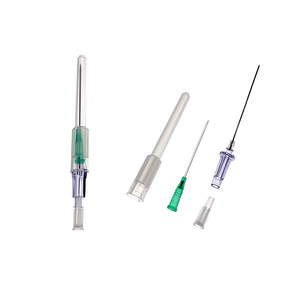
Passive Safety Clip Mechanics: As the clinician withdraws the stylet needle from the patient's vein, a precision-engineered stainless-steel safety clip automatically engages over the sharp tip. This mechanism requires no manual action by the nurse, removing human error from the safety protocol. The sharp needle tip remains permanently enclosed inside the protective metallic shield, rendering it completely safe for biohazard disposal.
Blood Control Technology (BCT): Advanced safety IV catheters integrate a internal blood-control septum within the catheter hub. This internal valve automatically restricts the flow of blood from the hub upon needle withdrawal until the infusion line or Luer access device is attached. This feature prevents blood spillage onto hospital bedding, minimizes contamination, and eliminates the need for manual venous compression during insertion.
A key trend in global medical procurement is the elimination of hazardous plasticizers from medical device formulations. Di(2-ethylhexyl) phthalate (DEHP), historically used to make Polyvinyl Chloride (PVC) flexible for infusion tubing, has been identified as an endocrine disruptor that can leach into lipid solutions, blood products, and sensitive drug formulations.
Responsible medical device factories have converted their extrusion processes to utilize alternative non-phthalate plasticizers such as TOTM (Tris(2-ethylhexyl) trimellitate), DINCH, or Polyurethane-based compounds. DEHP-free IV infusion sets and measured volume burette sets prevent chemical leaching during prolonged intravenous therapy, rendering them safe for pediatric, neonatal, oncology, and hemodialysis patients.
Regulatory Compliance Note: Direct factory sourcing guarantees that raw materials meet ISO 10993 cytotoxicity, systemic toxicity, sensitization, and hemocompatibility testing protocols, facilitating seamless compliance with EU MDR 2017/745 and US FDA requirements.
The global medical disposables market is undergoing structural shifts driven by technological advances, regulatory tightening, and global geopolitical demands. Healthcare purchasing managers and medical distributors must anticipate the following long-term industry trends:
Regulators including the US FDA and European Medicines Agency (EMA) now require full UDI-compliant GS1 2D DataMatrix barcoding on primary pouches, inner boxes, and master shipper cartons. Leading factories have upgraded their printing and packaging lines to print real-time dynamic batch codes, expiration dates, and UDI strings. This digital capability simplifies inventory management for hospital central sterile supply departments (CSSD) and ensures swift recall management when necessary.
To eliminate human handling errors, forward-thinking medical disposable factories are investing heavily in automated assembly robotics and high-speed optical vision systems. Automated sensor arrays inspect bevel sharpness, wing alignment, tube bonding integrity, and Luer taper dimensions (per ISO 80369-7) at speeds of up to 600 units per minute. Any sub-standard component is automatically purged from the assembly line prior to pouch sealing.
Medical disposables manufacturing historically generated substantial plastic waste. Modern factory designs incorporate recyclable medical-grade paper-poly peel pouches, reduced-thickness corrugated master cartons, and optimized Ethylene Oxide (EtO) sterilization cycles that dramatically lower gas usage while keeping residual EtO levels well below international safety limits (< 4 mg/g per device).
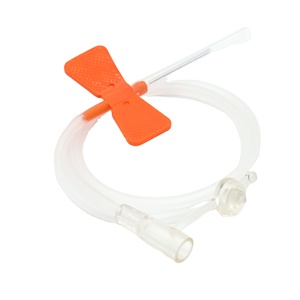
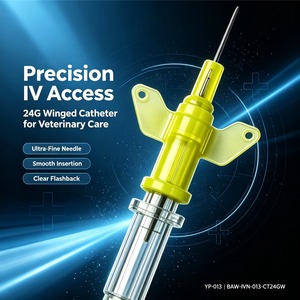
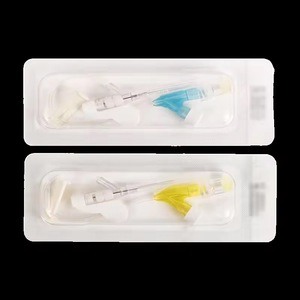
As demonstrated in our curated catalogue, medical disposable factories are adapting human-grade IV cannula technology for veterinary medicine. The pet healthcare market requires specific gauge mixes (22G, 24G, 26G) featuring ultra-flexible butterfly wings and modified hub lengths optimized for canine and feline vascular access. Factory-direct suppliers capable of supporting both human and veterinary product lines provide significant procurement efficiencies for broad-spectrum distributors.
When selecting an OEM partner for medical disposables, buyers must audit operational history, technical capabilities, and quality assurance infrastructure. Lars Medicare Private Limited represents an industry benchmark for medical device manufacturing:
Key technical, regulatory, and commercial queries answered by medical device manufacturing experts.
Every commercial export shipment from our certified factories is supported by a full regulatory dossier, including a valid CE Certificate, ISO 13485:2016 Quality Management Certification, EC Declaration of Conformity, Certificate of Free Sale (CFS), batch-wise Certificate of Analysis (CoA), biological indicator sterility test results, and Ethylene Oxide (EtO) residual analysis reports. Technical files prepared in STED or CSDT formats are available to support national registration in Africa, Latin America, Southeast Asia, the CIS region, and the European Union.
We provide complete OEM private-label manufacturing services for global distributors and brand owners. Our in-house design and tool-room capabilities allow us to customize pouch artwork, multi-lingual Instructions for Use (IFUs), inner box packaging, master cartons, UDI-compliant barcodes, and specific gauge color coding. For standard neutral-pack items, minimum orders start at one consolidated pallet. For customized OEM private-label programs, MOQs are determined per SKU based on printing plate setup and blister film run lengths, typically ranging from 30,000 to 50,000 units per gauge.
Our Safety IV Cannulas utilize an integrated, passive needle-shielding mechanism. Upon withdrawing the insertion stylet from the catheter hub, an internal stainless-steel clip automatically locks over the sharp needle tip. Because this safety mechanism operates automatically without requiring additional manual steps by the healthcare professional, it eliminates human error and protects clinicians, nursing staff, and waste-disposal workers from accidental needlestick injuries and blood-borne pathogen exposure.
Yes. We offer specialized lines of IV infusion sets, measured volume burette sets, extension lines, and blood transfusion sets manufactured with non-phthalate plasticizers (DEHP-free) and 100% latex-free injection sites. These products prevent chemical leaching during fluid delivery and are specifically validated for sensitive clinical environments, including pediatric wards, neonatal intensive care units (NICU), and oncology treatment centers. ISO 10993 biocompatibility test reports are supplied upon request.
We work under international commercial terms, including FOB, CIF, CFR, and DDP. Export consignments are loaded directly into sea containers at our Sonepat facility and dispatched via Nhava Sheva (JNPT) or Mundra sea ports, or shipped via Indira Gandhi International Airport (DEL) Air Cargo in New Delhi. Standard lead times for repeat orders of catalogue items are typically 3 to 4 weeks. First-time private-label OEM programs require 5 to 7 weeks to accommodate artwork proofing, custom plate setup, cleanroom production, EtO sterilization cycles, and mandatory 14-day sterility incubation testing prior to dispatch.
All single-use disposables are individually sealed in medical-grade paper-poly peel pouches that act as an impermeable microbial barrier. Secondary packaging utilizes rigid inner boxes and heavy-duty corrugated master cartons reinforced to withstand humid marine environments and rough transport handling. Prior to release, every sterilization load is validated using biological indicators (Bacillus atrophaeus) and chemical indicators, ensuring a Sterility Assurance Level (SAL) of 10^-6 throughout the product's 5-year shelf life when stored under recommended clean conditions.