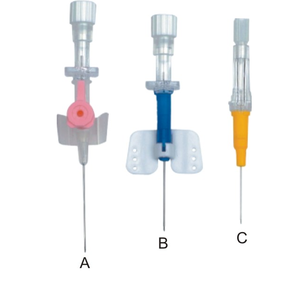
Good Price 14g 16g 18g 20g 22g 24g 26g Sizes Different Types Iv Cannula and Color
Comprehensive gauge spectrum of peripheral IV catheters with color-coded wings, injection ports, and siliconized tri-facet bevel needles for seamless venipuncture.
MEDICA 2026 | 16–19 November 2026 | Hall 6, Stall F37 | Düsseldorf, Germany

Explore our export-ready range of medical disposables, manufactured in ISO Class 8 cleanrooms with strict bio-burden and endotoxin controls.
Comprehensive gauge spectrum of peripheral IV catheters with color-coded wings, injection ports, and siliconized tri-facet bevel needles for seamless venipuncture.
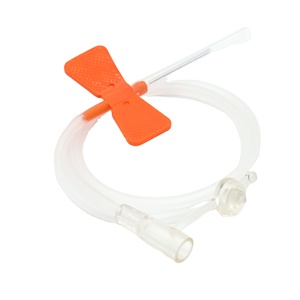
Sterile medical-grade stainless steel cannula systems engineered for acute outpatient settings, offering high kink-resistance and biocompatible FEP/PU tubing.
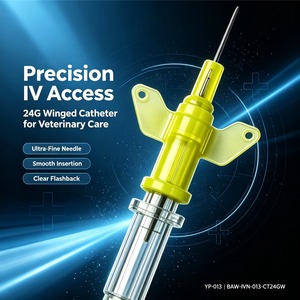
Flexible winged butterfly infusion sets specialized for small animal veterinary applications, ensuring secure anchor points and ultra-gentle vessel penetration.
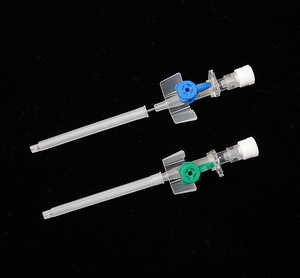
High-flow 18G winged catheter with integrated snap-cap injection port, meeting rigorous ISO 13485 standards for rapid fluid resuscitation and blood sampling.
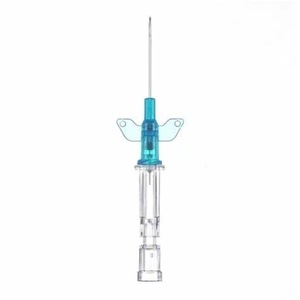
Pediatric and veterinary micro-gauge intravenous catheters tailored for small animal veins, featuring immediate blood flashback visualization chambers.
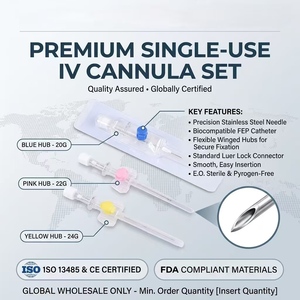
Bulk-packaged OEM venous catheters engineered with high-clarity clear hubs for rapid confirmation of successful vein insertion during emergency operations.
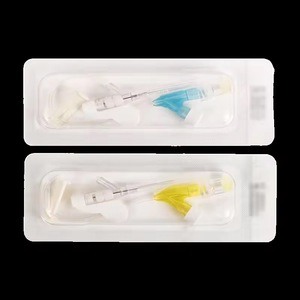
Safety-shielded veterinary catheters designed to prevent accidental needle-stick injuries during animal handling, featuring non-pyrogenic materials.
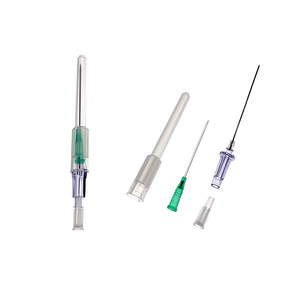
Full spectrum veterinary safety catheters with automatic passive needle shields and hydrophobic blood-stop filters for comprehensive clinical compliance.
Human blood is a dynamic, living tissue. The procurement of single-use blood bag systems is not merely a purchasing decision; it is a critical clinical link in the chain of transfusion medicine safety. As a global CE Certified Blood Bag Factory & Supplier, our manufacturing architecture prioritizes component stability, cell viability preservation, endotoxin mitigation, and absolute bio-barrier protection under international quality benchmarks such as ISO 3826, ISO 13485:2016, and European Medical Device Regulation (EU) 2017/745 (MDR).
Core Technical Advantage: Medical-grade plasticized PVC formulations must balance gas permeability (oxygen and carbon dioxide exchange) with minimal plasticizer migration. Our blood bag containers utilize non-leaching, biocompatible plasticizer blends (such as DEHP with advanced surface cross-linking or alternative non-phthalate plasticizers like DINCH and BTHC) to optimize erythrocyte membrane preservation over 35 to 42-day storage windows.
The operational performance of a sterile blood bag container relies on the thermodynamic stability of its inner surfaces and the biochemical integrity of its anticoagulant solutions. Standard blood collection bags contain pre-measured volumes of Anticoagulant Citrate Dextrose (ACD), Citrate Phosphate Dextrose (CPD), or Citrate Phosphate Dextrose Adenine (CPDA-1), supplemented by additive solutions such as Saline-Adenine-Glucose-Mannitol (SAGM) for extended red cell preservation.
| Anticoagulant / Additive Solution | Key Biochemical Components | Red Blood Cell (RBC) Shelf Life | Primary Clinical Application |
|---|---|---|---|
| CPDA-1 Solution | Citrate, Phosphate, Dextrose, Adenine | 35 Days at 2°C – 6°C | Whole blood collection & primary red cell storage |
| CPD + SAGM System | Saline, Adenine, Glucose, Mannitol | 42 Days at 2°C – 6°C | Packed Red Blood Cells (PRBC) component separation |
| ACD-A Solution | Trisodium Citrate, Citric Acid, Dextrose | 21 Days (or Apheresis) | Plateletpheresis and automated cell separation protocols |
| AS-3 / AS-5 Systems | Sodium Chloride, Dextrose, Adenine, Citrate | 42 Days at 2°C – 6°C | Extended viability pediatric and adult transfusion bags |
In our high-precision manufacturing facility, the liquid filling process of CPDA-1 and SAGM solution is executed under ISO Class 5 (Class 100) laminar flow stations nested inside ISO Class 8 cleanrooms. Liquid volumes are controlled with gravimetric sensors achieving ±0.5% dosing tolerance, preventing hemoconcentration or anticoagulant toxicity during donor phlebotomy.
A primary failure mode in blood bank supply chains is micro-leakage during high-speed centrifugation (e.g., 4,000 to 5,000 × g forced sedimentation). To overcome this risk, our OEM production lines employ automated high-frequency (HF) PVC welding equipment. Unlike thermal melting, HF radio-frequency welding generates molecular-level friction between polymer sheets, yielding continuous, seamless seam welds that resist bursting pressures exceeding 5 bar.
Furthermore, our blood donor tubing features an ultra-thin wall, siliconized 16G or 17G venipuncture needle with a ultra-smooth bevel design. This minimizes donor discomfort while preventing hemolysis caused by shear stress during blood flow. Each bag assembly incorporates a tamper-evident break-away valve (frangible connector) that facilitates smooth, sterile fluid pathways during component separation without generating plastic particulate matter.
Modern blood banking has shifted almost entirely from whole blood transfusion to component therapy, maximizing the clinical yield from a single donor. Our factory manufactures four primary architectural configurations:
Integrated Leukoreduction Technology: Our premium triple and quadruple blood bag systems can be equipped with inline leukoreduction filters. These specialized non-woven polyurethane membrane filters remove >99.99% (4-log reduction) of donor white blood cells (WBCs), reducing febrile non-hemolytic transfusion reactions (FNHTR) and HLA immunization risks in vulnerable recipients.
The global market for medical blood bags is undergoing a structural transition driven by regulatory tightening, technological automation, and sustainability mandates. Supply chain directors and hospital procurement managers must align their purchasing strategies with three dominant trends shaping the industry:
European Union directives and global health organizations are actively mandating the elimination of di(2-ethylhexyl) phthalate (DEHP) in single-use medical devices due to concerns regarding endocrine disruption. The challenge lies in maintaining erythrocyte membrane protection—which DEHP naturally provided. Our R&D engineering team has validated BTHC (Butyryl Trihexyl Citrate) and DINCH polymer blends. These next-generation, DEHP-free blood bags maintain red cell osmotic fragility thresholds for 42 days while completely complying with REACH and EU MDR 2017/745 environmental health standards.
Blood loss due to temperature excursions during transit represents a multi-million-dollar inefficiency for hospital networks. Future-ready procurement strategies require blood collection bags equipped with integrated surface passive RFID tags and colorimetric irreversible temperature indicators. Smart blood bags enable automated real-time inventory tracking, seamless vein-to-vein chain-of-custody verification, and instant scanning without opening insulated transport containers.
As blood centers transition toward automated blood processing extractors (such as automated top-and-bottom press systems), blood bags must adhere to sub-millimeter dimensional tolerances. Our factory utilizes high-precision robotic trimming and standardized port positioning, guaranteeing 100% mechanical compatibility with automated blood separation hardware used across Europe, North America, and East Asia.
Combining two decades of medical device manufacturing experience with direct factory-to-distributor transparency.
Our fully integrated manufacturing plant in Sonepat (Haryana) features a dedicated tool room, high-speed injection moulding, and automated extrusion lines. We maintain total control over material purity without third-party vendor dependency.
Every production lot undergoes validated 100% Ethylene Oxide (EO) sterilization inside our facility. Every shipment is accompanied by a batch Certificate of Analysis (CoA), pyrogenicity testing reports, and EO residue validation.
We provide complete technical files (STED format), CE Certificates, ISO 13485:2016 accreditation, and Free Sale Certificates (FSC). Our team streamlines product registration for distributors across Africa, Latin America, CIS, and Europe.
Technical, regulatory, and logistics clarity for hospital purchasing departments and medical device importers.
Every shipment of blood collection bags and IV therapy disposables is delivered with a complete regulatory folder. This includes a CE Certificate, ISO 13485:2016 Quality Management System verification, EC Declaration of Conformity, Certificate of Free Sale (CFS), batch-specific Certificate of Analysis (CoA), Ethylene Oxide (EO) residual analysis reports (ISO 10993-7), and sterility test results. Technical dossiers in STED format are readily available to accelerate local health authority registrations.
Yes, OEM and private-label manufacturing represent a core pillar of our operations. We provide comprehensive customization including outer carton printing, foil pouch artwork, customized multi-lingual Instructions for Use (IFU), UDI-compliant GS1 barcoding, and custom gauge or volume configurations. Because tool design and polymer extrusion occur under one roof, custom orders are executed efficiently.
Our sterile, unopened blood bag systems maintain a validated shelf life of 3 to 5 years from the date of sterilization (depending on anticoagulant solution and aluminum foil pouch barrier specifications). Storage should be maintained in a dry, well-ventilated warehouse at temperatures between 15°C and 25°C, protected from direct sunlight, radiant heat, and corrosive chemical vapors.
Our safety blood donor sets feature an integrated passive needle protector device. Upon completion of phlebotomy, as the needle is withdrawn from the donor's vein, the protective guard slides forward and permanently locks over the exposed 16G sharp needle tip with an audible click. This prevents accidental needle-stick exposure and blood-borne pathogen contamination for healthcare workers.
We accommodate FOB, CIF, CFR, and DDP Incoterms. Sea freight shipments are consolidated and dispatched via Nhava Sheva (Mumbai) or Mundra ports, while urgent air freight orders are routed through Indira Gandhi International Airport (DEL), New Delhi. Flexible payment structures include Letter of Credit (L/C at sight) and Telegraphic Transfer (T/T).
Connect directly with our export engineering desk to request product samples, technical specifications, and factory-direct price quotes for your regional market.