
MEDICA 2026  |  16–19 November 2026  |  Hall 6, Stall F37  |  Düsseldorf, Germany

0%

China has become a significant manufacturing base for disposable medical components, including IV Extension Line products. Hospitals, distributors, and procurement teams often seek reliable suppliers, competitive pricing, and stable production capacity. Yet a factory website alone cannot prove product quality.

This guide introduces ten Chinese manufacturers associated with IV Extension Line production. It considers product range, customization capability, quality systems, export experience, and communication practices. Attention is also given to practical details, such as connector options, clamp performance, tubing clarity, packaging integrity, and leakage testing. These small features matter during preparation and clinical use. A secure connection can prevent avoidable handling problems.

Quality documentation deserves close review. Buyers should confirm ISO 13485 certification, applicable product registrations, sterilization validation, lot traceability, and inspection records. Depending on the destination market, additional regulatory requirements may apply. Supplier audits, sample evaluations, and clear technical agreements remain valuable. A low quotation is not automatically a good decision.

This guide has limits. Manufacturer capabilities may change. Public information can also be incomplete or outdated. Therefore, the list should support further verification rather than replace it. Readers should request current certificates, production samples, and written specifications before making a purchasing decision. Practical experience shows that responsiveness after sampling often reveals more than promotional language. The strongest supplier is not always the largest one. It is the company that consistently delivers compliant products, transparent communication, and dependable support.
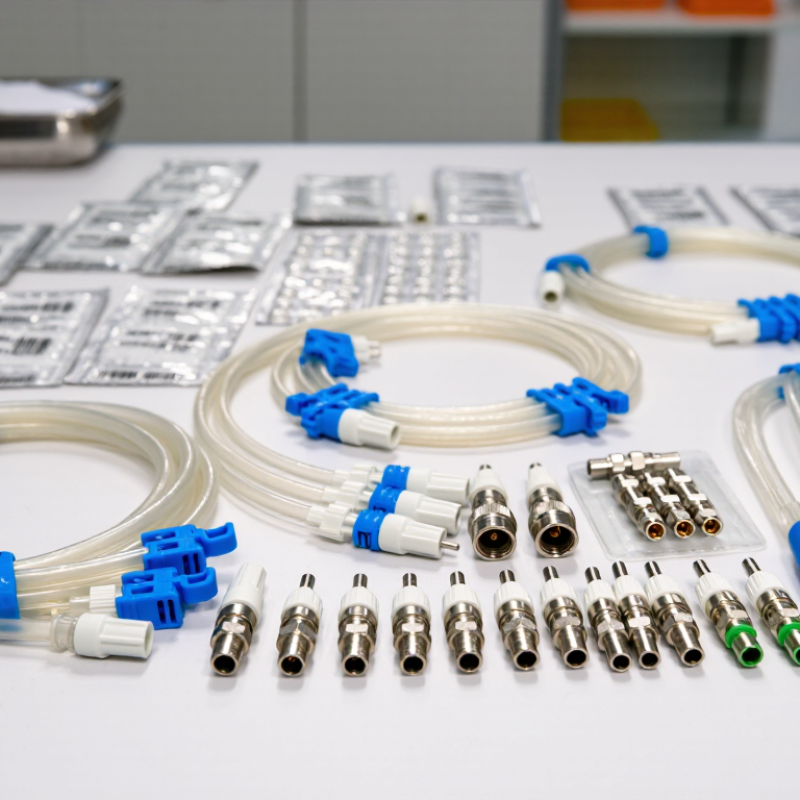
China Top 10 IV Extension Line Manufacturers?

What Are IV Extension Lines and Why Are They Used?

China Top 10 IV Extension Line Manufacturers

What Are IV Extension Lines and Why Are They Used?

An IV extension line is a short, flexible tube placed between an intravenous catheter and an infusion set. It creates extra working space near the patient’s arm or hand. This simple distance can reduce pulling, twisting, and accidental catheter movement.

Healthcare workers use extension lines during fluid therapy, medication delivery, and blood sampling procedures. A connector, clamp, or needle-free valve may control the flow. Some models include multiple ports for compatible clinical applications. The selected design should match the prescribed fluid, pressure, connection type, and patient condition.

Small details matter. A clear tube helps staff observe air bubbles, discoloration, or unexpected residue. A secure luer connection can reduce leakage during movement. Flexible tubing may improve comfort when a patient bends an elbow. However, flexibility alone does not guarantee safe performance.

Manufacturers should verify biocompatibility, sterility, pressure resistance, and dimensional accuracy. They should also provide traceable production records and clear instructions for use. In real clinical settings, packaging damage and poor connections remain practical concerns. A product can look well made and still fail under testing. That is why hospitals and distributors should review quality certificates, lot information, and validation data before purchasing. Judgment is still required.

China Top 10 IV Extension Line Manufacturers? – What Are IV Extension Lines and Why Are They Used?

IV extension lines are sterile medical tubing sets placed between an access device and an infusion or injection line. They extend the distance from the patient, reduce movement at the access site, support safer medication administration, and make line management easier.

The chart shows the relationship between commonly used nominal extension-line lengths and their calculated internal volume. Values are based on a 1.0 mm internal diameter: internal volume = π × radius² × length. Actual priming volume varies by product design, tubing diameter, connectors, clamps, and filters.

How to Evaluate Chinese IV Extension Line Manufacturers

China Top 10 IV Extension Line Manufacturers: How to Evaluate Chinese IV Extension Line Manufacturers

A credible evaluation starts with patient safety, not a polished website. The WHO Global Report on Infection Prevention and Control (2022) estimates that 7 in 100 acute-care patients in high-income countries acquire healthcare-associated infections. The figure rises to 15 in low- and middle-income countries. This makes connector cleanliness, leak resistance, and sterile packaging practical purchasing concerns.

Ask each manufacturer for ISO 13485 certification, ISO 8536 test records, and ISO 80369 connector verification. Review sterilization validation, biocompatibility evidence, and batch traceability. Request samples from three separate production lots. Test priming volume, clamp performance, tensile strength, and leakage after repeated bending. Small details matter, especially around luer connections.

CDC NHSN surveillance reports continue tracking central-line bloodstream infections, although extension-line data is rarely isolated. That limitation should create caution, not confidence. A factory may pass routine inspection yet show weak control during changeovers. I would inspect cleanroom records, operator training, and deviation reports. Do not accept a certificate without checking its scope and expiry date. Price comparisons can mislead. A cheaper line may use thinner tubing, less consistent clamps, or incomplete documentation. My own assessment would remain provisional until the supplier explains failed tests openly. Perfect claims deserve more questions.

China’s Top 10 IV Extension Line Manufacturers

China’s Top 10 IV Extension Line Manufacturers

China’s top ten IV extension line manufacturers are often judged by more than production volume. Reliable suppliers usually show stable tubing dimensions, clear material specifications, and controlled connector assembly. Their products may include standard, multi-lumen, needle-free, and light-protected extension lines. Each design should match the intended infusion application.

During supplier evaluation, I would review ISO 13485 certification, risk-management records, sterilization validation, and batch traceability. Samples deserve close attention. Check for smooth connectors, secure caps, clean internal pathways, and consistent clamp movement. A small leak may appear only after pressure testing. That detail matters.

Factory audits can reveal practical differences. Observe cleanroom discipline, operator training, incoming-material checks, and packaging controls. Ask for recent test reports, not only brochure statements. Applicable regulatory requirements also vary by destination market, so documentation must be current and specific. A low price can be attractive, but it may hide thinner walls, weaker fittings, or inconsistent inspection. I would not rank manufacturers from catalogues alone. Production records and independent testing provide stronger evidence. Even experienced buyers can overlook connector compatibility, especially when switching between infusion systems. Reliable cooperation requires honest communication about defects, delays, and corrective actions.

Product Features, Certifications, and Manufacturing Capabilities

China’s top IV extension line manufacturers are often distinguished by product control, not marketing claims. Reliable suppliers produce lines with kink-resistant tubing, secure luer-lock fittings, smooth clamps, and consistent priming volumes. Some models include needle-free connectors or multi-port designs for complex infusion procedures. Materials should be medical-grade and selected for compatibility with common fluids and medications.

Certification Review
Certification provides useful evidence, but it needs careful review. Experienced manufacturers usually operate under ISO 13485 quality systems and maintain documented risk management, process validation, and batch traceability. Products for international markets may require CE marking or other regulatory approvals, depending on destination and classification. A certificate alone is not enough. Buyers should check its scope, validity, issuing body, and connection to the exact product family.

Manufacturing capability becomes visible in the details. Look for controlled cleanrooms, automated assembly, leak testing, visual inspection, and sterilization validation through ethylene oxide or radiation methods. Strong factories can manage tubing length, connector configuration, packaging, labeling, and private specifications without losing consistency. Samples should be tested for tensile strength, leakage, flow performance, and package integrity. Small differences matter.

The less comfortable question is whether production remains stable during urgent orders. Ask for quality records, change-control procedures, inspection standards, and corrective-action examples. Some suppliers communicate well before sampling but become vague after approval. That weakness deserves attention. A factory with real experience will explain limitations clearly, even when the answer is inconvenient.

How to Select the Right Chinese Manufacturer for Your Needs

Selecting one of China’s top ten IV extension line manufacturers requires more than comparing prices. Start with the intended clinical use, connection type, length, flow requirements, and packaging format. Ask whether the factory maintains ISO 13485 quality systems and follows applicable medical device requirements in your market.

Request samples from several shortlisted manufacturers. Examine tubing clarity, connector fit, clamp movement, and package seals under normal handling. Small details matter. A loose connection can create serious workflow concerns. Review material specifications, sterilization validation, batch records, and traceability procedures. The manufacturer should provide controlled documents, not vague promises.

Factory audits can reveal important differences. Check cleanroom controls, incoming material inspection, production records, and final testing equipment. Ask how nonconforming products are isolated and investigated. Discuss minimum order quantities, sample lead times, tooling ownership, and shipment protection before signing any agreement. Clear communication is essential when specifications change.

Do not choose only by the lowest quotation. A cheaper line may involve thinner tubing, weaker packaging, or slower corrective action. That assumption can be wrong, though, so verify it with samples and records. Independent pre-shipment inspection adds useful confidence. Also assess response speed and technical English, because unclear messages can cause costly revisions. A reliable Chinese manufacturer should explain limitations honestly, support consistent production, and provide evidence for every critical claim.

China Top 10 IV Extension Line Manufacturers? - How to Select the Right Chinese Manufacturer for Your Needs

Anonymous comparison of representative Chinese manufacturing profiles for IV extension lines. Confirm current certificates, validation records, samples, pricing, and regulatory scope before placing an order.

Rank Manufacturer Profile Typical Production Region Primary Product Focus Common Tube Materials Connector Configurations Sterilization Options Packaging Capability Compliance Documents to Request Customization Capability Typical MOQ Range Typical Lead Time Selection Fit
1 Profile A
High-volume integrated producer
Eastern coastal medical-device cluster Standard and multi-lumen IV extension lines for hospitals and distributors PVC, DEHP-free PVC, TPE; medical-grade tubing options Luer lock, slip luer, needle-free connector, clamp, multi-way stopcock Ethylene oxide; gamma subject to product validation Individual sterile pouch, blister, bulk carton, private-label packaging ISO 13485 certificate, ISO 10993 testing, sterilization validation, bioburden and leak-test records Length, tube diameter, clamp color, connector layout, label and carton artwork 5,000–20,000 pieces 25–45 days after approval Best for scale
2 Profile B
OEM-focused tubing specialist
Yangtze River Delta medical-manufacturing area Custom extension sets and disposable fluid-transfer tubing PVC, TPE, TPU; DEHP-free and latex-free configurations Luer lock, Y-site, spike connection, needle-free access port Ethylene oxide with routine residual testing Peelable medical pouch, header bag, customized secondary carton ISO 13485, material declarations, extractables information, EO residual report, certificate of analysis Strong engineering support for tube length, lumen count and assembly drawings 3,000–15,000 pieces 30–50 days after design confirmation Best for OEM
3 Profile C
Connector and valve specialist
Southern coastal device-manufacturing zone Extension lines with needle-free valves and closed-system access components PVC, TPE and polycarbonate connector components Needle-free valve, positive-displacement valve, luer lock, rotating luer collar Ethylene oxide; radiation feasibility evaluated by product type Single sterile pouch, tray packaging, kit assembly ISO 13485, ISO 10993 biological evaluation, valve pressure and leakage testing, sterilization records Valve selection, flow-path design, protective cap, clamp and connector orientation 10,000–30,000 pieces 35–60 days after validation Best for valve systems
4 Profile D
Export-oriented disposable supplier
Central and eastern export manufacturing corridor General-purpose IV extension lines for overseas tenders and distributors Medical-grade PVC; DEHP-free versions available Standard luer lock, slip luer, clamp, injection site Ethylene oxide English artwork, multilingual labels, sterile pouch and export carton ISO 13485, declaration of conformity, EO validation, product test report, lot traceability records Moderate; mainly packaging, tube length and connector combinations 10,000–50,000 pieces 30–45 days for standard items Best for distribution
5 Profile E
Precision low-volume producer
Advanced medical-device industrial park Low-dead-space and low-priming-volume extension lines TPE, TPU and DEHP-free PVC Low-dead-space luer lock, miniature clamp, needle-free access port Ethylene oxide; gamma assessment available Individual sterile pouch with protective caps ISO 13485, flow-rate data, priming-volume report, particulate testing, biocompatibility documentation High; suitable for neonatal, oncology and critical-care applications 2,000–10,000 pieces 40–70 days for new designs Best for specialty use
6 Profile F
Integrated IV-set manufacturer
Established disposable-device production base Extension lines compatible with infusion sets, burettes and transfusion assemblies PVC, DEHP-free PVC, ABS and polycarbonate components Luer lock, spike, drip-chamber interface, Y-site and clamp Ethylene oxide Component kits, sterile set packaging, institutional bulk packs ISO 13485, material safety data, dimensional inspection, leak and tensile-strength testing Good for complete disposable-set integration 8,000–40,000 pieces 30–55 days Best for bundled supply
7 Profile G
Cleanroom assembly specialist
Northern medical-manufacturing region Cleanroom-assembled sterile extension lines for private-label programs PVC, TPE, silicone and TPU according to specification Luer lock, multi-way connector, clamp, cap and access site Ethylene oxide; validated cycle documentation required Cleanroom packing, double-bagging, sterile pouch and carton labeling ISO 13485, cleanroom monitoring records, environmental monitoring, EO residual and sterility reports Good for controlled assembly and packaging changes 5,000–25,000 pieces 35–60 days Best for sterile control
8 Profile H
Cost-competitive standard-line producer
Large-scale coastal industrial area Standard straight and two-way IV extension lines Medical-grade PVC; DEHP-free option available on request Luer lock, slip luer, simple clamp and injection site Ethylene oxide Standard sterile pouch, bulk carton and basic private-label service ISO 13485, batch inspection report, EO residual data and product specification sheet Limited to standard drawings and selected packaging changes 20,000–100,000 pieces 20–40 days for regular products Best for price
9 Profile I
Small-batch development supplier
Specialized medical-device technology park Prototype, pilot and moderate-volume extension-line programs TPE, TPU, silicone and DEHP-free PVC Luer lock, custom access port, clamp and protective cap Ethylene oxide; sterilization arranged through qualified partners when required Prototype pouch, pilot-batch sterile pack and custom labels Design history documentation, material certificates, risk analysis, biocompatibility and process validation plan Very high for prototypes and design verification samples 500–5,000 pieces 45–75 days for new tooling or samples Best for pilot runs
10 Profile J
Hospital-channel consumables supplier
Regional medical-supply manufacturing hub Routine hospital-use extension lines and procedure-specific kits PVC, DEHP-free PVC and polycarbonate components Luer lock, three-way stopcock, clamp and injection site Ethylene oxide Sterile individual pack, procedure kit and hospital carton ISO 13485, product technical file, sterilization certificate, lot release and traceability records Moderate; suitable for procedure kits and regional requirements 5,000–30,000 pieces 30–50 days Best for routine use

Buyer checklist: Request a current ISO 13485 certificate, product drawings, tube and connector material declarations, biocompatibility evidence, sterilization validation, EO residual data, leakage and flow-rate test results, sample approval records, lot traceability information, and a clearly defined quality agreement before final supplier selection.

FAQS

What should I evaluate first when choosing a Chinese IV extension line manufacturer?

Start with patient safety, not website design or low pricing. Check connector cleanliness, leak resistance, sterile packaging, and batch traceability. Small details matter.

Which documents should the manufacturer provide?

Request medical-device quality certification and connector test records. Review sterilization validation, biocompatibility evidence, material specifications, and controlled production documents. Check expiry dates and certificate scopes.

How can I test product samples properly?

Request samples from three separate production lots. Test priming volume, clamp movement, tensile strength, and leakage after repeated bending. Inspect every connection carefully.

What physical details should I check on each extension line?

Examine tubing clarity, connector fit, clamp consistency, and package seals. Handle the line like a busy clinical worker would. Watch for loose connections.

Why are factory audits important?

Audits reveal cleanroom controls, incoming material inspection, and final testing practices. Review operator training, production records, and equipment maintenance. Ask how defects are isolated and investigated.

How should I compare prices between manufacturers?

Do not select only the lowest quotation. A cheaper product may use thinner tubing, weaker packaging, or slower corrective action. That assumption can be wrong. Verify it with samples and records.

What questions should I ask about production problems?

Ask for deviation reports and examples of corrective actions. The factory should explain failed tests openly. Perfect claims deserve more questions.

What commercial details should I confirm before ordering?

Discuss minimum order quantities, sample lead times, tooling ownership, and shipment protection. Confirm how specification changes receive written approval. Clear communication prevents costly revisions.

How can I judge whether a manufacturer is reliable?

Assess response speed, technical communication, and document quality. A reliable supplier explains limitations honestly and supports consistent production. My first impression may be wrong. Keep the assessment provisional.

Conclusion

This article provides a practical overview of the IV Extension Line, explaining its role in connecting intravenous access devices, improving flexibility, and supporting safer, more convenient fluid or medication administration. It outlines the main factors used to evaluate Chinese manufacturers, including product design, material quality, flow performance, leakage prevention, customization options, quality control, production capacity, and responsiveness to international customer requirements.

The guide also presents a structured comparison of China’s top 10 IV Extension Line manufacturers without focusing on brand promotion. It highlights important product features, relevant certifications, manufacturing capabilities, testing procedures, and export experience that buyers should carefully review. Finally, the article offers a clear selection framework based on application needs, technical specifications, order volume, compliance expectations, delivery schedules, and after-sales communication, helping hospitals, distributors, and medical procurement teams identify a suitable manufacturing partner with confidence.

Clara

Clara

Clara is a dedicated marketing professional who combines strategic insight, clear communication, and extensive knowledge of the company’s products and services. With a strong understanding of customer needs, market trends, and effective digital communication, she helps present complex information......
Talk to an Expert