MEDICA 2026  |  16–19 November 2026  |  Hall 6, Stall F37  |  Düsseldorf, Germany

0%

Choosing the right DEHP-Free Infusion Set requires more than scanning a product label. Global buyers must examine materials, fluid pathways, connectors, clamps, ports, and sterilization methods. A clear label helps. It does not prove complete product suitability.

Dr. George D. Thurston, an environmental health researcher focused on phthalate exposure, has stated, “Reducing unnecessary exposure is a sensible precaution when safer alternatives are available.” This principle supports careful evaluation, not automatic purchasing. A DEHP-Free Infusion Set may reduce concerns linked to di-2-ethylhexyl phthalate. However, buyers should still review biocompatibility data, extractables testing, sterility evidence, and supplier quality controls. DEHP-free does not always mean phthalate-free. Small wording differences matter.

This guide reviews ten infusion sets for hospitals, distributors, and medical procurement teams serving international markets. The comparison considers tubing flexibility, drop-chamber visibility, priming performance, connection security, packaging clarity, and traceability. Practical details matter. A stiff tube can pull at a catheter. A cloudy chamber can slow visual inspection. Weak packaging can create avoidable handling concerns.

No shortlist is perfect. Product performance may change across fluids, temperatures, and clinical workflows. Some evidence may also come from manufacturer documentation, requiring independent verification. Buyers should confirm current specifications directly with qualified suppliers before ordering. Regional requirements may differ, so this article is an informed purchasing guide rather than a substitute for professional or regulatory review. The strongest choice is not always the cheapest one. It is the set that combines verified materials, dependable manufacturing, clear documentation, and consistent performance.

10 Best DEHP-Free Infusion Sets for Global Buyers?

What DEHP-Free Infusion Sets Are and Why They Matter

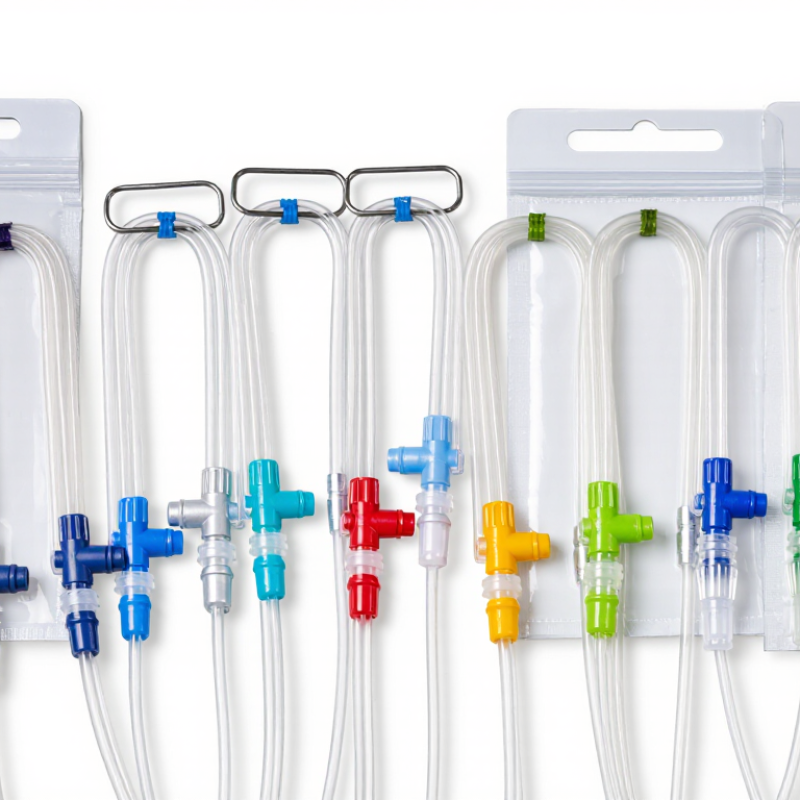
DEHP-free infusion sets are medical devices designed without di(2-ethylhexyl) phthalate, a plasticizer traditionally used to soften PVC tubing. DEHP can migrate from tubing into certain fluids, especially those containing lipids or other compatible solvents. Exposure concerns have encouraged hospitals and purchasing teams to seek alternative materials. These sets may use different plastic formulations while retaining familiar features, such as a drip chamber, injection port, clamp, and luer connector.

The label matters, but it is not a complete safety assessment. A dependable buyer should check the full material declaration, fluid compatibility data, sterilization method, shelf life, and applicable regulatory documentation. Tubing that performs well with saline may behave differently with nutrition solutions or drug mixtures. That detail is easy to overlook. During evaluation, clinical staff should also assess flexibility, leak resistance, flow accuracy, connector security, and ease of priming. A technically compliant set can still frustrate nurses if the clamp slips or the chamber is difficult to read.

DEHP-free does not automatically mean risk-free. Alternative plasticizers and polymers require their own safety evidence, and environmental conditions can affect performance. Temperature, storage time, and repeated handling may change tubing behavior. Global buyers should compare independent test results with local clinical needs, not rely on marketing language alone. I would also review post-market feedback, because laboratory data cannot reveal every bedside problem. A careful purchasing decision connects chemistry, usability, and documented quality.

How to Assess Materials, Safety, and Clinical Compatibility

For global buyers, a DEHP-free label is only the starting point. Confirm the plasticizer and polymer through a current certificate of analysis. Common alternatives include TOTM, DINCH, and citrate-based systems, but “alternative” does not automatically mean safer. EFSA’s 2019 scientific opinion established a group tolerable daily intake of 50 micrograms per kilogram of body weight per day for several phthalates, expressed as DEHP equivalents. This value concerns dietary exposure, not direct infusion exposure. The distinction matters.

Ask for extractables and leachables data under realistic conditions. Test results should cover saline, lipid emulsions, temperature, contact time, and flow rate. FDA guidance on medical device biocompatibility recommends chemical characterization alongside biological evaluation. ISO 10993-18 supports this approach. A clear report should identify detected substances, detection limits, and toxicological assessment. Vague “non-toxic” claims are weak evidence.

Clinical compatibility needs equal attention. Check compliance with ISO 8536-4, connection integrity, priming behavior, pump performance, and particulate limits. A 2023 WHO and UNICEF market review emphasized the importance of quality-assured infusion equipment in healthcare supply systems. Yet laboratory data may not predict every bedside problem. A set can pass chemical testing but kink beside a patient’s bed. Neonatal, oncology, and lipid-infusion applications need separate review because exposure conditions differ. Procurement teams should compare multiple batches, not one attractive sample. Mistakes happen. That is why traceability, change-control records, and post-market complaint data deserve practical weight.

10 Best DEHP-Free Infusion Sets for Global Buyers?

Material, safety, and clinical compatibility screening

This material-family screen uses four practical procurement indicators: whether DEHP is intentionally present, whether an external plasticizer is typically required, whether the material is commonly used in fluid-contact components, and whether formulation-specific extractables and leachables testing is required. A value of 1 means “generally applicable”; 0 means “generally not applicable.”

DEHP-free status must be verified from the finished-device formulation and supplier documentation. Clinical compatibility still depends on polymer grade, additives, sterilization method, storage conditions, drug or solution composition, flow and pressure requirements, and biological evaluation. Relevant frameworks include ISO 8536-4, ISO 10993-1, ISO 10993-18, ISO 10993-17, and ISO 80369 where applicable.

Ten DEHP-Free Infusion Set Options for Global Buyers

Ten DEHP-Free Infusion Set Options for Global Buyers

Global buyers can compare ten practical configurations for different clinical needs. Option one is a standard gravity set with a DEHP-free PVC tube. Option two adds a 15-micron fluid filter for routine intravenous therapy. Option three uses a 0.22-micron filter for selected sterile solutions. Option four includes a needle-free connector for safer access. Option five offers a luer-lock connection that reduces accidental separation. Option six supports infusion pumps and requires confirmed pump-channel compatibility. Option seven uses a polyolefin tube for buyers seeking an alternative to PVC. Option eight provides a low-priming-volume design for small-volume medicines. Option nine includes a burette chamber for controlled pediatric dosing. Option ten combines a light-protective tube with an opaque chamber for photosensitive solutions.

Material details need careful review. “DEHP-free” does not automatically confirm that every phthalate is absent. Request a complete material declaration, migration data, sterilization method, and applicable test reports. Check whether the tube remains flexible after storage and transport. It should not feel brittle after temperature changes. Packaging also matters. Individual sterile packaging needs readable lot numbers, expiry dates, and intact seals. Buyers should verify drop factor, priming volume, connector dimensions, and pump instructions before approval. A cheaper set may create hidden costs if its connector leaks or its filter slows flow. No option fits every ward. Supplier documents can also contain gaps, so independent review remains worthwhile.

10 Best DEHP-Free Infusion Sets for Global Buyers? - Ten DEHP-Free Infusion Set Options for Global Buyers
Option Recommended Use Drip Factor Tubing Length Approx. Priming Volume Key Components DEHP-Free Material Profile Connector / Filter Details Sterilization Buyer Considerations
Option 1 Standard gravity infusion for adults 20 drops/mL 150 cm Approximately 10 mL Spike, drip chamber, roller clamp, injection site, distal connector DEHP-free
Polyolefin-based tubing and non-PVC fluid path
Needle-free or luer-lock distal connection; optional 15 µm fluid filter Ethylene oxide or radiation, depending on validated configuration Suitable general-purpose configuration; confirm compatibility with the intended solution and local registration requirements
Option 2 High-flow crystalloid administration 10 drops/mL 180 cm Approximately 15 mL Large-bore spike, large drip chamber, roller clamp, injection port DEHP-free
Polyolefin or alternative DEHP-free polymer fluid path
Standard luer-lock connector; optional 15 µm or 20 µm filter Ethylene oxide Lower drip factor allows faster visual flow monitoring; verify maximum flow rate before procurement
Option 3 Controlled infusion using a volumetric pump 20 drops/mL 180 cm Approximately 12 mL Pump-compatible tubing segment, drip chamber, clamp, injection site DEHP-free
Non-DEHP polymer tubing designed for pump use
Needle-free luer connection; pump segment requires device-specific compatibility testing Ethylene oxide Confirm pump model, occlusion alarm performance, flow accuracy, and tubing loading instructions
Option 4 Pediatric and neonatal low-volume infusion 60 drops/mL 150 cm Approximately 6 mL Microdrip chamber, fine-control clamp, injection site, distal connector DEHP-free
Non-PVC or DEHP-free polymer fluid path
Optional 0.2 µm inline filter; needle-free connector recommended for closed access Ethylene oxide Microdrip factor improves low-rate monitoring; use only with clinically appropriate flow-control procedures
Option 5 Infusion of solutions requiring particulate reduction 20 drops/mL 150 cm Approximately 12 mL Drip chamber, roller clamp, injection site, inline filter housing DEHP-free
DEHP-free tubing with compatible filter membrane materials
0.2 µm or 0.22 µm membrane filter; verify compatibility with the drug and solution Ethylene oxide Filter pore size, adsorption, flow resistance, and replacement interval should be evaluated for each application
Option 6 Light-sensitive medication administration 20 drops/mL 180 cm Approximately 10 mL Light-protective tubing, amber drip chamber, clamp, injection port DEHP-free
Opaque or amber DEHP-free polymer fluid path
Standard luer-lock or needle-free connector; optional 15 µm filter Ethylene oxide Confirm light-transmission performance, drug compatibility, and whether the complete set—not only the tubing—is light protective
Option 7 Blood and blood-component administration 20 drops/mL 170 cm Approximately 15 mL Blood spike, drip chamber, roller clamp, injection site, blood filter DEHP-free
DEHP-free polymer tubing suitable for blood-contact applications
Typically fitted with a 170–260 µm screen filter; luer-lock patient-end connector Ethylene oxide Verify blood-component compatibility, filter performance, flow capacity, and applicable transfusion-device requirements
Option 8 Multi-line or secondary infusion setup 20 drops/mL 150 cm Approximately 8 mL Secondary spike, drip chamber, back-check valve, clamp, distal connector DEHP-free
Polyolefin-based or other validated DEHP-free fluid path
Back-check valve helps reduce backflow; needle-free luer connection recommended Ethylene oxide Confirm valve direction, priming procedure, compatibility with the primary line, and residual-volume requirements
Option 9 Pressure-assisted infusion and rapid fluid delivery 10 drops/mL 180 cm Approximately 18 mL Reinforced tubing, large-bore spike, clamp, injection site, secure connectors DEHP-free
DEHP-free pressure-rated polymer tubing
Pressure-rated luer-lock connections; optional 15 µm filter where clinically appropriate Ethylene oxide Confirm pressure rating, leakage resistance, connector security, and use with the selected pressure device
Option 10 Closed-system or needle-free hospital infusion 20 drops/mL 150 cm Approximately 10 mL Drip chamber, roller clamp, needle-free access port, protective end cap DEHP-free
Non-DEHP fluid path with validated access-site materials
Needle-free connector with luer-lock interface; optional microbial barrier filter Ethylene oxide or radiation, according to validated product design Assess connector disinfection protocol, seal integrity, leakage prevention, and compatibility with hospital access standards
Technical values are representative configuration ranges for procurement comparison. Buyers should verify the final product specification, applicable standards, sterilization method, chemical compatibility, and regulatory documentation before purchase.

How to Compare Suppliers, Certifications, and Regional Standards

10 Best DEHP-Free Infusion Sets for Global Buyers

Comparing DEHP-free infusion sets requires more than checking a product label. Ask suppliers which materials replace DEHP, such as TOTM or other plasticizers. Request a complete material declaration, not only a marketing statement. Review batch records, migration testing, and shelf-life data. A reliable supplier should explain testing methods, sample sizes, and acceptance limits clearly. Vague answers deserve caution.

Certifications must match the destination market. ISO 13485 supports confidence in the supplier’s quality system, while ISO 10993 reports help assess biocompatibility. ISO 8536 may apply to infusion equipment requirements. For European sales, verify current MDR documentation and conformity evidence. In the United States, check applicable FDA requirements, but remember that registration is not the same as product approval. Other regions may require local registration, language-specific labels, or additional electrical and clinical documents. Standards can overlap, but they are not identical.

Tips: Compare the exact model, tubing, connector, filter, and packaging configuration. Ask for certificates from accredited bodies and confirm their validity independently. Inspect samples for clear tubing, smooth connectors, secure caps, and readable lot numbers. Test performance under realistic storage and pressure conditions. One weakness: buyers sometimes trust certificates without checking whether they cover the supplied model. That mistake is easy to make. Supplier audits, traceability, complaint records, and responsive technical support reveal practical reliability beyond paperwork.

How to Select, Purchase, and Manage Infusion Sets Worldwide

10 Best DEHP-Free Infusion Sets for Global Buyers?

Selecting the best DEHP-free infusion set starts with clinical requirements, not price. Confirm the intended use, fluid compatibility, priming volume, connector type, and flow-control method. Check whether the set suits gravity infusion, pressure infusion, or an infusion pump. “DEHP-free” should appear in technical documents, material declarations, and product labeling. Do not rely on a sales statement alone. A certificate is useful, but traceable test records are stronger.

Global purchasing needs careful document control. Request samples from qualified suppliers and inspect tubing clarity, clamp movement, connector fit, and package seals. Review sterilization evidence, shelf life, storage limits, and lot traceability. Verify required registrations in the destination market before placing a large order. Local clinical teams should assess usability with their existing pumps and accessories. Small incompatibilities can delay treatment.

Management continues after delivery. Record lot numbers, expiry dates, incoming inspection results, and complaint details. Use a first-expiring, first-out system. Protect sterile packages from heat, moisture, crushing, and direct sunlight. I would not treat the lowest quotation as the best purchase. It may exclude testing, training, or replacement support. One weakness in this approach remains: supplier documents can change. Recheck critical specifications during every major order. Train staff to identify damaged packaging and unexpected resistance during use. Human judgment still matters.

FAQS

What is a DEHP-free infusion set?

It is a medical device without DEHP, a plasticizer used to soften some PVC tubing. It may include a drip chamber, clamp, injection port, and luer connector. Labels are clues.

Why do hospitals consider DEHP-free tubing?

DEHP can migrate into certain fluids, especially lipid-containing solutions. Alternative materials may reduce this concern. However, DEHP-free does not mean risk-free.

Does DEHP-free confirm that every phthalate is absent?

No. Buyers should request a complete material declaration. They should also review migration data and independent test reports. That assumption can fail.

Which infusion set suits routine gravity therapy?

A standard gravity set may suit ordinary intravenous fluids. A 15-micron filter can support selected routine applications. Confirm fluid compatibility before use.

What options support specialized clinical needs?

Options include needle-free connectors, luer-lock fittings, pump-compatible tubing, and low-priming-volume designs. Pediatric care may benefit from a burette chamber. Photosensitive solutions may require light protection.

What should buyers check before approving a set?

Review fluid compatibility, sterilization method, shelf life, regulatory documents, and material details. Check drop factor, priming volume, connector dimensions, and pump instructions. Do not rely on a short label alone.

How can staff assess practical performance?

Staff should examine flexibility, leak resistance, flow accuracy, connector security, and priming ease. The chamber should be easy to read. A slipping clamp creates bedside frustration.

Can storage and transport affect DEHP-free tubing?

Yes. Temperature changes, long storage, and repeated handling may alter tubing behavior. Check whether it becomes brittle. Inspect sterile packaging, lot numbers, expiry dates, and seal condition. Suppliers can leave gaps.

Conclusion

DEHP-Free Infusion Set products are designed to reduce exposure to di(2-ethylhexyl) phthalate, a plasticizer that may migrate from certain medical tubing materials. This article explains why material selection matters and how DEHP-free alternatives can support safer infusion practices, particularly for sensitive patient groups and long-term or specialized therapies. It also outlines key factors for evaluating product quality, including tubing composition, fluid compatibility, sterilization methods, leakage resistance, flow performance, connector design, and ease of clinical use.

For global buyers, the article presents ten types of DEHP-free infusion set options suited to different applications and purchasing needs. It also provides a practical framework for comparing suppliers, quality systems, certifications, technical documentation, packaging, and regional requirements. Finally, readers will learn how to select suitable products, verify samples before purchasing, manage storage and inventory, and maintain consistent supply across international markets while prioritizing patient safety, regulatory alignment, and reliable clinical performance.

Evelyn

Evelyn

Evelyn is a seasoned marketing professional and a trusted voice behind the company’s expert blog. With a strong understanding of market trends, customer needs, and product development, Evelyn transforms complex information into clear, practical, and engaging content that helps readers make informed......
Talk to an Expert