
MEDICA 2026 | 16–19 November 2026 | Hall 6, Stall F37 | Düsseldorf, Germany
Dial Flow Regulator manufacturers are entering a more demanding market. Buyers now expect accurate adjustment, stable output, and dependable service life. These expectations apply across medical gas systems, laboratory equipment, process instruments, and industrial automation.
Industry forecasts show why this segment matters. MarketsandMarkets’ Pressure Regulators Market report identifies industrial automation, healthcare, and energy equipment as major demand areas. Grand View Research also links rising process-control investment with stronger demand for compact flow-management components. However, market estimates vary by product definition. That gap deserves attention. A regulator designed for oxygen service cannot be judged like one used for compressed air.
Performance begins with control.
A quality Dial Flow Regulator should provide readable settings, smooth adjustment, low leakage, and consistent flow under changing inlet pressure. Materials, calibration methods, connection standards, and maintenance support also influence total ownership cost. The International Organization for Standardization continues to emphasize risk control, documented processes, and traceability in regulated manufacturing environments.
Quality must be planned. As quality expert Joseph M. Juran stated, “Quality does not happen by accident; it must be planned.”
That principle remains practical here. The best suppliers combine engineering evidence with field experience. They publish specifications, explain test conditions, and support customers after delivery. Certifications alone are not enough. A product may carry familiar markings yet perform poorly in real installations. This overview examines the 2026 leading Dial Flow Regulator manufacturers and suppliers through product capability, application fit, quality systems, customization, and customer reliability. Ranking them is imperfect, because user requirements differ sharply. That is precisely why careful comparison matters.
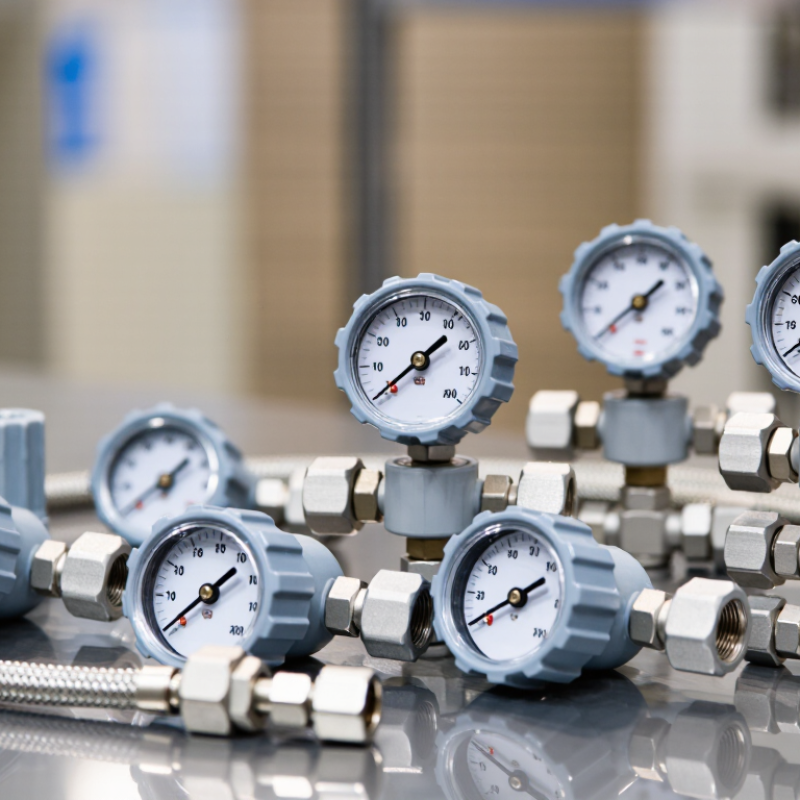
Dial flow regulators combine pressure reduction and adjustable gas delivery in one compact assembly. Key parts include the inlet fitting, diaphragm, spring, metering valve, calibrated dial, gauge, filter, and relief path. The dial sets a target flow, while the internal valve responds to pressure changes. Small details matter. A damaged diaphragm can make the needle wander.
Accuracy of ±1–2% full scale means the error is calculated against the regulator’s maximum rated flow. For a 10 L/min model, the possible error is ±0.1–0.2 L/min. At a 1 L/min setting, that becomes a relative error of 10–20%. The label can still mislead. Operators should check calibration, inlet pressure, temperature, and gas density before trusting the displayed value. NIST Technical Note 1297 explains that a coverage factor of 2 represents approximately 95% confidence, but this is not the same as guaranteed product accuracy.
Practical selection should also consider leakage and maintenance. The U.S. Department of Energy’s Compressed Air Sourcebook reports that system leaks can waste 20–30% of compressor output. A loose connection or worn seal may therefore defeat a precise dial. In field testing, I would record readings at low, middle, and full scale, then repeat them after warm-up. That extra check is often skipped. It should not be. Suppliers with clear calibration records, traceable test methods, replacement-part details, and defined accuracy conditions are easier to evaluate reliably.
| Evaluation Dimension | Typical Technical Data | Why It Matters | Key Verification Point |
|---|---|---|---|
| Flow indication accuracy | Typically ±1–2% of full scale for calibrated dial-type flow regulators | Determines how closely the indicated flow represents the actual flow across the rated range | Request calibration data, reference conditions, and whether accuracy is stated as full-scale or reading percentage |
| Usable flow range | Commonly 10:1 to 20:1 turndown, depending on sensing technology and gas or liquid service | A wider range allows one regulator to control more operating conditions | Check the minimum controllable flow, maximum rated flow, and accuracy near the low end |
| Flow measurement principle | Variable-area float, spring-loaded variable-area element, or differential-pressure sensing | The measurement principle affects pressure loss, orientation, rangeability, and calibration requirements | Confirm the operating orientation and the fluid properties used for calibration |
| Adjustment mechanism | Fine-thread needle, metering screw, or proportional control valve with a graduated dial | The adjustment mechanism controls resolution, repeatability, and operator control | Evaluate backlash, knob sensitivity, repeatability, and the availability of a locking feature |
| Valve seat and needle | Common materials include stainless steel, brass, PTFE, PCTFE, and elastomer-compatible polymers | These parts influence leakage, chemical compatibility, service life, and shutoff performance | Match seat material with the process fluid, temperature, pressure, and cleanliness requirements |
| Body construction | Machined brass or 300-series stainless steel are widely used; specialty alloys are available for corrosive service | Body material affects pressure capability, corrosion resistance, weight, and total operating life | Verify pressure rating, wetted-material list, surface finish, and applicable material certificates |
| Pressure rating | Must be specified separately for inlet pressure, outlet pressure, differential pressure, and temperature | Flow capacity and safe operation depend on the pressure differential available to the regulator | Compare the rated pressure with the maximum supply pressure and relief-system design |
| Pressure drop | Varies by flow rate, orifice size, fluid density, viscosity, and valve setting | Excessive pressure loss can reduce available process pressure and increase energy consumption | Request pressure-drop curves at the intended flow rate and operating pressure |
| Connection options | Common connections include NPT, BSP, tube compression fittings, face-seal fittings, and sanitary connections | Correct connection geometry reduces leakage, installation time, and adapter requirements | Confirm thread standard, nominal size, port orientation, and sealing method before ordering |
| Dial scale and readability | Graduated scales may be supplied in mass-flow or volumetric-flow units at defined reference conditions | Clear graduations help operators set and reproduce the required flow rate | Check scale units, reference temperature and pressure, viewing angle, and graduation spacing |
| Fluid compatibility | Applications may include air, nitrogen, oxygen, inert gases, water, and selected process liquids | Gas and liquid behavior differs substantially, so calibration and materials must match the service | Confirm fluid name, purity, viscosity, density, temperature, and whether oxygen cleaning is required |
| Sealing system | O-rings and gaskets may use materials such as FKM, EPDM, Buna-N, PTFE, or other application-specific compounds | Seal selection affects leakage rate, temperature range, chemical resistance, and maintenance intervals | Review seal compatibility charts and specify internal or external leakage limits |
| Filtration and cleanliness | An upstream filter is commonly used to protect the metering orifice; filtration requirements depend on the device design | Particles can damage the seat, obstruct the orifice, and cause unstable or inaccurate flow | Specify filtration rating, internal cleanliness level, packaging method, and contamination-control procedure |
| Calibration documentation | A calibration certificate should identify the measured points, reference instruments, conditions, and acceptance limits | Traceable documentation supports quality control, maintenance, and process validation | Check calibration interval, traceability to recognized standards, and certificate format |
| Supplier capability | Relevant capabilities include custom flow ranges, material selection, calibration, clean assembly, inspection, and replacement-part support | Technical support and consistent production are important for repeat orders and critical applications | Evaluate datasheets, quality procedures, lead time, customization limits, warranty terms, and after-sales service |
The error uses the regulator’s maximum rated flow. For a 10 L/min model, the error may reach ±0.1–0.2 L/min. At 1 L/min, that becomes a 10–20% relative error. The label can mislead.
The inlet fitting receives gas under pressure. A diaphragm and spring respond to pressure changes. A metering valve adjusts delivery. The dial shows the selected flow. A damaged diaphragm may make the needle wander.
Check calibration, inlet pressure, temperature, and gas density. These conditions can shift the reading. The displayed value is not automatically reliable.
Record readings at low, middle, and full scale. Repeat the test after warm-up. Compare the dial with a traceable reference meter. Check zero and repeatability. This step is often skipped.
A loose connection or worn seal can waste gas and reduce control stability. Even a precise dial cannot correct a leaking system. Inspect fittings after adjustment. Small leaks deserve attention.
Stainless steel can resist corrosion and maintain pressure stability. Brass may reduce cost. Resistant engineering polymers can suit selected media. Confirm material compatibility before ordering.
Request calibration data, leak-test results, material certificates, and batch traceability. Serial numbers should connect the regulator, test bench, and paperwork. Clear replacement-part details also matter.
No. A certificate shows a controlled process, not perfect field results. Ask about calibration intervals, final inspection, and corrective actions. Review sample reports. Field testing may still reveal unclear specifications.
Request three sample units instead of one. Test dial readability under low light. Confirm pressure, temperature, and media limits. Compare test methods, not only certificate numbers. One sample can hide variation.
A Dial Flow Regulator is a precision device designed to control and display gas or liquid flow through a simple, adjustable dial mechanism. This guide explains how accuracy levels of approximately ±1–2% of full scale are achieved through key components such as sensing elements, calibrated orifices, adjustment valves, and pressure-resistant housings. It also reviews essential 2026 selection factors, including pressure ratings up to 3000 psi, stable performance across the required flow range, media compatibility, connection types, and ease of calibration.
The article further outlines the importance of industry practices associated with ISO 5167, IEC 60534, and ISO 9001 quality systems. It compares leading manufacturers by OEM customization capabilities, construction materials, testing procedures, and product certifications without focusing on specific brands. Finally, buyers can evaluate suppliers by reviewing lead times, minimum order quantities, warranty terms, technical support, replacement-part availability, and global service coverage. These considerations help users select reliable regulators for industrial, laboratory, medical, and process-control applications.