Choosing a dialysis supplier is not just a price comparison. A delayed shipment can disrupt purchasing plans, while inconsistent tubing or packaging may create avoidable work for clinical teams. This guide to 2026’s best Dialysis Consumables suppliers gives global buyers a practical starting point. It considers product range, manufacturing consistency, documentation, supply capacity, and responsiveness.
The products matter in daily use. Buyers may need dialyzers, bloodlines, fistula needles, concentrates, or water-treatment filters. Each item must suit the intended equipment and local purchasing requirements. Look for clear product specifications, batch traceability, sterile packaging details where applicable, and realistic shelf-life information. Ask how a supplier handles quality concerns and delivery changes. Get answers in writing.
A polished catalogue is not proof of dependable performance. Neither is a low quotation. This article compares suppliers using information buyers can check, rather than treating marketing claims as evidence. Still, no shortlist can replace product evaluation. A checklist has limits. Buyers should confirm current documents, compatibility, and applicable requirements with qualified clinical, procurement, and regulatory professionals. Those checks take time, and sometimes the best-looking option will not fit a facility’s needs. That is worth admitting. The goal is not to declare one supplier right for every market, but to help buyers ask sharper questions before placing an order.
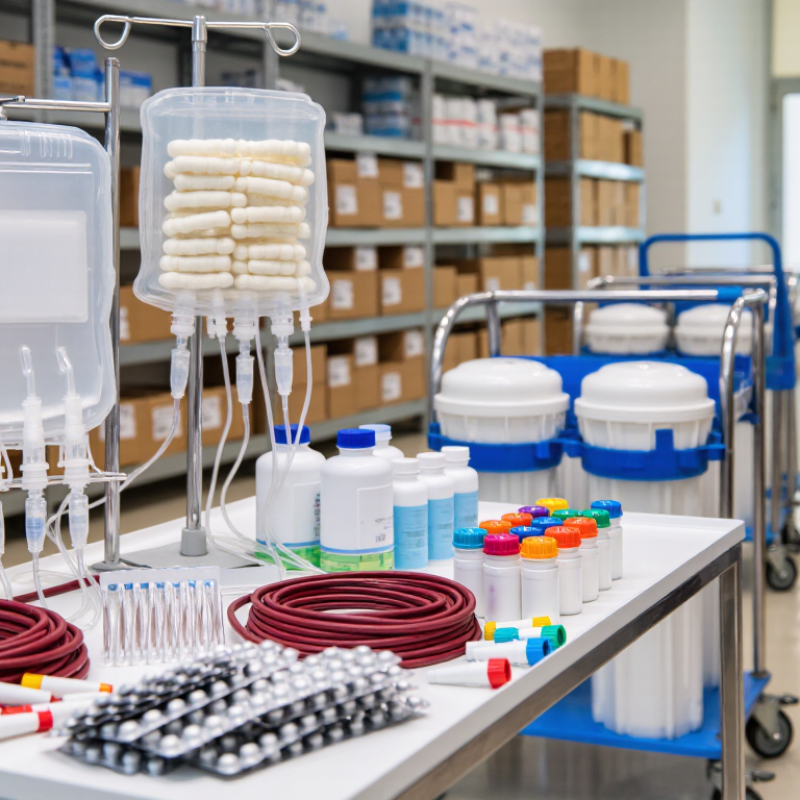
What Dialysis Consumables Include and Why They Matter
Dialysis consumables are the patient-contact products used during treatment: dialyzers, blood tubing, access needles, dialysate concentrates, filters, connectors, and dressings. They work alongside the dialysis machine but are not the machine itself. Each item has a practical job. A kinked bloodline can interrupt flow; a poor-fitting connector can create leak or contamination risks. Small parts matter.
The USRDS 2024 Annual Data Report recorded more than 800,000 people living with kidney failure in the United States in 2022, underscoring the scale of ongoing treatment needs. CDC surveillance also found that bloodstream infection rates among dialysis patients fell 32% from 2014 to 2019. Consumable selection supports infection prevention, reliable treatment, and consistent workflows, but products alone cannot prevent every problem. Staff training, correct handling, and dependable supply are essential too. Not glamorous. Still, a missing connector or damaged package can delay a session. Buyers should check material compatibility, sterility information, packaging integrity, and lot traceability, then confirm details with clinical and procurement teams. The reports show progress, not perfection; supply decisions deserve regular review.
Which Product Categories Do Global Buyers Need?
Global buyers need more than dialyzers. A practical hemodialysis list includes dialyzers, bloodlines, fistula needles, bicarbonate and acid concentrates, and sterile saline. The 2024 USRDS Annual Data Report shows that more than two-thirds of US patients receiving kidney replacement therapy were treated with hemodialysis in 2022. This is a useful market benchmark, not a global forecast. Buyers should also check connector compatibility, sterilization method, pack size, and shelf life before comparing prices.
Peritoneal dialysis requires a different mix: compatible solutions, transfer sets, catheters, and secure storage supplies. Water-treatment filters, disinfection products, gloves, and routine testing materials support safe unit operations across modalities. Small details matter. A mismatch in tubing or connectors can disrupt workflow, even when the main device is available. The International Society of Nephrology’s 2023 Global Kidney Health Atlas documents substantial differences in kidney-care capacity between countries, so one standard catalogue may not fit every facility. That point is easy to overlook. Buyers should map product specifications to local treatment practices and delivery conditions; stock planning also needs review, because usage estimates can be wrong.
What Standards Should Dialysis Consumables Meet in 2026?
What Standards Should Dialysis Consumables Meet in 2026?
Dialysis consumables should meet the requirements that apply in their destination market and product category. Buyers can assess a supplier’s quality system against ISO 13485 and its risk controls against ISO 14971. These are useful benchmarks, not substitutes for local regulatory review. Requirements differ.
For blood-contacting items, such as tubing, needles, and dialyzers, evaluate biocompatibility evidence under applicable ISO 10993 methods. Check relevant product-specific standards and the ISO 23500 series where dialysis-fluid quality is involved. Ask how sterilization is validated, how packaging protects sterility, and how shelf life is supported. A clear label matters. So does traceability to the production lot.
Look beyond certificates. Request test reports, certificates of analysis, and documented controls for leaks, dimensions, and connector fit. A connector that appears compatible on a desk may behave differently during setup. Review transport conditions and change-notification procedures, too. Paperwork can look complete. It may not show how a supplier handles a failed batch or a packaging change. Ask for concrete examples, then verify that the evidence matches the exact consumable and manufacturing site being offered.
How Can Buyers Evaluate and Verify Suppliers?
For dialysis consumables, a polished catalog is only a starting point. Ask suppliers for current quality-system certificates, then verify the certificate number, issuing body, expiry date, and product scope directly. A certificate may not cover every item in a supplier’s catalog. Check that product specifications identify materials, dimensions, sterilization method, packaging, and shelf life. Details matter.
Request sample documents for a specific production lot, such as inspection records and a certificate of analysis where applicable. Confirm that batch numbers link packaging to production and shipment records. Ask how the supplier handles complaints, product changes, and rejected lots. If feasible, arrange a qualified audit or independent inspection. Review samples for seal consistency, clear labeling, and packaging damage, but do not treat a sample as proof of ongoing production quality. No checklist catches everything.
Tips: Compare lead times with past shipment records, not estimates alone. Ask for written notice periods for material or process changes. Verify that the supplier can support your destination market’s applicable requirements, and document who confirmed each claim. A rushed document review can miss an expired certificate; it happens. Recheck critical records before placing repeat orders.
How Do Sourcing, Logistics, and After-Sales Support Compare?
For dialysis consumables, compare suppliers by lot traceability, documented quality controls, and realistic replenishment times—not unit price alone. The USRDS 2024 Annual Data Report recorded about 808,000 people with kidney failure in the United States in 2022. Their recurring treatment needs show why missed deliveries can disrupt care. Small delays matter.
Ask how suppliers manage product expiration, temperature-sensitive shipments, customs paperwork, and backup inventory. The World Bank’s 2023 Logistics Performance Index assessed 139 economies across customs, infrastructure, shipment quality, tracking, and timeliness. Buyers can use those dimensions to question a supplier’s route plans, but a country-level score cannot guarantee a specific shipment will arrive intact. Request shipment records and escalation contacts. Test the process.
After-sales support should include clear complaint handling, product-change notices, and practical training for storage and use. Check whether responses are available across time zones and whether replacement stock can be arranged when a shipment arrives damaged. WHO and UNICEF’s 2022 report found that one in four health-care facilities lacked basic water services; this underlines why consumables must arrive with handling guidance that fits local conditions. Yet supplier claims are not proof. Verify them with records, sample orders, and feedback from clinical and procurement teams.
2026 Best Dialysis Consumables Suppliers for Global Buyers?
How do sourcing, logistics, and after-sales support compare?
This illustrative 100-point scorecard prioritizes product sourcing and quality/regulatory readiness, followed by logistics and after-sales support. The weights are a proposed buyer evaluation framework, not measured supplier performance or market survey results. Compare suppliers using market-specific regulatory approvals, documented quality systems, delivery terms, and service commitments.
FAQS
Common supplies include dialyzers, bloodlines, fistula needles, bicarbonate and acid concentrates, and sterile saline. Check pack size and shelf life.
Buyers may need compatible solutions, transfer sets, catheters, and secure storage supplies. Storage conditions matter.
Water-treatment filters, disinfection products, gloves, and routine testing materials support daily operations. Needs vary between facilities.
Confirm connector fit, sterilization method, pack size, and shelf life. A low price cannot fix a tubing mismatch.
Buyers can review quality systems against ISO 13485 and risk controls against ISO 14971. Local requirements still apply.
Request applicable biocompatibility evidence, sterilization validation, and clear lot traceability. Check that documents match the exact product and manufacturing site.
Confirm the certificate number, issuing body, expiry date, and product scope. A certificate may not cover every item.
Review lot records, packaging condition, lead times, and change-notification procedures. Samples help, but they do not prove consistent production.
Treatment practices and delivery conditions differ by country and facility. Usage estimates can be wrong. Recheck them.
Conclusion
Dialysis Consumables include the single-use products and supporting items needed for safe, consistent dialysis treatments, such as dialyzers, blood tubing, needles, filters, and related accessories. Global buyers should first identify the product categories, specifications, and quantities their facilities require, then assess how each supplier manages product quality, traceability, and documentation. In 2026, attention to applicable quality and safety standards, clear labeling, and reliable batch records can help buyers make informed comparisons.
Supplier evaluation should extend beyond product claims. Buyers can review manufacturing capabilities, request relevant documentation and samples, check quality-control processes, and confirm communication and complaint-handling procedures. Sourcing decisions should also consider lead times, shipping conditions, inventory continuity, and the supplier’s ability to provide responsive after-sales support. A structured comparison of these factors can help procurement teams reduce supply risks and select dependable partners suited to their clinical and operational needs.